Plantaginaceae
Yellow mecardonia: Ground Cover Plant
Mecardonia procumbens
It is an easy-to-maintain plant, ideal for hanging baskets, window boxes, or as a groundcover. It prefers bright light, direct sun or partial shade, a well-drained substrate, and regular watering without allowing water to stagnate. With rapid growth and abundant flowering, Mecardonia procumbens is non-toxic to humans and pets.
Every 4 days
Bright indirect
10° - 32°C
40% - 70%
Categories
What is Yellow mecardonia?
Yellow mecardonia (Mecardonia procumbens) is a easy-care plant from the Plantaginaceae family. Mecardonia procumbens is an annual or perennial herbaceous plant from the Plantaginaceae family, native to the tropical and subtropical regions of the Americas, including Mexico. It has a bushy habit with prostrate, creeping stems that form dense mats up to 60 cm in diameter. The leaves are small, o...
Yellow mecardonia grows up to 15cm, spread of 60cm, watering every 4 days, 10°C – 32°C, 40–70% humidity. It is suitable for indoor environments and safe for pets.
Unlike many tropical plants, Yellow mecardonia tolerates watering mistakes. Best for beginners. Unlike many popular species, Yellow mecardonia is safe to keep around pets. Without adequate drainage, root rot can develop within 8 days.
How to Care for Yellow mecardonia?
TLDR: Yellow mecardonia needs Bright indirect, watering every 4 days, and temperatures between 10-32°C with 40-70% humidity.
How Often Should You Water Yellow mecardonia?
Water every 3-4 days with approximately 200-250 ml of water, allowing the top layer of the substrate to dry slightly between waterings. Constantly waterlogged soil promotes root rot, so avoid standing water in the pot or saucer.
How Much Light Does Yellow mecardonia Need?
It needs plenty of light, preferably direct sun or partial shade, for 6-10 hours a day. When grown indoors, place the plant near a south-facing window, less than 30 cm from the glass, to ensure abundant flowering.
What Is the Best Soil for Yellow mecardonia?
Choose a well-drained, lightweight, peat-based substrate with a pH between 6.0 and 7.0. A mixture of peat, perlite, and compost ensures both moisture retention and the drainage necessary to prevent root rot.
What Pot Should You Use for Yellow mecardonia?
It is excellent for hanging baskets or wide, shallow planters with many drainage holes, where the creeping stems can cascade down. For use as a groundcover, choose a spot with good drainage, as the roots do not tolerate stagnant water.
Care Schedule
Fertilize
Every 30 days
Repot
Every 365 days
What Is Yellow mecardonia and Where Does It Come From?
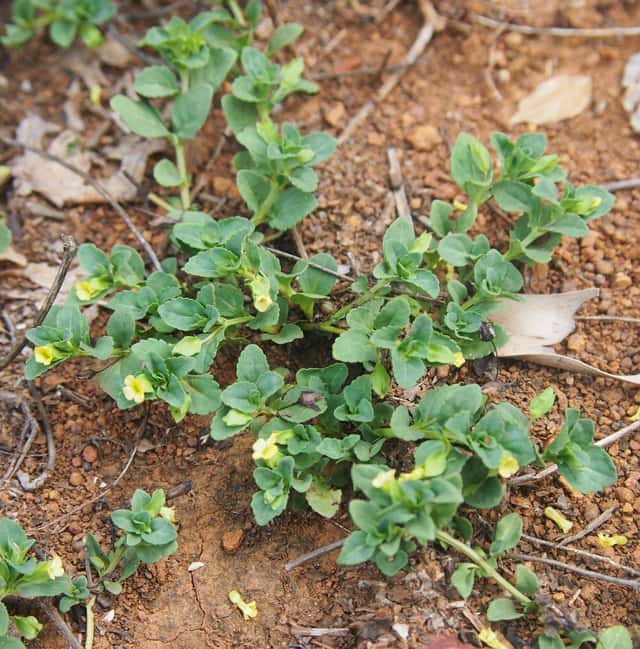
Mecardonia procumbens is an annual or perennial herbaceous plant from the Plantaginaceae family, native to the tropical and subtropical regions of the Americas, including Mexico. It has a bushy habit with prostrate, creeping stems that form dense mats up to 60 cm in diameter. The leaves are small, oval, and deep green, while the bright yellow flowers appear from spring to fall, attracting bees and butterflies. In nature, it often grows in wet areas, on riverbanks, and in marshy soils, but it has naturalized on all continents except Antarctica due to its remarkable adaptability.
How to Propagate Yellow mecardonia?
How Big Does Yellow mecardonia Grow?
TLDR: Yellow mecardonia can reach up to 15cm tall with Fast growth rate.
Max height
15cm
Spread
60cm
Growth rate
Fast
Foliage
Evergreen
Plant Uses
Ornamental
Great for decoration
Ground Cover
Soil coverage
Medicinal
Medicinal properties
Medicinal Uses
- In Mexican traditional medicine, where it is known as "hierba de la golondrina," the plant is used to combat fatigue and anemia
- Traditional use in treating fever, biliary disorders, and eye problems
- Preliminary research suggests wound-healing properties, though scientific evidence remains limited
Is your plant showing symptoms?
Click on the symptom to discover possible causes:
What Diseases Commonly Affect Yellow mecardonia?
TLDR: Yellow mecardonia is susceptible to 6 known diseases. Monitor regularly for early detection.
Root Rot
Root rot is a serious fungal disease that affects the root system of plants, causing them to decay and die. It is primarily caused by overwatering, poor drainage, or soil-borne fungi such as Pythium, Phytophthora, Rhizoctonia, and Fusarium. The disease thrives in waterlogged conditions where roots are deprived of oxygen, making them susceptible to fungal infection.
Overwatering
Overwatering occurs when plants receive too much water, depriving roots of oxygen and causing root rot. This environmental stress is one of the most common causes of houseplant death, as waterlogged soil prevents roots from breathing and functioning properly.
Spider Mites
Spider mites are tiny arachnids (less than 1/20 inch long) related to spiders and ticks that feed on plant sap. They thrive in hot, dry conditions and can cause significant damage to ornamental and vegetable plants. During severe infestations, crop losses can reach 14% or higher as these pests disrupt vital plant processes including photosynthesis, carbon dioxide absorption, and transpiration.
Aphids
Aphids are small, soft-bodied, pear-shaped insects (1/16 to 1/8 inch long) that feed by sucking nutrient-rich sap from plants. They reproduce rapidly and can quickly weaken plants, causing distorted growth and transmitting plant viruses. Aphids come in various colors including green, black, red, yellow, brown, and gray. They secrete honeydew, a sticky substance that attracts ants and encourages sooty mold growth.
Meaning & Symbolism
Its yellow flowers, always open toward the sun, are associated with optimism, positive energy, and the joy of living. Being a resilient plant capable of blooming even in poor or marshy soils, it symbolizes adaptability and perseverance.
Compare with similar plants
| Attribute | Difficulty | Light | Watering | Pet Safe |
|---|---|---|---|---|
| Field Maple | Easy | Bright indirect | 14d | ✓ |
| Silver Birch | Easy | Direct sun | 14d | ✓ |
| Common Blanketflower | Easy | Direct sun | 10d | ✓ |
| Cushion Bush | Easy | Direct sun | 14d | ✓ |





