Nymphaeaceae
Yellow Water-Lily (Nuphar lutea)
Nuphar lutea
A plant for a large pond, not a small tub. It wants sun or part shade and heavy soil at the bottom. Once settled it needs very little, but it does spread. In a smaller pond, thin out some of the rhizomes so it does not take over the surface.
Every 2 days
Bright indirect
-20° - °C
% - %
Categories
What is Yellow water-lily?
Yellow water-lily (Nuphar lutea) is a easy-care plant from the Nymphaeaceae family. Yellow water-lily is an aquatic plant from Europe, western Asia and North Africa, living in lakes, ponds and calm stretches of river. It grows from a thick rhizome anchored in the mud, with large leathery leaves that float on the surface and thinner ones that stay underwater. In summer it opens yell...
Yellow water-lily grows up to watering every 2 days. It is not suitable for indoor environments and safe for pets.
Unlike many tropical plants, Yellow water-lily tolerates watering mistakes. Best for beginners. Unlike many popular species, Yellow water-lily is safe to keep around pets.
How to Care for Yellow water-lily?
TLDR: Yellow water-lily needs Bright indirect, watering every 2 days, and temperatures between -20-30°C with 40-70% humidity.
How Often Should You Water Yellow water-lily?
It needs no watering, since it lives in water all the time. Set young plants 30 to 45 cm deep; mature plants usually do well down to 1 metre and can take more than 2 metres. It prefers still or slow water and suffers in polluted water.
How Much Light Does Yellow water-lily Need?
Full sun or part shade. It tolerates light shade.
What Is the Best Soil for Yellow water-lily?
Mud or heavy clay soil, ideally rich. It tolerates mildly acidic to mildly alkaline water. In a basket, use aquatic compost.
What Pot Should You Use for Yellow water-lily?
A large aquatic basket with heavy soil. Top it with gravel so the soil stays in.
What Is Yellow water-lily and Where Does It Come From?
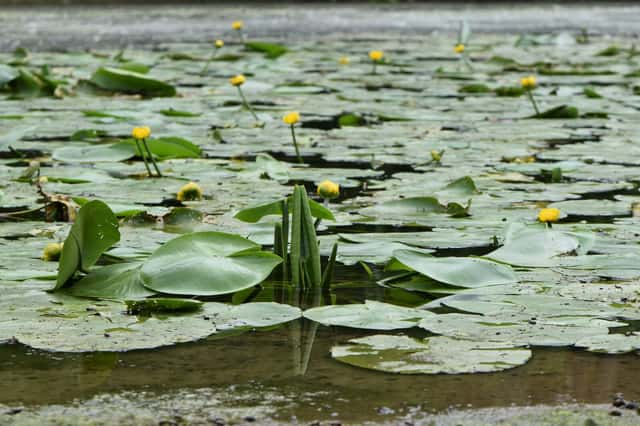
Yellow water-lily is an aquatic plant from Europe, western Asia and North Africa, living in lakes, ponds and calm stretches of river. It grows from a thick rhizome anchored in the mud, with large leathery leaves that float on the surface and thinner ones that stay underwater. In summer it opens yellow, cup-shaped flowers 3 to 6 cm across, held just above the water, with a scent often compared to brandy. The fruit looks like a small green bottle. It usually grows in shallower water than the white water-lily.
How to Propagate Yellow water-lily?
Rhizome division
Dividing is also a good way to stop plants from taking over the pond.
- 1 Lift the plant out of the water
- 2 Cut the rhizome into pieces, each with at least one growing bud
- 3 Plant in baskets of heavy soil
- 4 Keep in shallow water until established, then lower the basket gradually
Materials needed:
Seed
Much slower than dividing the rhizome.
- 1 Sow ripe seed in pots covered by 2 to 3 cm of water
- 2 Move to individual pots when the first true leaf appears
- 3 Keep in water for about two years before planting in the pond
Materials needed:
How Big Does Yellow water-lily Grow?
TLDR: Yellow water-lily can reach up to ?cm tall with Medium growth rate.
Growth rate
Medium
Foliage
Deciduous
Warning: Toxic Plant
This plant can be toxic if ingested. Keep out of reach of:
Plant Uses
Ornamental
Great for decoration
Edible
Can be consumed
Medicinal
Medicinal properties
Medicinal Uses
- In folk medicine the rhizome was used in teas and poultices. Do not use it without medical advice, as large doses are potentially toxic.
Culinary Uses
- Historically the cooked rhizome and ground seeds were eaten as food, but they taste bitter and should not be eaten without confirming with an expert.
Is your plant showing symptoms?
Click on the symptom to discover possible causes:
What Diseases Commonly Affect Yellow water-lily?
TLDR: Yellow water-lily is susceptible to 1 known diseases. Monitor regularly for early detection.
Meaning & Symbolism
Stylised red leaves of this plant are a symbol of Frisia and appear on the flag of the Dutch province of Friesland.
Fun Facts
The flowers smell a little like brandy, which is where the name brandy-bottle comes from.
Air moves in through the young leaves and out through the old ones, carrying oxygen down to the rhizome in the mud.
Stylised versions of its leaves are on the flag of Friesland in the Netherlands.
Frequently asked questions
How deep should I plant yellow water-lily?
Is it right for a small pond?
Does it survive winter?
Can I eat it or make tea from it?
What is making holes in the leaves?
Compare with similar plants
| Attribute | Difficulty | Light | Watering | Pet Safe |
|---|---|---|---|---|
| Field Maple | Easy | Bright indirect | 14d | ✓ |
| Iberian Houseleek | Easy | Direct sun | 14d | ✓ |
| Silver Birch | Easy | Direct sun | 14d | ✓ |
| Common Blanketflower | Easy | Direct sun | 10d | ✓ |





