Asphodelaceae
Zebra Aloe (Aloe zebrina)
Aloe zebrina
An easy, fast-growing aloe. It does well in sun or part shade, in sandy soil that drains quickly. Water moderately in warm weather and keep it nearly dry in winter. It handles light frost if the soil is dry.
Every 14 days
Bright indirect
-2° - °C
% - %
Categories
What is Zebra Aloe?
Zebra Aloe (Aloe zebrina) is a easy-care plant from the Asphodelaceae family. Aloe zebrina is a small aloe from southern tropical Africa, ranging from Namibia to northern South Africa, where it grows in dry thickets, grassland and rocky ground. It forms rosettes up to about 40 to 50 cm across, nearly stemless, and sends up offsets at the base until it becomes a clump. Each ro...
Zebra Aloe grows up to 50cm, spread of 40cm, watering every 14 days. It is suitable for indoor environments and not safe for pets.
Unlike many tropical plants, Zebra Aloe tolerates watering mistakes. Best for beginners. Without precautions, ingestion can cause irritation in pets. Keep out of reach of cats and dogs. Without adequate drainage, root rot can develop within 28 days.
How to Care for Zebra Aloe?
TLDR: Zebra Aloe needs Bright indirect, watering every 14 days, and temperatures between -2-30°C with 40-70% humidity.
How Often Should You Water Zebra Aloe?
In warm weather, water when the soil has dried out completely, about every 1 to 2 weeks. In winter, water once a month or not at all. Leaf tips curling in hot, dry spells mean it is ready for water.
How Much Light Does Zebra Aloe Need?
Full sun to part shade. In part shade the leaves stay greener and plumper; in strong sun they turn purplish. Indoors, place it by the brightest window.
What Is the Best Soil for Zebra Aloe?
Sandy or sandy-loam soil that drains well, such as cactus and succulent mix. Add crocks or grit at the bottom of the pot.
What Pot Should You Use for Zebra Aloe?
A terracotta pot with a drainage hole, wider than it is deep, so the clump of offsets has room to spread.
Care Schedule
Fertilize
Every 90 days
What Is Zebra Aloe and Where Does It Come From?
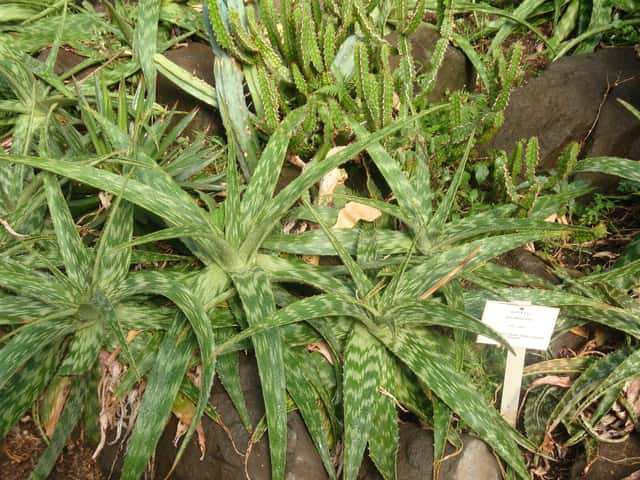
Aloe zebrina is a small aloe from southern tropical Africa, ranging from Namibia to northern South Africa, where it grows in dry thickets, grassland and rocky ground. It forms rosettes up to about 40 to 50 cm across, nearly stemless, and sends up offsets at the base until it becomes a clump. Each rosette holds 15 to 25 long leaves, 15 to 35 cm, dull green with large white spots lined up in crosswise bands, which is where the name zebrina comes from. The edges carry brown teeth, and the tips turn reddish in sun. In late summer and autumn it puts up a branched stalk 75 cm to 2 m tall with dull red to pink tubular flowers that birds pollinate.
How to Propagate Zebra Aloe?
Offsets
Offsets with their own roots establish faster. Do not bury the base too deep.
- 1 Separate an offset from the mother plant with any roots it has
- 2 Let it dry in shade for about a week
- 3 Plant in river sand or succulent mix
- 4 Water lightly only after a week
Materials needed:
Seed
Seeds germinate quickly with mild warmth and good drainage.
- 1 Scatter seeds over sandy mix
- 2 Cover with a thin layer of coarse sand
- 3 Water lightly and keep at about 18 °C
- 4 Prick out the seedlings once they are firm
Materials needed:
How Big Does Zebra Aloe Grow?
TLDR: Zebra Aloe can reach up to 50cm tall with Fast growth rate.
Max height
50cm
Spread
40cm
Growth rate
Fast
Foliage
Evergreen
Warning: Toxic Plant
This plant can be toxic if ingested. Keep out of reach of:
Plant Uses
Ornamental
Great for decoration
Medicinal
Medicinal properties
Ground Cover
Soil coverage
Medicinal Uses
- In African folk medicine, the bitter sap is used to clean wounds and treat skin problems
Is your plant showing symptoms?
Click on the symptom to discover possible causes:
What Diseases Commonly Affect Zebra Aloe?
TLDR: Zebra Aloe is susceptible to 6 known diseases. Monitor regularly for early detection.
Root Rot
Root rot is a serious fungal disease that affects the root system of plants, causing them to decay and die. It is primarily caused by overwatering, poor drainage, or soil-borne fungi such as Pythium, Phytophthora, Rhizoctonia, and Fusarium. The disease thrives in waterlogged conditions where roots are deprived of oxygen, making them susceptible to fungal infection.
Overwatering
Overwatering occurs when plants receive too much water, depriving roots of oxygen and causing root rot. This environmental stress is one of the most common causes of houseplant death, as waterlogged soil prevents roots from breathing and functioning properly.
Mealybugs
Mealybugs are small, soft-bodied insects covered with a white, waxy, cottony material. They are common pests of houseplants and outdoor plants in mild climates. These sap-sucking insects feed on plant tissue, causing damage, stunted growth, and can lead to plant death if left untreated. They produce sticky honeydew which attracts sooty mold.
Scale Insects
Scale insects are small sap-sucking pests that appear as brown, shell-like bumps on plant stems and leaves. There are over 25 species, divided into armored (hard) and unarmored (soft) scales. They feed by piercing plant tissue and extracting sap, which weakens the plant and can lead to yellowing, stunted growth, and even death if left untreated. They also excrete honeydew, which attracts ants and promotes sooty mold growth.
Fun Facts
The name zebrina means striped like a zebra, after the bands of spots on the leaves.
Along the Kunene River in Angola, the flowers are boiled and pressed into cakes.
The root gives a golden-yellow dye used to colour palm fibres for basketry.
Frequently asked questions
Does zebra aloe like full sun?
How often should I water it?
Can it handle cold?
Is it toxic?
Compare with similar plants
| Attribute | Difficulty | Light | Watering | Pet Safe |
|---|---|---|---|---|
| Field Maple | Easy | Bright indirect | 14d | ✓ |
| Iberian Houseleek | Easy | Direct sun | 14d | ✓ |
| Silver Birch | Easy | Direct sun | 14d | ✓ |
| Common Blanketflower | Easy | Direct sun | 10d | ✓ |





