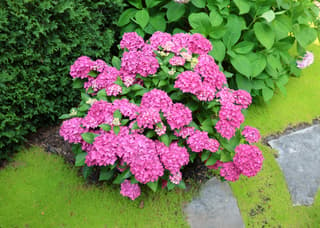
Bigleaf Hydrangea with Leaf Spots: Causes & Solutions
Hydrangea macrophylla
Bigleaf Hydrangea is a plant that needs indirect light and frequent watering. When showing leaf spots, it may indicate issues related to its environment or care.
Is your Bigleaf Hydrangea showing leaf spots? Discover 4 possible causes and how to treat them.
🔍 Possible Causes (4)
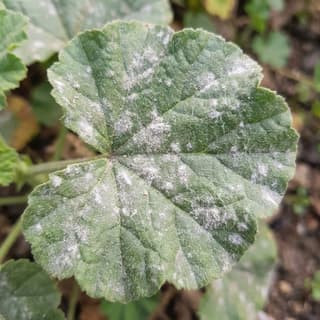
Powdery Mildew
Powdery mildew is a common fungal disease caused by various fungi species including Erysiphe, Podosphaera, Oïdium, and Leveillula. It affects over 10,000 plant species worldwide. The disease thrives in warm, dry climates with high humidity and appears as a distinctive white powdery coating on plant surfaces.
✓ Related symptoms:
- • White to gray powdery spots on leaves, stems, and buds
⚡ Quick Fixes:
Remove heavily infected areas
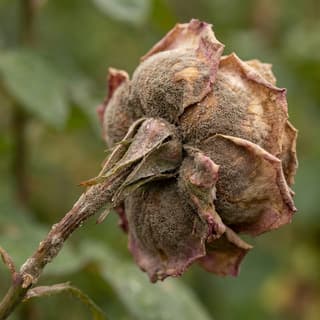
Gray Mold (Botrytis Blight)
Gray mold, caused by the fungus Botrytis cinerea, is one of the most common fungal diseases in plants. It affects over 200 plant species, including ornamentals, vegetables, fruits, and houseplants. The disease thrives in cool, humid conditions with poor air circulation, causing grayish spots and soft rot on infected tissues.
✓ Related symptoms:
- • Grayish colored soft, mushy spots on leaves, stems, and flowers
- • Brown to gray circular spots on leaves and petals
- • Water-soaked lesions that expand rapidly
⚡ Quick Fixes:
Remove and dispose of all visibly infected parts
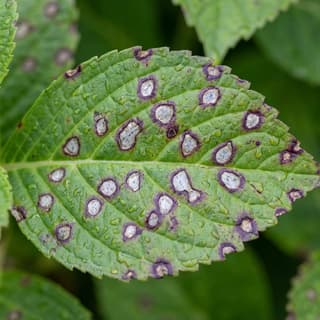
Cercospora Leaf Spot
Cercospora leaf spot is a common fungal disease caused by Cercospora species that affects many plant types, particularly beets, roses, and leafy vegetables. The disease thrives in warm, humid conditions and can cause significant defoliation, reducing plant vigor and yield. It spreads rapidly through water splash, wind, and contaminated tools.
✓ Related symptoms:
- • Small circular spots (0.02-0.2 inch) on leaves
- • Spots coalesce into larger necrotic lesions
⚡ Quick Fixes:
Step 1
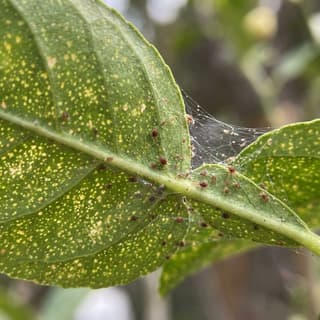
Spider Mites
Spider mites are tiny arachnids (less than 1/20 inch long) related to spiders and ticks that feed on plant sap. They thrive in hot, dry conditions and can cause significant damage to ornamental and vegetable plants. During severe infestations, crop losses can reach 14% or higher as these pests disrupt vital plant processes including photosynthesis, carbon dioxide absorption, and transpiration.
✓ Related symptoms:
- • Pale discoloration spots on leaves
⚡ Quick Fixes:
Step 1