Hydrangeaceae
Bigleaf Hydrangea: The Color-Changing Shrub from Japan
Hydrangea macrophylla
Provide partial shade (morning sun, afternoon shade), consistently moist rich soil, and regular fertilizing every two weeks during the growing season. Prune lightly after flowering. Keep humidity above 50% indoors. Hardy in USDA zones 5–9.
Every 3 days
Partial shade
-7° - 25°C
50% - 70%
Categories
What is Bigleaf Hydrangea?
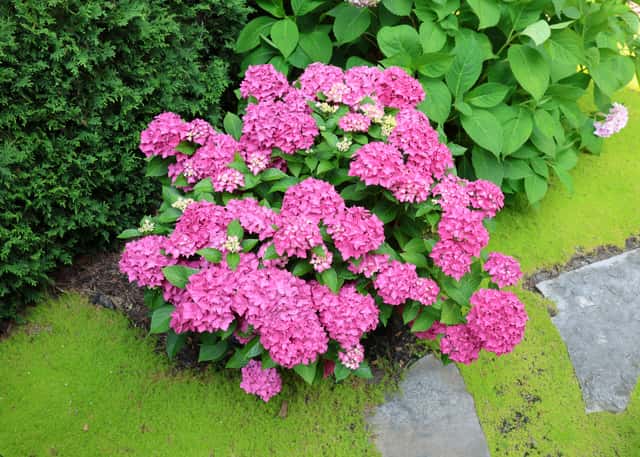
Bigleaf Hydrangea (Hydrangea macrophylla) is a medium-care plant from the Hydrangeaceae family. Hydrangea macrophylla, commonly known as Bigleaf Hydrangea, is a deciduous flowering shrub native to Japan. It is celebrated for its large, rounded flower clusters that dramatically change color — from pink to blue — based on the pH of the soil. This versatility and visual impact make it one of the...
Bigleaf Hydrangea grows up to 1.8m, spread of 183cm, watering every 3 days, -7°C – 25°C, 50–70% humidity. It is suitable for indoor environments and not safe for pets.
Without precautions, ingestion can cause irritation in pets. Keep out of reach of cats and dogs. Without adequate drainage, root rot can develop within 7 days.
How to Care for Bigleaf Hydrangea?
TLDR: Bigleaf Hydrangea needs Partial shade, watering every 3 days, and temperatures between -7-25°C with 50-70% humidity.
How Often Should You Water Bigleaf Hydrangea?
Water deeply 2–3 times per week during the growing season, ensuring the top 1–2 inches of soil never fully dry out. Use a soaker hose or water at the base to avoid wetting the foliage, which can encourage fungal disease. Mulch around the base to retain moisture.
How Much Light Does Bigleaf Hydrangea Need?
Bigleaf Hydrangea thrives in morning sun with afternoon shade. Avoid intense afternoon sun in hot climates as it causes leaf scorch and wilting. In cooler zones (5–6), full sun is tolerated. Indoors, place near a bright east-facing window.
What Is the Best Soil for Bigleaf Hydrangea?
Plant in rich, well-draining soil with high organic matter. Soil pH is critical: acidic soil (pH 5.0–5.5) produces blue flowers, while neutral to slightly alkaline soil (pH 6.0–7.0) produces pink flowers. Amend with compost before planting.
What Pot Should You Use for Bigleaf Hydrangea?
Terracotta or ceramic pots with drainage holes are ideal for container growing. Choose a pot at least 30–40 cm wide to accommodate the root system. Avoid dark-colored pots in hot climates as they overheat the roots.
Care Schedule
Fertilize
Every 14 days
Misting
Every 3 days
What Is Bigleaf Hydrangea and Where Does It Come From?
Hydrangea macrophylla, commonly known as Bigleaf Hydrangea, is a deciduous flowering shrub native to Japan. It is celebrated for its large, rounded flower clusters that dramatically change color — from pink to blue — based on the pH of the soil. This versatility and visual impact make it one of the most popular ornamental shrubs in gardens worldwide.
How to Propagate Bigleaf Hydrangea?
Stem Cutting
Keep the cutting evenly moist but never waterlogged. High humidity (70–80%) accelerates rooting. Avoid direct sun during propagation.
- 1 Select a healthy non-flowering stem with 2–3 leaf nodes
- 2 Cut just below a node using clean, sharp pruners
- 3 Remove lower leaves leaving only 1–2 at the tip
- 4 Dip the cut end in rooting hormone powder
- 5 Insert into moist, well-draining propagation mix
- 6 Cover with a clear plastic bag to retain humidity
- 7 Place in bright indirect light at 18–22°C
- 8 Remove cover once new growth appears
Materials needed:
Ground Layering
Layering is the easiest propagation method for hydrangeas with very high success rates. Keep the pinned area consistently moist.
- 1 Select a low, flexible stem that can reach the ground
- 2 Wound the stem at a node by making a shallow cut
- 3 Pin the wounded section into moist soil with a U-shaped stake
- 4 Cover lightly with soil and keep moist
- 5 Once rooted, sever from the parent plant and transplant
Materials needed:
How Big Does Bigleaf Hydrangea Grow?
TLDR: Bigleaf Hydrangea can reach up to 1.8m tall with Fast growth rate.
Max height
1.8m
Spread
1.8m
Growth rate
Fast
Foliage
Deciduous
Warning: Toxic Plant
This plant can be toxic if ingested. Keep out of reach of:
Plant Uses
Ornamental
Great for decoration
Is your plant showing symptoms?
Click on the symptom to discover possible causes:
What Diseases Commonly Affect Bigleaf Hydrangea?
TLDR: Bigleaf Hydrangea is susceptible to 6 known diseases. Monitor regularly for early detection.
Powdery Mildew
Powdery mildew is a common fungal disease caused by various fungi species including Erysiphe, Podosphaera, Oïdium, and Leveillula. It affects over 10,000 plant species worldwide. The disease thrives in warm, dry climates with high humidity and appears as a distinctive white powdery coating on plant surfaces.
Gray Mold (Botrytis Blight)
Gray mold, caused by the fungus Botrytis cinerea, is one of the most common fungal diseases in plants. It affects over 200 plant species, including ornamentals, vegetables, fruits, and houseplants. The disease thrives in cool, humid conditions with poor air circulation, causing grayish spots and soft rot on infected tissues.
Cercospora Leaf Spot
Cercospora leaf spot is a common fungal disease caused by Cercospora species that affects many plant types, particularly beets, roses, and leafy vegetables. The disease thrives in warm, humid conditions and can cause significant defoliation, reducing plant vigor and yield. It spreads rapidly through water splash, wind, and contaminated tools.
Root Rot
Root rot is a serious fungal disease that affects the root system of plants, causing them to decay and die. It is primarily caused by overwatering, poor drainage, or soil-borne fungi such as Pythium, Phytophthora, Rhizoctonia, and Fusarium. The disease thrives in waterlogged conditions where roots are deprived of oxygen, making them susceptible to fungal infection.
Meaning & Symbolism
In Japan (its country of origin), the Hydrangea — known as "Ajisai" — is deeply tied to the rainy season and symbolizes heartfelt emotion, gratitude, and sincere apology. Japanese samurai of the Edo period admired its color-changing nature as a symbol of resilience and adaptability.
Fun Facts
The name "Hydrangea" comes from Greek: "hydor" (water) and "angos" (vessel) — a nod to its cup-shaped seed capsules and love of water.
In Japan, Emperor Meiji is said to have gifted hydrangeas to the family of his beloved as a gesture of apology — cementing the flower's association with heartfelt emotion.
Bigleaf Hydrangea is one of the few plants where you can actively change the flower color by adjusting soil chemistry.
The dried blooms of Hydrangea macrophylla are prized in floral arrangements and can last for months without losing their shape.
Frequently asked questions
Why did my Hydrangea change from blue to pink?
How often should I water my Bigleaf Hydrangea?
When and how should I prune Bigleaf Hydrangea?
Is Bigleaf Hydrangea toxic to pets?
Can I grow Bigleaf Hydrangea indoors?
Compare with similar plants
| Attribute | Difficulty | Light | Watering | Pet Safe |
|---|---|---|---|---|
| Dark Fieldcap | Medium | Low light | 2d | ⚠️ |
| Azalea | Medium | Partial shade | 3d | ⚠️ |
| Muriel's Bamboo | Medium | Partial shade | 3d | ✓ |
| Bougainvillea | Medium | Direct sun | 7d | ⚠️ |




