Calcium Deficiency: How to Identify & Treat Fast
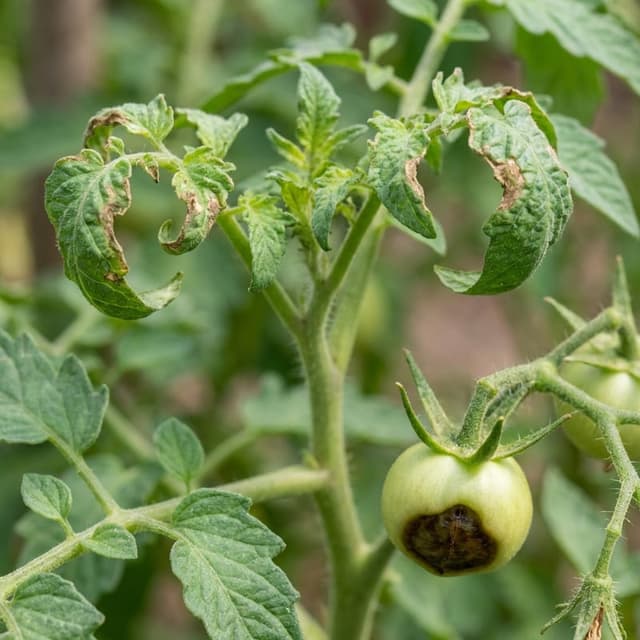
Calcium deficiency is a common plant disorder caused by insufficient bioavailable calcium in the growing medium or, more frequently, by low transpiration rates that prevent proper calcium transport to new growth. It manifests as necrotic leaf margins, curling of young leaves, stunted growth, and in severe cases, conditions like blossom end rot in fruits. The disorder primarily affects rapidly growing tissues where calcium demand is highest.
Slow
14 days
What is Calcium Deficiency?
Calcium Deficiency is a nutrient_deficiency condition with moderate severity that affects plants. Calcium deficiency is a common plant disorder caused by insufficient bioavailable calcium in the growing medium or, more frequently, by low transpiration rates that prevent proper calcium transport to new growth. It manifests as necrotic leaf margins, curling of young leaves, stunted growth, and in...
Calcium Deficiency is a nutrient_deficiency disease with moderate severity that spreads at a slow rate. Recovery typically takes approximately 14 days with proper treatment. It affects 10 plant species in our database.
Unlike many common diseases, Calcium Deficiency is not contagious between plants.
🔍 What Are the Symptoms of Calcium Deficiency?
TLDR: Calcium Deficiency presents 10 main symptoms. Early identification is crucial for effective treatment.
Main Symptoms
- ! Necrotic margins on young leaves
- ! Curling or twisted new growth
- ! Tip burn with brown edges on leaves
- ! Stunted plant growth and reduced height
- ! Death of terminal buds and growing tips
- ! Blossom end rot on tomatoes, peppers, and eggplants
- ! Bitter pit on apples with brown spots
- ! Cavity spot on carrots and root vegetables
- ! Pale or withered appearance of new leaves
- ! Fewer nodes and reduced leaf area
Visual Signs
❓ What Causes Calcium Deficiency in Plants?
- → Insufficient bioavailable calcium in soil or growing medium
- → Low transpiration in affected tissues preventing calcium transport
- → Water shortages impeding nutrient uptake
- → Acidic, sandy, or coarse soils with low calcium content
- → Uneven soil moisture and inconsistent watering
- → Excessive nitrogen fertilization
- → High phosphorus levels making calcium insoluble
- → Magnesium imbalance interfering with calcium uptake
- → Poor root health limiting nutrient absorption
- → High humidity reducing transpiration rates
💊 How to Treat Calcium Deficiency?
TLDR: Treat Calcium Deficiency with 7 days of quick treatment or 14 days of organic treatment. Full recovery takes approximately 14 days.
Quick Fixes
~7 days
Step 1
Mix calcium nitrate solution: 1 teaspoon per gallon of water
Step 2
Apply as foliar spray on affected leaves in early morning or evening
Step 3
Alternatively, use as soil drench around plant base
Step 4
Flush soil with pH-adjusted water (6.5-7.0) to remove salt buildup
Step 5
Apply commercial Cal-Mag supplement following package directions
Step 6
Ensure consistent watering daily to maintain moisture
Step 7
Check for improvement in new growth within 5-7 days
Materials needed:
Organic Treatment
~14 days
Step 1
Test soil pH using a home test kit or digital meter
Step 2
If pH is below 6.5, add dolomitic limestone or crushed eggshells to raise it
Step 3
Mix 2-3 tablespoons of bone meal into the top 2-3 inches of soil around affected plants
Step 4
Water deeply to help nutrients reach root zone
Step 5
Add 1-2 inches of organic compost as mulch to maintain moisture
Step 6
Monitor plants weekly for new healthy growth
Step 7
Repeat bone meal application every 4-6 weeks during growing season
Materials needed:
Expert Treatment
~21 days
Step 1
Conduct comprehensive soil test for pH, calcium, magnesium, and nitrogen levels
Step 2
Calculate exact calcium requirement based on soil test results
Step 3
Correct pH first if below 6.2 using agricultural lime (amount per soil test)
Step 4
Flush root zone with 2-3 times container volume of pH-balanced water to remove antagonistic salts
Step 5
Apply calcium nitrate at 200 ppm nitrogen as soil drench every 5-7 days
Step 6
Supplement with foliar calcium chloride spray (0.5-1%) twice weekly
Step 7
Install drip irrigation or improve watering system for consistent moisture
Step 8
Monitor soil EC (electrical conductivity) to prevent salt buildup
Step 9
Add organic matter to improve cation exchange capacity
Step 10
Retest soil after 2 weeks and adjust treatment protocol
Step 11
Establish long-term calcium maintenance program
Step 12
Document plant response with photos and measurements
Step by Step
- 1
Test soil pH and adjust to 6.5-7.0 range if needed
- 2
Flush growing medium with pH-balanced water to remove excess salts
- 3
Apply calcium-magnesium supplement at 6-7 teaspoons per gallon of soil
- 4
For immediate relief, spray foliage with calcium nitrate solution
- 5
Ensure consistent watering schedule moving forward
- 6
Monitor new growth for signs of recovery over next 1-2 weeks
- 7
Continue calcium supplementation according to product directions
- 8
Retest soil after 2-3 weeks to verify nutrient levels
🧪 Natural vs Chemical: Which Treatment Works for Calcium Deficiency?
🌱 Natural Solutions
- ✓ Add crushed eggshells to soil as slow-release calcium source
- ✓ Apply bone meal to provide organic calcium
- ✓ Use dolomitic limestone to raise pH and add calcium
- ✓ Add gypsum (calcium sulfate) without affecting pH
- ✓ Apply compost tea rich in available nutrients
- ✓ Use fish bone meal for calcium and phosphorus
- ✓ Add wood ash in moderation for alkaline calcium
- ✓ Apply seaweed extracts to improve nutrient uptake
💉 Chemical Solutions
- ✓ Calcium nitrate solution (200 ppm nitrogen) as soil drench or foliar spray
- ✓ Calcium chloride spray for quick foliar absorption
- ✓ Agricultural lime for soil pH correction
- ✓ Calcium-magnesium supplements (Cal-Mag products)
- ✓ Gypsum application for calcium without pH change
- ✓ Chelated calcium for hydroponic systems
Treatment Comparison
| Type | Estimated time | Steps | Difficulty | Best For |
|---|---|---|---|---|
| ⚡Quick | ~7 days | 7 | Advanced | Urgent cases |
| 🌿Organic | ~14 days | 7 | Advanced | Indoor plants |
| 🔬Expert | ~21 days | 12 | Advanced | Severe infections |
🛡️ How to Prevent Calcium Deficiency?
TLDR: Prevent Calcium Deficiency with 10 essential care practices. Regular monitoring is key for early detection.
- ✓ Maintain consistent watering schedule to ensure steady calcium transport
- ✓ Test and adjust soil pH to 6.5-7.0 for optimal calcium availability
- ✓ Avoid excessive nitrogen fertilization during early growth stages
- ✓ Add organic matter like compost or manure to improve soil structure
- ✓ Ensure good drainage to prevent waterlogging
- ✓ Monitor and maintain proper calcium-magnesium balance
- ✓ Irrigate before high temperature periods to prevent stress
- ✓ Improve air circulation in greenhouses to boost transpiration
- ✓ Mulch plants to maintain even soil moisture
- ✓ Avoid root damage when working near plants
🔗Related Diseases
Phosphorus Deficiency
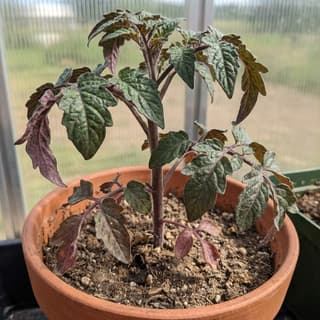
MediumPhosphorus deficiency is a common nutritional problem that hinders healthy plant growth. Phosphorus is essential for root development, flowering, fruiting, and energy metabolism. When deficient, plants exhibit stunted growth and leaves with purple or reddish coloration, especially on older leaves.
Potassium Deficiency
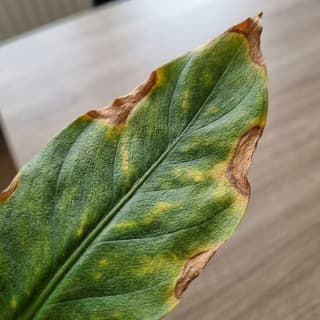
MediumPotassium deficiency is a nutritional disorder that affects a plant's ability to regulate stomatal opening and closing, resulting in characteristic leaf edge burn. Potassium is a mobile nutrient, so symptoms first appear on older, lower leaves.
Iron Deficiency
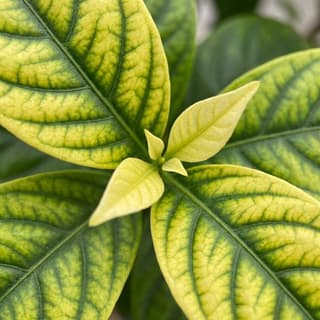
MediumIron deficiency, commonly known as iron chlorosis, is a nutrient deficiency disorder where plants cannot access sufficient iron from the soil. While iron is typically abundant in soil, various soil conditions can limit plant uptake, resulting in characteristic yellowing of leaves while veins remain green.
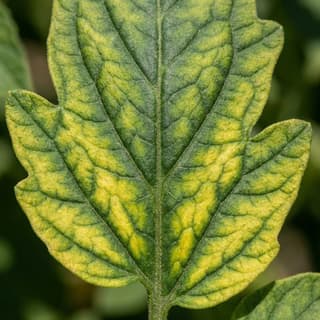
Magnesium Deficiency
MediumMagnesium deficiency is a nutrient disorder characterized by interveinal chlorosis, where leaf tissue between veins turns yellow while the veins remain green. This deficiency affects older leaves first as magnesium is a mobile nutrient that plants relocate to support new growth. Magnesium is essential for chlorophyll production and photosynthesis, making this deficiency critical for plant health.