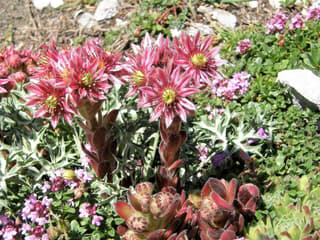
Iberian Houseleek with Curculionidae: Prevention & Cure
Sempervivum vicentei
Curculionidae on Iberian Houseleek: What to Know?
Curculionidae on Iberian Houseleek (Sempervivum vicentei) is a other condition with moderate severity. Iberian Houseleek has moderate susceptibility to this disease. Curculionidae (weevils) are small beetles that feed on plants. Adults chew leaf margins, leaving crescent-shaped notches, primarily at night. The larvae live in the substrate and consume roots, causin...
Iberian Houseleek is a easy-care plant.
🛡️ How to Prevent Curculionidae on Iberian Houseleek?
TLDR: Prevent Curculionidae on Iberian Houseleek with 7 essential preventive care practices.
- ✓ Inspect and, if possible, quarantine any new plants for 2 to 3 weeks.
- ✓ Use high-quality, clean substrate and wash or disinfect pots and tools before reuse.
- ✓ Keep the environment clear by removing plant debris and stacked wood that serve as shelter.
- ✓ Adjust watering and avoid waterlogging, which exacerbates damage to weakened roots.
- ✓ Place adhesive bands in spring and summer if you had issues the previous year.
- ✓ Apply nematodes preventatively in late summer or autumn in pots and flowerbeds with a history of weevils.
- ✓ Regularly check leaf margins, as early detection of notches facilitates control.
🌱 How to Care for Iberian Houseleek to Prevent Curculionidae?
💧 How to Water
Water thoroughly only when the soil has dried out completely, roughly every 2 weeks in warm dry weather for plants in pots, and much less in cool weather. Plants in the ground usually manage on rainfall. Keep it on the dry side in winter and never let the pot stand in water: soft, translucent or rotting rosettes are a sign of too much water.
☀️ Lighting
Give it full sun, ideally in an east, south or west-facing spot. Strong light keeps the rosettes compact and brings out the purple leaf tips; in shade they stretch, turn plain green and flower poorly. It is not a good indoor plant, as it needs bright outdoor light and a cold winter rest.
🪴 Ideal Soil
Use poor to moderately fertile, sharply drained soil: sandy, loamy or chalky ground all work, whatever the pH. In containers, mix equal parts loam-based, peat-free potting compost and grit, and top-dress with gravel so the rosettes sit dry.