Curculionidae: How to Identify & Treat Fast
Curculionidae (weevils) are small beetles that feed on plants. Adults chew leaf margins, leaving crescent-shaped notches, primarily at night. The larvae live in the substrate and consume roots, causing decline, yellowing, and wilting even when the substrate is moist, and in severe cases, plant death. They frequently affect ornamentals and garden plants such as strawberries, citrus, roses, hydrangeas, azaleas, blueberries, begonias, and many potted plants.
What is Curculionidae?
Curculionidae is a other condition with moderate severity that affects plants. Curculionidae (weevils) are small beetles that feed on plants. Adults chew leaf margins, leaving crescent-shaped notches, primarily at night. The larvae live in the substrate and consume roots, causing decline, yellowing, and wilting even when the substrate is moist, and in severe cases, plant death...
Curculionidae is a other disease with moderate severity. It affects 3 plant species in our database.
Unlike many common diseases, Curculionidae is not contagious between plants.
🧪 Natural vs Chemical: Which Treatment Works for Curculionidae?
🌱 Natural Solutions
- ✓ Perform nighttime inspections and manually remove adults using a flashlight, gently shaking the plant over a cloth or tray and disposing of the adults.
- ✓ Install traps and barriers by placing adhesive bands on trunks and pots to stop climbing, corrugated cardboard strips at the base as trap shelters, and trap pots with moist substrate near affected plants.
- ✓ Maintain the crop by removing fallen leaves and weeds, improving drainage and substrate aeration, and avoiding overwatering.
- ✓ If larvae are suspected, unpot the plant, wash the roots with water, remove visible larvae, and repot in new, clean substrate, disinfecting reused pots.
- ✓ Apply beneficial nematodes via irrigation according to substrate temperature, using Steinernema kraussei at 5 to 15 °C (41 to 59 °F) and Heterorhabditis bacteriophora at 12 to 25 °C (54 to 77 °F) to control larvae.
- ✓ Apply products containing Beauveria bassiana targeting adults and sheltering areas.
- ✓ Apply horticultural-grade diatomaceous earth to pot rims and entry points, keeping it dry.
💉 Chemical Solutions
- ✓ Use azadirachtin (neem) as a growth regulator in irrigation or targeted foliar applications as a supplement and only if necessary.
- ✓ Apply spinosad to active adults at dusk as a supplement and only if necessary.
- ✓ Use naturally derived pyrethrins as a spot shock treatment as a supplement and only if necessary.
- ✓ Avoid treating open flowers to protect pollinators.
- ✓ Indoors, prioritize non-chemical methods.
🛡️ How to Prevent Curculionidae?
TLDR: Prevent Curculionidae with 7 essential care practices. Regular monitoring is key for early detection.
- ✓ Inspect and, if possible, quarantine any new plants for 2 to 3 weeks.
- ✓ Use high-quality, clean substrate and wash or disinfect pots and tools before reuse.
- ✓ Keep the environment clear by removing plant debris and stacked wood that serve as shelter.
- ✓ Adjust watering and avoid waterlogging, which exacerbates damage to weakened roots.
- ✓ Place adhesive bands in spring and summer if you had issues the previous year.
- ✓ Apply nematodes preventatively in late summer or autumn in pots and flowerbeds with a history of weevils.
- ✓ Regularly check leaf margins, as early detection of notches facilitates control.
🔗Related Diseases
Mosaic Virus
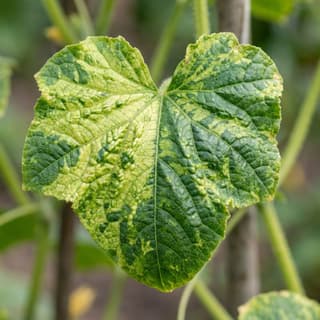
Potyviruses (family Potyviridae, genus Potyvirus) are plant viruses transmitted primarily by aphids during feeding and mechanically through sap. They cause mosaic patterns (light and dark patches) on leaves, leaf curling and distortion, vein clearing, leaf blistering, stunting, and in vegetables and fruits, streaks and discoloration. In potatoes (Potato virus Y), necrotic spots on leaves and ringspots on tubers may occur; in cucurbits (e.g., Zucchini yellow mosaic virus), distinct mosaic and deformations of leaves and fruit; in peppers, streaks and spots on fruit; in brassicas (Turnip mosaic virus), mosaic and stunted growth; and in plums, Sharka (plum pox) causing spots and fruit distortion. Infection can also be introduced via seeds, seedlings, tubers, scions, and host weeds. Unfortunately, infected plants cannot be cured.
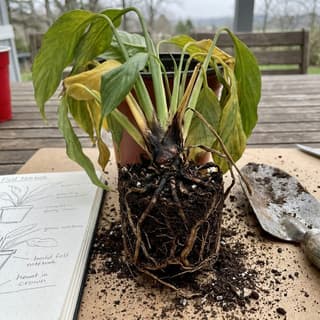
Phytophthora Root Rot
The Phytophthora genus consists of soil-borne oomycetes (water molds) that act as plant pathogens, primarily affecting trees and woody plants. It typically spreads through the root system, leading to systemic decline and eventual plant collapse.
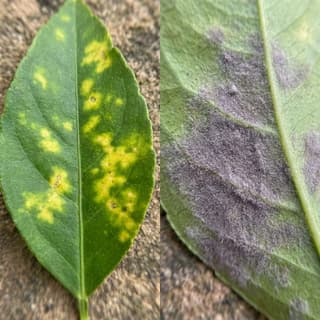
Downy Mildew
Pseudoperonospora is a genus of pathogens causing what is known as downy mildew. These are moisture-loving 'molds' from the kingdom Chromista that primarily attack leaves. Angular yellow spots appear between the veins on the upper side of the leaves, while a grayish-purple coating forms on the underside in humid conditions. The leaves turn brown, dry out, and the plant weakens. It most commonly affects cucumbers and other cucurbits (zucchini, pumpkins, melons) and, in our region, hops. It spreads via wind and rain and thrives during prolonged humidity, dew, cooler nights, and in stuffy greenhouses.
Annual Bluegrass (Poa annua)
MediumAnnual bluegrass is a common lawn weed that rapidly outcompetes desirable grass species. It is characterized by its lighter color, shallow root system, and prolific seed production even under low mowing heights. It is highly resilient and spreads quickly.