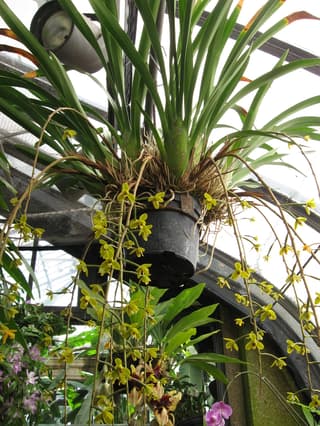
Giant Boat-lip Orchid with Orchid fleck virus? Rare but Treatable
Cymbidium madidum
Orchid fleck virus on Giant Boat-lip Orchid: What to Know?
Orchid fleck virus on Giant Boat-lip Orchid (Cymbidium madidum) is a viral condition with high severity. Giant Boat-lip Orchid has low susceptibility to this disease. Orchid fleck virus (OFV) is a rhabdovirus that causes characteristic chlorotic or necrotic spots on orchid leaves. The virus is transmitted by tiny mites, and unfortunately, infected plants cannot be...
Giant Boat-lip Orchid is a medium-care plant. Recovery from Orchid fleck virus takes approximately 30 days with proper treatment. As an indoor plant, ensure good ventilation to aid recovery.
Unlike most plants, Giant Boat-lip Orchid has natural resistance to Orchid fleck virus. Best treated with preventive measures rather than reactive treatment.
🔍 What Does Orchid fleck virus Look Like on Giant Boat-lip Orchid?
- • Small, yellowish or whitish spots on the leaves
- • Elongated, necrotic brown streaks
- • Premature leaf drop
- • Stunted growth and distorted flowers
❓ What Causes Orchid fleck virus on Giant Boat-lip Orchid?
- → Infection via Brevipalpus mites
- → Use of contaminated cutting tools
- → Introduction of a new, diseased plant into the collection
🛡️ How to Prevent Orchid fleck virus on Giant Boat-lip Orchid?
TLDR: Prevent Orchid fleck virus on Giant Boat-lip Orchid with 4 essential preventive care practices.
- ✓ Always disinfect shears before use
- ✓ Keep spider mites and other pests away
- ✓ Quarantine new plants for at least one month
- ✓ Regularly inspect the undersides of leaves
🌱 How to Care for Giant Boat-lip Orchid to Prevent Orchid fleck virus?
💧 How to Water
Water heavily in spring and summer, as soon as the mix is close to dry. In winter, water less and in the morning, and let the mix dry a little more between waterings without leaving it dry for long.
☀️ Lighting
Bright, filtered light, with no direct afternoon sun. Yellowish-green leaves mean the light is right. Very dark leaves and no flowers mean too little light.
🪴 Ideal Soil
Coarse orchid bark that dries quickly, optionally mixed with perlite, charcoal or chopped sphagnum. The roots must never sit in soggy mix.