
Common lime with Phytophthora Root Rot: Prevention & Cure
Tilia × europaea
Phytophthora Root Rot on Common lime: What to Know?
Phytophthora Root Rot on Common lime (Tilia × europaea) is a fungal condition with high severity. Common lime has moderate susceptibility to this disease. Disease caused by fungus-like organisms (oomycetes) that live in soil and can survive for years. It affects roots, stem, and crown of plants, being especially severe in waterlogged or poorly drained s...
Common lime is a easy-care plant. Recovery from Phytophthora Root Rot takes approximately 45 days with proper treatment.
Unlike bacterial infections, Phytophthora Root Rot on Common lime can be managed with organic fungicides.
🔍 What Does Phytophthora Root Rot Look Like on Common lime?
- • Leaf wilting despite moist soil
- • Yellowing or discolored foliage (dull green, yellow, red, purplish)
- • Sparse foliage and progressive branch dieback
- • Gradual color decline in conifers (vibrant green → dull green → gray → brown)
- • Darkened bark around crown and upper roots
- • Reddish-brown streaks in inner bark and outer wood layer
- • Dark sap or gum oozing from diseased trunk areas
- • Water-soaked spots turning brown on stems
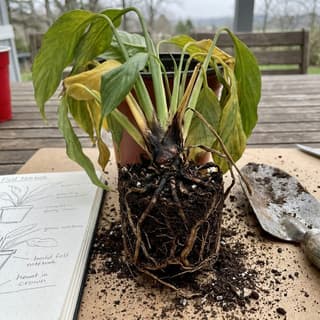
- • Poor root system with blackened, soft roots that break easily
- • Inverted V-shaped discoloration pattern at stem base
❓ What Causes Phytophthora Root Rot on Common lime?
- → Heavy, compacted, or waterlogged soil
- → Inadequate drainage and standing water around base
- → Prolonged over-irrigation
- → Planting too deep or covering plant crown
- → Soil saturation for 4-8 hours (sufficient for infection)
- → Warm/mild temperatures combined with moist soil
- → Movement of contaminated soil, water, or plants
- → Un-sanitized tools and equipment
- → Purchase of infected nursery stock
💊 How to Treat Phytophthora Root Rot on Common lime?
TLDR: Treat Phytophthora Root Rot on Common lime with quick treatment (~23 days) or organic (~45 days). Common lime has moderate susceptibility to this disease.
Quick Fixes
Expose plant base by removing soil to main roots
Allow area to dry completely
Apply phosphorous acid-based systemic fungicide as foliar spray
Products like fosetyl-al (Aliette)
Apply mefenoxam to soil around base
Follow label dosage
Fix irrigation system to avoid wetting trunk
Adjust sprinklers and drip emitters
Reapply foliar fungicide after 2-3 weeks
During active growth period
Monitor symptoms weekly
Observe progression or stabilization
Organic Treatment
Expose plant base by removing soil down to main roots
Allow crown tissue to air-dry completely
Improve drainage by creating mound or installing drainage system
Raise planting area 8-12 inches for trees
Apply composted hardwood bark and gypsum around base
Use 15-25 lbs gypsum per 100 sq ft
Add fresh tree chip mulch
Promotes beneficial Phytophthora-suppressive organisms
Apply biological product with Trichoderma spp.
Follow manufacturer instructions
Adjust irrigation to water only at dripline
Never wet trunk or base
Monitor recovery weekly
Observe new foliage and vigor
🛡️ How to Prevent Phytophthora Root Rot on Common lime?
TLDR: Prevent Phytophthora Root Rot on Common lime with 14 essential preventive care practices.
- ✓ Significantly improve soil drainage before planting
- ✓ Plant on raised mounds (8-12 inches for trees, 8-10 inches for shrubs)
- ✓ Avoid prolonged soil saturation; allow top layer to dry between waterings
- ✓ Never plant deeper than nursery depth; do not cover graft union
- ✓ Adjust sprinklers to avoid wetting trunk; position drip emitters away from base
- ✓ Avoid volcano mulching around stem
- ✓ Select certified stock and resistant varieties
- ✓ Inspect root system before purchase; avoid severely pot-bound plants
- ✓ Do not install irrigated turf around tree bases
- ✓ Break through compacted soil layers (hardpan) before planting
- ✓ Group plants by irrigation needs
- ✓ Avoid replanting susceptible species for 1-2 seasons after infection
- ✓ Redirect drainage water away from healthy plants
- ✓ Clean tools and equipment regularly
🌱 How to Care for Common lime to Prevent Phytophthora Root Rot?
💧 How to Water
Provide young, newly planted limes with regular deep watering during their first two growing seasons, especially during dry spells. Once established, the tree can tolerate temporary drought well; however, persistently wet, compacted soil should be avoided.
☀️ Lighting
The Common lime grows best in full sun to partial shade. In full sun, the tree develops the compact, dome-shaped crown it is known for; in the shade, it grows more sparsely and tends to reach toward the light.
🪴 Ideal Soil
Almost any soil type is suitable, from sandy to loamy and clay soils, as long as the ground is fertile and well-drained. A pH between 4.5 and 7.5 is well tolerated. Avoid permanently wet, oxygen-poor soil.
Frequently asked questions
Can Phytophthora Root Rot kill my Common lime?
How long does Common lime take to recover from Phytophthora Root Rot?
Is Phytophthora Root Rot contagious to other plants near Common lime?
Sources & References
- Phytophthora Root Rot: Prevention Guide | RHS
- Phytophthora Root and Crown Rot | UC IPM
- Phytophthora Root and Crown Rot in the Landscape | NC State
- Diagnosis and Management of Phytophthora Diseases | PNW Pest Mgmt
- Tilia x europaea | common lime - RHS
- Tilia x europaea - BBC Gardeners World Magazine
- Tilia x europaea Care Guide - ForwardPlant
- Tilia x europaea - Plants For A Future
- Tilia europaea - Hollandse linde - Plantr.nl