Malvaceae
Common lime: Aromatic Plant
Tilia × europaea
The Common lime is a robust, hardy tree that requires little maintenance once established. Plant it in a sunny to partially shaded spot in fertile, moist but well-drained soil. Water young trees regularly until they are fully rooted; mature specimens are reasonably drought-tolerant. Annual pruning during winter dormancy keeps the shape and size under control, especially for pleached trees.
Every 14 days
Bright indirect
-30° - 35°C
% - %
Categories
What is Common lime?
Common lime (Tilia × europaea) is a easy-care plant from the Malvaceae family. The Common lime (Tilia x europaea) is a large, deciduous hybrid between the large-leaved lime and the small-leaved lime. This stately tree can reach heights of up to 35 meters and features a broad, dome-shaped canopy of heart-shaped leaves. In July, the tree bears clusters of small, yellowish flower...
Common lime grows up to 35.0m, spread of 1500cm, watering every 14 days, -30°C – 35°C. It is not suitable for indoor environments and safe for pets.
Unlike many tropical plants, Common lime tolerates watering mistakes. Best for beginners. Unlike many popular species, Common lime is safe to keep around pets.
How to Care for Common lime?
TLDR: Common lime needs Bright indirect, watering every 14 days, and temperatures between -30-35°C with 40-70% humidity.
How Often Should You Water Common lime?
Provide young, newly planted limes with regular deep watering during their first two growing seasons, especially during dry spells. Once established, the tree can tolerate temporary drought well; however, persistently wet, compacted soil should be avoided.
How Much Light Does Common lime Need?
The Common lime grows best in full sun to partial shade. In full sun, the tree develops the compact, dome-shaped crown it is known for; in the shade, it grows more sparsely and tends to reach toward the light.
What Is the Best Soil for Common lime?
Almost any soil type is suitable, from sandy to loamy and clay soils, as long as the ground is fertile and well-drained. A pH between 4.5 and 7.5 is well tolerated. Avoid permanently wet, oxygen-poor soil.
What Pot Should You Use for Common lime?
The Common lime is typically planted in open ground due to its ultimate size and is not suitable as a houseplant. For temporary cultivation in a pot (for example, as a young pleached tree), a sturdy, wide tub with drainage holes and a neutral, nutrient-rich potting soil is recommended; transplant to the open ground as soon as the tree becomes too large for the pot.
What Is Common lime and Where Does It Come From?
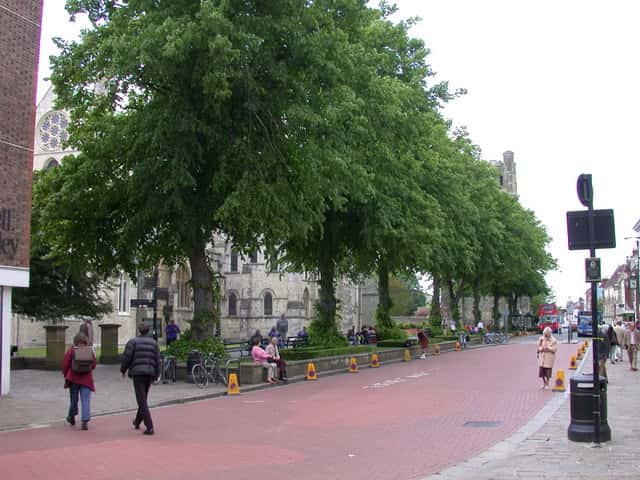
The Common lime (Tilia x europaea) is a large, deciduous hybrid between the large-leaved lime and the small-leaved lime. This stately tree can reach heights of up to 35 meters and features a broad, dome-shaped canopy of heart-shaped leaves. In July, the tree bears clusters of small, yellowish flowers with a sweet, honey-like fragrance that attracts bees and other insects. Traditionally, the lime tree has been widely planted in the Netherlands along avenues, in squares, and as a village tree, symbolizing community and protection.
How to Propagate Common lime?
How Big Does Common lime Grow?
TLDR: Common lime can reach up to 35.0m tall with Medium growth rate.
Max height
35.0m
Spread
15.0m
Growth rate
Medium
Foliage
Deciduous
Plant Uses
Ornamental
Great for decoration
Medicinal
Medicinal properties
Aromatic
Pleasant fragrance
Edible
Can be consumed
Medicinal Uses
- Linden flower tea is traditionally used for colds, flu, and coughs due to its diaphoretic and expectorant properties
- The tea has a calming, mildly sedative effect and is used for nervousness and insomnia
- Linden blossom is used to support digestion and for mild hypertension
- Charcoal from linden wood was formerly used for stomach complaints and burns
Culinary Uses
- Young, mild leaves can be used raw in salads
- Linden blossoms are dried to make a fragrant herbal tea with a honey-like flavor
- The tree's sap can be drunk or boiled down into a natural syrup
Is your plant showing symptoms?
Click on the symptom to discover possible causes:
What Diseases Commonly Affect Common lime?
TLDR: Common lime is susceptible to 7 known diseases. Monitor regularly for early detection.
Aphids
Aphids are small, soft-bodied, pear-shaped insects (1/16 to 1/8 inch long) that feed by sucking nutrient-rich sap from plants. They reproduce rapidly and can quickly weaken plants, causing distorted growth and transmitting plant viruses. Aphids come in various colors including green, black, red, yellow, brown, and gray. They secrete honeydew, a sticky substance that attracts ants and encourages sooty mold growth.
Sooty Mold
Sooty mold is a fungal disease that develops on surfaces coated with honeydew, a sticky sweet substance secreted by sap-sucking insects like aphids, scale insects, and whiteflies. While it does not directly infect plant tissue, it reduces photosynthetic capacity by blocking sunlight and diminishes the plant's aesthetic appearance.
Phytophthora Root Rot
Disease caused by fungus-like organisms (oomycetes) that live in soil and can survive for years. It affects roots, stem, and crown of plants, being especially severe in waterlogged or poorly drained soils. It is the second most common cause of root rot in trees and shrubs.
Verticillium Wilt
Verticillium wilt is a soil-borne fungal disease caused primarily by the fungi Verticillium dahliae and V. albo-atrum. These pathogens infect plant roots and grow within the vascular tissues, blocking water and nutrient transport, resulting in wilting and eventual plant death. The disease affects over 350 plant species including vegetables, fruits, ornamental flowers, and trees. The fungi can survive in soil for more than 10 years as resistant structures called microsclerotia.
Meaning & Symbolism
For centuries in Europe, the lime tree has been a symbol of love, friendship, and community: village limes served as meeting places and sometimes even as 'justice trees' where legal matters were settled under the canopy. The tree also represents protection and peace, and its fragrant blossoms are associated with comfort and healing.
Compare with similar plants
| Attribute | Difficulty | Light | Watering | Pet Safe |
|---|---|---|---|---|
| Field Maple | Easy | Bright indirect | 14d | ✓ |
| Silver Birch | Easy | Direct sun | 14d | ✓ |
| Common Blanketflower | Easy | Direct sun | 10d | ✓ |
| Cushion Bush | Easy | Direct sun | 14d | ✓ |





