Soybean with Pythium Root Rot: Prevention & Cure
Glycine max
Pythium Root Rot on Soybean: What to Know?
Pythium Root Rot on Soybean (Glycine max) is a fungal condition with high severity. Soybean has moderate susceptibility to this disease. Pythium root rot is a serious fungal disease caused by various Pythium species including P. aphanidermatum, P. ultimum, and P. irregulare. These water molds are present in practically all cultivated s...
Soybean is a medium-care plant. Recovery from Pythium Root Rot takes approximately 14 days with proper treatment.
Unlike bacterial infections, Pythium Root Rot on Soybean can be managed with organic fungicides.
🔍 What Does Pythium Root Rot Look Like on Soybean?
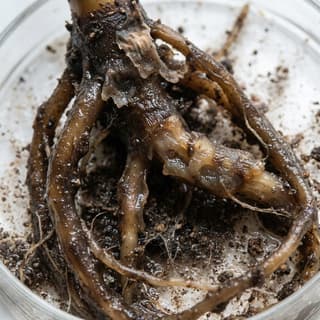
- • Dark brown to black wet rot of roots
- • Roots soften and disintegrate easily
- • Outer cortical tissue pulls off easily exposing vascular strand
- • Brown and dead root tips
- • Stunted growth and undersized plants
- • Wilting during the day with recovery at night
- • Progressive yellowing of leaves
- • Plant collapse and death in severe cases
- • Crown may turn brown-black with soft rot
❓ What Causes Pythium Root Rot on Soybean?
- → Infection by Pythium species (P. aphanidermatum, P. ultimum, P. irregulare)
- → Soil moisture above 70% of available water capacity
- → Poor drainage and waterlogged substrate
- → Overwatering or too frequent irrigation
- → Favorable temperatures (above 77°F for P. aphanidermatum, lower temperatures for other species)
- → Use of non-pasteurized or contaminated substrate
- → Contaminated pots, tools, and surfaces
- → Spread through contaminated irrigation water
- → Transmission by fungus gnats and shore flies
- → Excessive levels of ammonium or soluble salts in substrate
💊 How to Treat Pythium Root Rot on Soybean?
TLDR: Treat Pythium Root Rot on Soybean with quick treatment (~7 days) or organic (~14 days). Soybean has moderate susceptibility to this disease.
Quick Fixes
Step 1
Step 2
Step 3
Step 4
Step 5
Step 6
Organic Treatment
Step 1
Step 2
Step 3
Step 4
Step 5
Step 6
Step 7
🛡️ How to Prevent Pythium Root Rot on Soybean?
TLDR: Prevent Pythium Root Rot on Soybean with 10 essential preventive care practices.
- ✓ Use well-drained substrate with adequate air pore space
- ✓ Pasteurize or solarize substrate before use (140°F for 30 min)
- ✓ Avoid overwatering and maintain good water management
- ✓ Ensure proper drainage in pots and beds
- ✓ Inspect roots of new plant material before introducing to collection
- ✓ Keep pots, tools, and growing areas clean and disinfected
- ✓ Keep irrigation hose ends elevated off the ground
- ✓ Avoid excessive levels of ammonium and soluble salts in substrate
- ✓ Use substrate with at least 20% composted pine bark
- ✓ Control fungus gnats that can transmit spores
🌱 How to Care for Soybean to Prevent Pythium Root Rot?
💧 How to Water
Consistent soil moisture is crucial during the growing season. Short-term wetness is tolerated, but prolonged waterlogging leads to root rot. Adjust irrigation based on weather conditions and soil type.
☀️ Lighting
Soybeans need full direct sun (at least 6-8 hours daily). As a short-day plant, flowering is promoted by shorter day lengths; long days delay it.
🪴 Ideal Soil
Loose, nutrient-rich loamy soils with a pH of 6.0-7.5 and good drainage are ideal. Compacted or poorly drained soils encourage diseases.