How Often to Water Sunflowers: Pots, Beds, and Every Stage
In a garden bed, sunflowers need one deep soak a week when it does not rain, with extra care from bud to bloom's end. In pots, soil dries faster and needs daily checking in the heat. Here is how to water each stage, measure rain, and help a wilted sunflower.
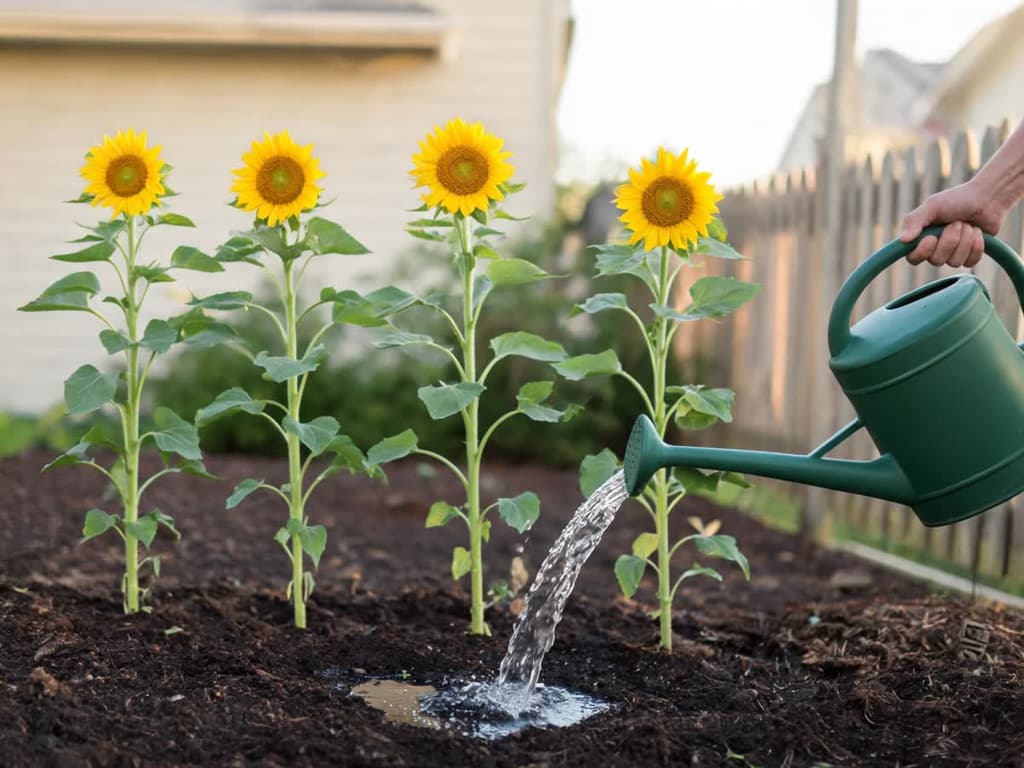
How often to water a sunflower depends on where it grows and which stage it is in. In a garden bed, one deep soaking a week is plenty when it does not rain, and the soil must not dry out from the bud stage through the end of blooming. In a pot, the soil dries out much faster: check it daily during hot spells and water whenever the top inches feel dry.
The sunflower (Helianthus annuus) is an annual plant: it germinates, flowers, sets seed, and dies within a few months. Because of this, its watering needs change from stage to stage, and the flowering period is the most critical.
Quick summary:
From sowing until the seedling emerges, keep the soil moist without making it soggy.
During the vegetative stage, water deeply and infrequently. The root grows down chasing moisture.
From bud formation to the end of blooming, do not let the soil dry out. According to Embrapa, water stress hits hardest during this stage, producing lighter seeds.
In a garden bed, the benchmark is roughly 25 liters per square meter per week, including rainfall.
In a pot, poke your finger into the soil every day during hot weather and water when the top 2 to 3 cm are dry.
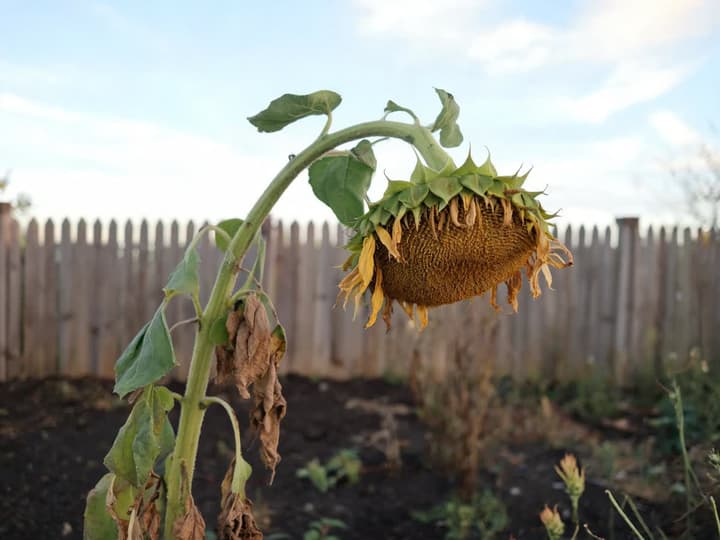
A flower head (the sunflower "head") pointing downward with a yellowish-brown back means mature seeds. It is not a sign of thirst.
How Often to Water Sunflowers
A sunflower planted in the ground needs about 2.5 cm of water per week, including rainfall. That is the recommendation from the West Virginia University Extension, which translates to one deep soak a week during weeks without rain. In liters, 2.5 cm of water over 1 square meter is roughly 25 liters.
For pots, there is no number in days measured by any university. The Oregon State University Extension only states that potted plants need more frequent watering than garden beds. The soil is what decides: in hot weather, potting soil can dry out from one day to the next.
Advice on watering sunflowers ranges from "water every day" to "water once a week." The cereal brand Nestlé tells growers to water every morning and again in the evening on hot days. The US nursery Plant Addicts recommends 2.5 cm per week. Both figures address entirely different situations: daily watering is meant for seeds and small seedlings, while weekly watering suits plants with established roots in the ground.
Sunflower water needs change with each growth stage
A sunflower's water demand climbs from sowing until blooming, then tapers off at the end of its cycle. According to Embrapa, 500 to 700 mm of water distributed evenly across the entire cycle yields near-maximum production. This total includes rainfall, and much of it arrives on its own for anyone planting during the rainy season.
Stage | What is happening | How to water |
|---|---|---|
Sowing until seedling emergence | The seed needs moist soil to germinate | Keep soil moist every day, without puddles. Water gently with a fine-rose watering can |
First few weeks | The root system is still shallow | Keep the top inches moist. Water whenever the surface dries out |
Vegetative growth until bud stage | The taproot drives deep | Deep, spaced-out watering: about 25 liters per square meter per week, including rainfall |
From bud to the end of blooming | Critical stage: water deficits here hurt the most | Never let the soil dry out. Check every 2 to 3 days in garden beds and daily in pots |
Seed fill until the flower head dries | The plant completes its life cycle | Keep watering until the seeds harden. After that, stop |
Oregon State University sums up the first stage like this: sow seeds about 2.5 cm deep and keep the soil moist until they germinate.
Embrapa describes the sunflower root as a taproot, a primary root that grows straight down in search of deep moisture. When the topsoil stays constantly wet, the roots remain concentrated in the upper 40 cm. When moisture is leaner during early growth, the taproot plunges deeper, allowing the plant to better withstand drought later on.
From bud to bloom's end: the stage where water shortages hit hardest
The sunflower's most critical stage begins 10 to 15 days before the flower opens. It ends 10 to 15 days after the end of flowering. This data comes from Embrapa Meio-Norte, in Technical Circular 48, on sunflower management. Because the flower takes 10 to 15 days to open completely, the window totals about 30 to 45 days.
North Dakota State University reaches the same conclusion for irrigated crops. Agronomist Hans Kandel writes this in the guide Irrigated Sunflowers. According to him, a lack of water between flowering and maturity harms yields more than at any other stage. Embrapa adds the effect that home gardeners see: drought after flowering causes leaves to die prematurely and leaves seeds lighter.
The Australian florist Floraly claims the opposite, suggesting that once the bud opens, watering once a week is sufficient. This guide sides with Embrapa and North Dakota State University, as their recommendations rely on measured agronomic field trials, whereas Floraly cites no sources.
Once you spot the closed flower bud at the tip of the stem, start checking your garden soil every 2 to 3 days. If the top 5 cm feel dry and no rain has fallen, provide a deep soak that same day.
Sunflowers in garden beds: deep, spaced-out watering
In outdoor garden beds, a single deep soaking each week works much better than a splash of water every day. Light watering moistens only the surface, encouraging shallow rooting. Plant Addicts nursery recommends soaking the soil down to a depth of roughly 15 cm with each watering.
To tell whether rainfall met your plant's weekly requirement, set a straight-sided container in the garden bed, such as an empty tuna can. If the water inside exceeds 2.5 cm over the week, the rain did the job. If it falls short, make up the difference with a watering can or garden hose.
Water at the base of the plant around the stem rather than overhead onto the foliage. Morning is the ideal time: any leaves splashed accidentally have the whole day to dry. The US floral company FTD recommends watering the root zone 8 to 10 cm away from the stem.
In Brazil, anyone who sows now, at the beginning of spring (which starts on September 22), sees the flower in summer. Summer is the rainy season across much of the country, and many weeks pass without needing any watering at all. In the northern hemisphere, North Carolina State University extension records blooming from July through October.
Potted sunflowers
A potted sunflower needs more frequent watering than one in a garden bed, because the small amount of soil in the pot dries out quickly in full sun. Oregon State University Extension recommends dwarf sunflowers up to about 90 cm tall for containers. The container must be at least the size of a 19-liter bucket, with holes in the bottom.
Dwarf sunflowers sold in full bloom at supermarkets or garden centers follow the identical rule, with even less room for error. The small container holds very little moisture, and the plant is already in its critical stage with open blooms. In hot weather, these pots can dry out completely from one day to the next.
How to water a sunflower in a pot:
Insert your finger into the potting mix up past the first knuckle every day.
If the top 2 to 3 cm are dry, pour water slowly until it drains freely from the bottom holes.
Wait 10 minutes, then discard any runoff remaining in the saucer.
If the soil still feels moist, do not water; check it again the following day.
The finger test is the same one used for the peace lily, but the outcome is different. Sunflowers grow in full sun, and their pot dries out much faster than that of a shade plant indoors.
How to tell when your sunflower needs water
The soil signals the need for water well before the leaves do. In a garden bed, dig down about 5 cm with your finger or a trowel: dry, crumbly soil at that depth means it is time to soak. In a pot, testing the top 2 to 3 cm is enough since the entire soil volume is shallow.
Drooping leaves combined with dry soil point to underwatering. When that happens, give the plant a deep drink right away and verify the next day whether the leaves have perked back up. Drooping leaves paired with moist soil mean something else entirely, and the next section breaks down the causes.
Wilted sunflowers: underwatering, basal disease, or end of cycle
A wilted sunflower may be thirsty, suffering from a stem-base infection, or simply bowing under the weight of mature seeds. Before you grab the hose, inspect the soil, the base of the stem, and the back of the flower head.
What you see | What it is | What to do |
|---|---|---|
Drooping leaves, dry and hard soil | Underwatering | Soak thoroughly now and check the soil again tomorrow |
Drooping leaves that stay limp after watering, black stem base, or white mold | Root rot or collar rot (at the base of the stem, level with the soil) | Do not water more to compensate. Allow the soil to dry out slightly between waterings |
Flower head turned downward, yellow-brown back, shedding petals | Mature seeds | Not a watering issue. Harvest the seeds or leave the head for wild birds |
University of Georgia Extension describes ripening this way in its backyard sunflower guide: the back of the flower head turns from green to yellow-brown, and the head droops downward. More water at this stage will not lift the flower back up.
Embrapa describes two diseases at the base of the sunflower. One darkens the base of the stem and the roots, which turn black and brittle, favored by heat and lack of water. The other forms white mold at the plant's crown and appears in heat and high humidity. According to Embrapa, plants severely affected by either one wilt and die. The same circular recommends growing sunflowers in well-draining soil that does not become waterlogged.
If you return from a trip to find a wilted sunflower, follow this checklist. Dry soil: soak it deeply immediately. Moist soil: skip watering and examine the base of the stem. For symptoms that do not fit into the table, the guide what is wrong with my plant helps troubleshoot issues by leaf appearance.
Dry lower leaves on potted sunflowers
Dry, brittle lower leaves on a potted sunflower usually stem from three common issues. They can also appear at the same time.
The first is potting mix drying out in the heat. Oregon State University Extension reports that direct sun scorches sunflower foliage: first producing light or yellow patches that turn brown later on. Their recommendation is to never let plants suffer water stress during heatwaves. For potted plants, that means testing the soil every day and watering whenever the top 2 to 3 cm dry out.
The second cause is the natural end of the plant's life cycle. Sunflowers are annuals, and the oldest leaves at the base die off first. According to Embrapa, water stress following bloom accelerates this leaf loss.
The third culprit is fungal disease. Powdery mildew is a fungus that coats foliage in a white powder. According to the University of Georgia, both powdery mildew and downy mildew, another leaf-spotting disease, attack the sunflower's oldest foliage first. Leaves with powdery white dust or spots do not point to a watering mistake. When in doubt, snapping a picture in the Bloom app identifies the infection (photo diagnosis is included with the Premium subscription, iOS only).
A leaf that has already dried out will not turn green again. The general rule for yellow leaves also applies to sunflowers: you can cut off the dry leaf, and what matters is that new leaves come out green.
Sunflowers die after blooming: it is the natural annual life cycle
The common sunflower dies after setting seed, and this is not a watering mistake. North Carolina State University describes it as an annual plant that does not survive the winter. The University of Florida calls it a short-lived annual: in Florida, it blooms in mid-spring and declines rapidly in the heat.
West Virginia University Extension calculates 85 to 95 days from sowing to maturity for most varieties. In Brazil, sown in late September, the sunflower matures around late December or early January.
To enjoy continuous flowers for a longer stretch, sow fresh batches every two to three weeks, as recommended by the same extension service. Seeds gathered from dried heads can also be saved for the next planting. The exception, according to Oregon State University, involves hybrid varieties, whose saved seeds often fail to germinate.
Frequently asked questions
Can I water my sunflower every day?
Yes, during sowing and the first few weeks when the soil needs continuous moisture. In a garden bed, once the plant gets established, daily watering moistens only the surface and fosters shallow roots. In a container, daily watering is appropriate only when your finger confirms the soil is dry every day, which happens often during hot weather.
How long can sunflowers go without water?
In a garden bed, an established sunflower tolerates drought far better than a container plant. North Dakota State University notes that in Texas trials, rainfall or irrigation every 14 days was sufficient for maximum seed yields. That schedule applies to plants with deep root systems anchored in garden soil; from bud stage through the end of blooming, check soil every 2 to 3 days. For pots, no measured duration exists, and hot weather can dry container soil from one day to the next.
Can I water sunflowers at night?
Yes, but morning is preferable. Wet evening foliage stays damp for hours, and high humidity fosters fungal problems like powdery mildew and white mold. If an evening watering is your only option, apply water strictly to the soil around the base of the plant.
Do sunflowers grow better in pots or in the ground?
In the ground, because their deep taproot can reach down and locate moisture on its own. In pots, root expansion is restricted, leaving the plant entirely dependent on you for daily water. If growing in pots, pick a dwarf variety that reaches up to about 90 cm and use a container holding at least 19 liters.
Before your next sunflower watering
Before reaching for the watering can, push your finger into the soil: 5 cm deep in garden beds, 2 to 3 cm in pots. If the soil feels dry and the plant is between the bud stage and the end of flowering, give it a deep drink today.
Related articles
How to Care for a Maidenhair Fern: Light, Water, and Revival Tips
Learn how to care for a maidenhair fern indoors: bright indirect light, consistently moist soil, high humidity, and how to revive it if it dries out completely.
How to Propagate Spider Plants: Root the Pup Before Cutting
The safest spider plant cutting comes from a pup still attached to the mother plant: rest the plantlet on soil in a small pot, wait for roots to establish, and only then cut the stolon. Learn when the pup is ready, whether rooting in water is worth it, how to divide the clump, and why plants fail to produce babies.
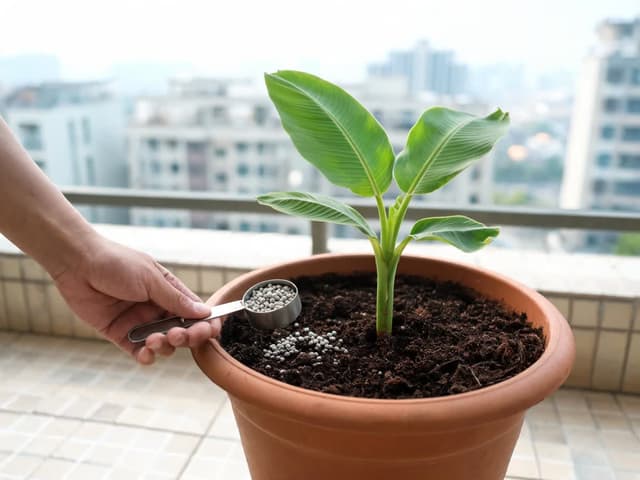
Banana plant fertilizer: fertilizing potted and backyard plants
Banana plant fertilizer needs more potassium than nitrogen, in a 3-1-6 ratio. For a potted plant on a balcony, use the label dose in spring and summer. In the backyard, fertilize every 2 months, adjusting the amount by mat age. Learn the formula, timing in Brazil, and signs of deficiency or excess.