Yellow Leaves on Plants: Diagnose the Cause in 3 Simple Questions
Overwatering, nutrient deficiency, poor lighting, or pests can all cause yellowing. You can pinpoint the exact issue by looking at which leaves are turning yellow, the pattern of the yellowing, and how the soil feels.
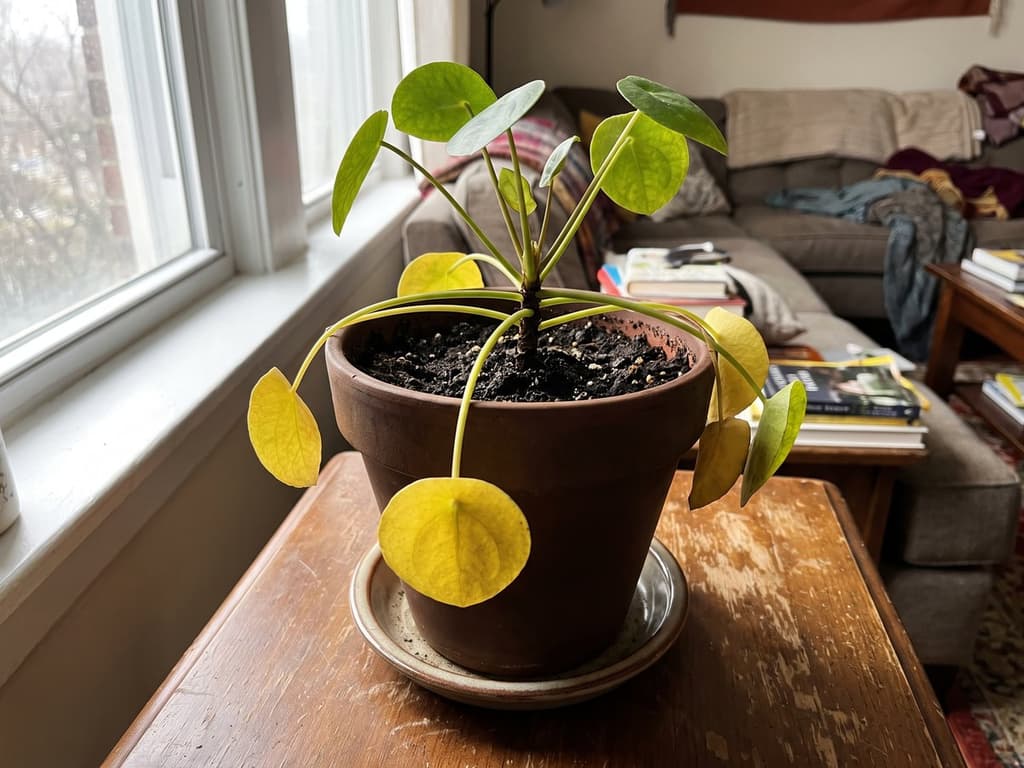
Yellowing leaves are known as chlorosis: this happens when leaf tissue loses chlorophyll, the pigment that keeps plants green. You can easily find the root cause by making three simple observations: which leaves are yellowing (the lower ones or the ones at the top), the pattern of the yellowing (solid, between the veins, or just on the edges), and how the soil feels. Each combination points to a very different problem.
This is crucial because almost every generic guide on yellow leaves lists the same five issues in the exact same order, leaving you to guess. Overwatering, underwatering, nitrogen deficiency, and iron deficiency all cause yellowing—but they produce different types of yellowing in different areas of the plant. This guide helps you pinpoint the exact diagnosis.
Quick summary:
The rule of thumb that solves half of your cases: when a plant runs low on a mobile nutrient (like nitrogen, potassium, or magnesium), it steals it from older leaves to feed new growth—so the yellowing starts at the bottom. Immobile nutrients (like iron, sulfur, or calcium) can't be moved, so the yellowing starts at the top. This is the classic pattern described by the Illinois Extension for iron and nitrogen (Illinois Extension).
Overwatering is the single most common killer of potted plants, and it is highly deceptive. The symptoms of root rot start with the wilting of the lower leaves and "are commonly mistaken for underwatering" (Iowa State Extension)—which often prompts people to water even more.
Epsom salt will only help if your plant actually has a magnesium deficiency. In soil that already has enough magnesium, adding more blocks calcium absorption, and spraying it directly on the leaves can burn them (UMN Extension).
The 3 Questions to Diagnose Your Plant
Before you water, fertilize, or spray anything, answer these three questions in order:
Which leaves turned yellow? The bottom ones (older), the top ones (newer), or is it scattered all over?
What is the pattern of the yellowing? Is it uniform across the whole leaf, between the veins with the veins staying green, only on the edges, or in tiny spots and patches?
How does the soil feel and what is the leaf texture? Is the soil wet and the leaf mushy, or is the soil dry and the leaf crispy?
Match your three answers in the table below:
Where it turned yellow | Yellowing pattern | Soil and texture | Most likely cause |
|---|---|---|---|
Lower leaves, several at once | Uniform | Wet soil, mushy leaf | Overwatering / root rot |
Lower leaves | Uniform | Dry soil, crispy leaf | Underwatering |
Lower leaves | Uniform, spreading upward | Normal watering, unfertilized for months | Nitrogen deficiency |
Lower leaves | Between the veins, green veins | Normal watering | Magnesium deficiency |
Lower leaves | Edges yellowing, then turning brown | Normal watering | Potassium deficiency |
Top leaves, new growth | Between the veins, very green veins | Normal watering | Iron deficiency, or high pH locking out iron |
Top leaves, new growth | Entire leaf turns pale yellow | Normal watering | Sulfur deficiency |
Any part | Yellow with dry brown tips and edges | White crust on soil surface | Over-fertilizing |
Entire plant is pale | General yellow-green, leggy stems | Far from the window | Not enough light |
Scattered | Leaves yellowing and dropping | Moved rooms or brought home 1–3 weeks ago | Light shock / acclimation |
Any part | Tiny speckles, webbing, or sticky residue | — | Pests |
One lower leaf at a time | Uniform, with new leaves growing | Everything normal | Normal aging |
The next three sections explain how to answer each question accurately.
Question 1: Which leaves turned yellow?
This is the ultimate time-saver, and it works because of a specific botanical rule: some nutrients can move inside a plant, while others are locked in place.
When a plant lacks a mobile nutrient—like nitrogen, phosphorus, potassium, or magnesium—it breaks down its oldest leaves and sends those resources to the new growth. The bottom leaf yellows because it is being intentionally drained. When it lacks an immobile nutrient—like iron, sulfur, calcium, or boron—it can't do this. The resources in the older leaves stay put, and the new growth at the top is the first to suffer.
The Illinois Extension explains this dynamic perfectly: iron deficiency starts on young terminal leaves and moves inward, while nitrogen deficiency starts on inner or older leaves and moves outward. The UC IPM notes that "because nitrogen is mobile in the plant, chlorosis is most pronounced on older leaves" (UC IPM).
Nutrient | Can it move inside the plant? | Where the yellowing starts |
|---|---|---|
Nitrogen, phosphorus, potassium, magnesium | Yes | Lower leaves, older growth |
Iron, sulfur, calcium, boron | No | Top leaves, new growth |
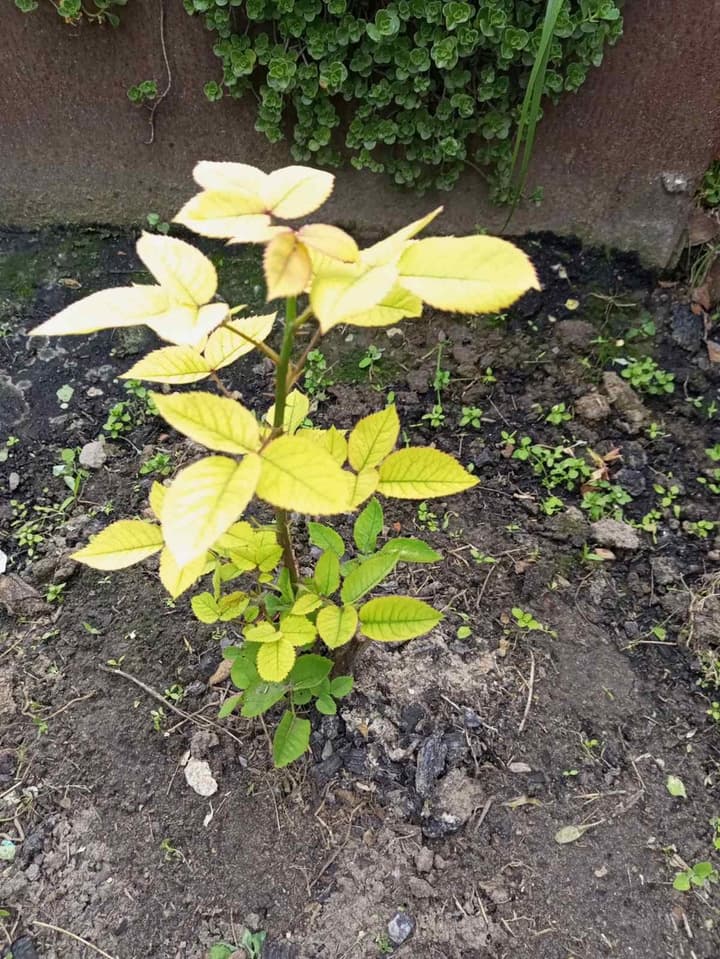
With this rule in mind, you don't need to memorize a massive list: if the yellowing started at the top, you can instantly cross nitrogen off your list of suspects, and vice versa.
Question 2: What is the pattern of the yellowing?
The pattern helps you distinguish between watering issues and nutrient deficiencies, as well as separate one nutrient issue from another.
Uniform yellowing — the entire leaf fades evenly without a specific pattern. This is classic for watering issues (either too much or too little) and nitrogen deficiency.
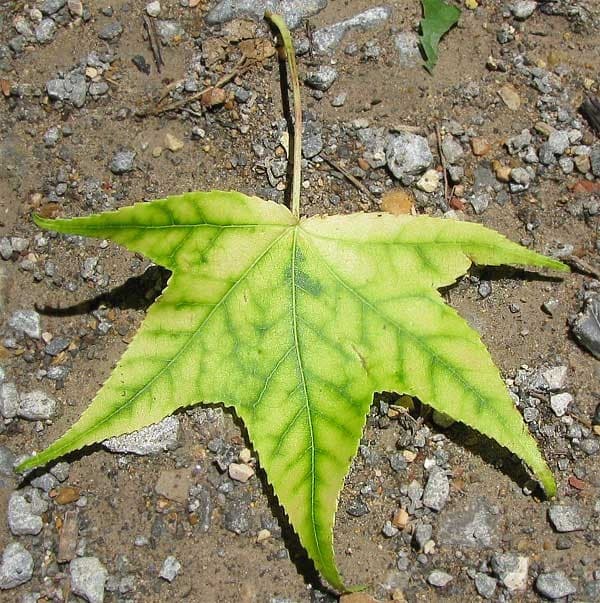
Interveinal yellowing (yellow between green veins). This is the signature look of micronutrient chlorosis: "affected leaves turn yellow, while the veins remain green" (Wisconsin Extension, revised 2024). On new leaves, it points to iron; on older leaves, it points to magnesium.
Only the edges turn yellow, then brown, with a green center. Potassium deficiency.
Speckles, spots with halos, or mottled yellowing. This is not a nutrient issue—it is a sign of pests or disease. Your next step should be to inspect the underside of the leaves with your phone's zoom lens.
Question 3: How do the soil and leaves feel?
This question prevents the most common and costly mistake: watering a plant that is already dying from too much water.
Stick your finger about 1 to 2 inches (3 to 5 cm) into the soil. The Iowa State Extension provides straightforward advice: check the moisture before every watering; if it feels damp or wet, wait; if it is dry in those top couple of inches, it is time to water (Iowa State Extension). Pair this with the texture of the leaf:
Wet soil + yellow, limp, or mushy leaves → overwatering.
Dry soil + yellow, dry, crispy leaves with curling edges → underwatering.
Soltech's guide to overwatering symptoms has a side-by-side table for telling overwatering apart from underwatering by soil, leaf color, texture, roots and smell.
Checking the weight of the pot can also help when the topsoil is misleading. Lift your pot right after watering to get used to its heavy weight. A light pot with a wilting plant means thirst; a heavy pot with a wilting plant means root trouble.
Overwatering — The #1 Killer
Roots need oxygen to breathe. Saturated soil pushes air out of the spaces between soil particles, causing the fine roots to die and rot. When this happens, the plant can no longer absorb water, even though it is sitting in a wet pot. The Maryland Extension explains that overwatering reduces soil oxygen, damages fine roots, and the first visible symptom is the wilting or yellowing of the lower, inner leaves (UMD Extension).
This is highly deceptive. As Iowa State notes, the symptoms of root rot start with the wilting of lower leaves and "are commonly mistaken for underwatering," making it absolutely vital to check both the roots and the soil moisture before you reach for the watering can. Healthy roots are firm, white, and fibrous; rotted roots are mushy, slimy, and brown or reddish.
How to fix it:
Stop watering immediately and empty any water sitting in the saucer or cachepot.
Gently slip the plant out of its pot and inspect the roots. If they are mushy and brown, it is root rot. If they are firm and light-colored, you caught it in time.
Trim away rotted roots using clean, sterilized shears and repot the plant in fresh, well-draining soil in a pot with drainage holes.
Only water when the top 1 to 2 inches of soil are dry—rely on the soil feel, not a calendar schedule.
Leaves that have already turned yellow from root rot will not turn green again. You are watering correctly to save the rest of the plant.
Underwatering
Underwatering presents with a similar uniform yellowing starting from the bottom, but the leaves will feel dry, papery, and crispy, often with curling edges, and the soil may pull away from the sides of the pot.
Keep in mind that extremely dry soil can become hydrophobic, meaning water will slide down the sides of the pot without actually soaking the root ball. If this happens, water slowly in two or three passes, or bottom-water by soaking the pot in a tub of water for 20 to 30 minutes until bubbling stops. Always water thoroughly until it drains out of the bottom—shallow watering leaves the lower half of the root system dry.
Nutrient Deficiencies
Potted plants only have access to the nutrients in their pots. Old, unfertilized potting soil eventually runs out of nutrients, and as Iowa State notes, under-fertilized plants will often develop yellow leaves (Iowa State Extension).
Missing Nutrient | Where it starts | What the yellowing looks like |
|---|---|---|
Nitrogen | Lower leaves | Uniform yellowing, whole plant looks pale, stunted growth |
Magnesium | Lower leaves | Yellowing between green veins |
Potassium | Lower leaves | Yellow edges turning brown, green centers |
Iron | Top leaves | Yellowing between green veins, veins stand out in sharp green |
Sulfur | Top leaves | The entire new leaf turns pale yellow |
Iron deficiency is the most commonly misdiagnosed of the five because it only appears on new growth.
The fix: Use a complete liquid fertilizer (containing NPK and micronutrients) at half strength every two weeks, only when the plant is actively growing. Half strength isn't just about saving money—full-strength outdoor fertilizers are too harsh for indoor pots and can cause the issue described in the next section.
When Nutrients Are There, But Locked Out
If you have been fertilizing and the new leaves are still showing yellowing between the veins, the issue probably isn't a lack of nutrients—it is likely soil pH.
The Wisconsin Extension explains that micronutrients are often present in sufficient amounts but cannot be absorbed by the roots due to high soil pH. The Illinois Extension points out the threshold: iron becomes increasingly insoluble and unavailable to plants as soil pH rises above 6.5–6.7.
In a home environment, hard tap water and using garden soil instead of a proper indoor potting mix will slowly push soil pH up. You can fix this by repotting into fresh indoor potting soil or using a fertilizer with EDDHA-chelated iron, which remains bioavailable in high-pH soils—whereas standard EDTA chelate loses its effectiveness above pH 6.5 to 7.
Over-fertilizing — The Hidden Culprit
Too much fertilizer burns roots. Fertilizer salts accumulate in the soil, damaging delicate root tips. In severe cases, this buildup appears as a white crust on the soil surface, the saucer, or the outside of terra cotta pots. This root damage mimics overwatering, leading to yellowing, browning leaf tips, leaf drop, and wilting (Iowa State Extension).
The telltale sign that separates this from other issues is yellowing combined with crispy brown tips and edges, alongside that white crust on the soil.
The fix: Take the plant to the sink and flush the soil with plenty of room-temperature water, letting it run freely through the drainage holes several times to wash away accumulated salts. Going forward, cut your fertilizer dose to half or a quarter of the label's recommendation, and only fertilize during periods of active growth. Fertilizer applied to a dormant plant won't be used and will only build up as salts.
Lighting: Too Little, Too Much, or Sudden Changes
When plants don't get enough light, they stretch and fade: in too much shade, growth becomes leggy and sparse, resulting in thin, pale, or yellow leaves (UMD Extension). You can confirm this by looking at the stems—long gaps between leaves (internodes) pointing toward the nearest window.
With too much direct light, the yellowing looks different: it appears only on the parts of the leaves directly facing the sun, looking bleached or faded, before turning into dry brown scorch marks.
There is also a third scenario, which is very common with newly purchased plants: sudden changes in light. Iowa State notes that both too much and too little light, "as well as a sudden change in light intensity," can cause leaves to yellow and drop. They recommend adjusting light levels gradually when moving plants (Iowa State Extension). A plant moved from a bright greenhouse to a dim hallway will often yellow and shed leaves within 1 to 3 weeks. The fix isn't watering or fertilizing—it is gradually moving it closer to a window over a two-week period.
Knowing exactly how much light your plant needs depends on the species, and nursery tags are notoriously vague. If you aren't sure what plant you have, you can take a quick photo of the leaf with Bloom. The app identifies the species instantly and provides specific care guides for light, watering, and more. The app is available for iPhone.
Pests
Sap-sucking pests drain a plant's energy, causing leaves to yellow around feeding spots—usually in a speckled, mottled pattern rather than an even fade. Three signs can help you identify pests quickly:
Tiny light spots, dusty-looking leaves, and fine webbing in the leaf joints → spider mites.
Sticky, shiny residue (honeydew) on lower leaves, with tiny insects on new growth → aphids or mealybugs. The treatment varies for each: learn how to tell them apart and treat them in our guide on aphids on plants.
Tiny black gnats flying around the soil when you water → fungus gnats. These are a sign of consistently wet soil, meaning your yellowing is likely due to overwatering.
Spider mites are the hardest to see with the naked eye and are the leading cause of yellowing leaves in dry indoor air.
Normal Aging
Not all yellowing indicates a problem. If your plant is actively pushing out new growth and occasionally one bottom leaf turns yellow and drops, this is simply natural aging (senescence). The plant is retiring its oldest, least efficient leaf and moving those nutrients to support new growth.
How to tell normal aging apart from a problem: speed and quantity. One lower leaf dropping every now and then on a growing plant is perfectly healthy. Three or four leaves turning yellow in the same week, or middle and top leaves yellowing at the same time, is a sign of trouble.
Will a yellow leaf ever turn green again?
It depends on the cause, but the honest answer is: usually, no. A leaf that has turned yellow from underwatering, root rot, or natural aging cannot recover—that tissue has already been broken down. The plant's recovery will show in its new growth.
The exception is micronutrient chlorosis caught early while the leaf tissue is still alive. A foliar application of iron can produce a rapid green-up, but the effect is temporary and limited only to the leaves that were sprayed, because iron cannot move to other parts of the plant (Iowa State Extension). In short: it greens up the treated leaf, but it doesn't cure the underlying soil or root issue.
Should I cut off yellow leaves?
Not right away. As long as a leaf still has some green, it is still photosynthesizing and producing energy. In the case of a mobile nutrient deficiency, the plant is still drawing nitrogen and magnesium out of that leaf to support new growth—cutting it off too early throws away those stored resources. Cutting also creates an open wound, which can let in fungi and bacteria.
Wait to cut until the leaf is completely yellow or brown, dry, or drops off with a gentle tug. There are two exceptions where you should cut immediately: leaves with soft, mushy brown spots (a sign of a spreading bacterial or fungal infection) and leaves heavily infested with pests.
Does Epsom salt fix yellow leaves?
Only if the cause is a magnesium deficiency, which is rare in indoor plants fed with a complete fertilizer. Epsom salt is magnesium sulfate, and the UMN Extension is clear: use it only if you have confirmed a magnesium deficiency, because adding magnesium to soil that already has enough can harm your plant and block calcium uptake.
How to decide without a soil test: magnesium deficiency has a very specific visual signature—yellowing between the veins on the older, lower leaves, while the veins stay green. If your yellowing doesn't match this exact pattern, Epsom salt is not the answer and can make things worse—including causing leaf burn if sprayed directly on the foliage.
When you aren't sure what plant you have or what it needs, a quick photo can save you a lot of guesswork:
Frequently Asked Questions
How do I make yellow leaves turn green again?
In most cases, you can't: the leaf tissue has already lost its chlorophyll. Recovery will show in the form of healthy new leaves once the underlying issue is fixed. The exception is early-stage iron chlorosis, where a foliar iron spray can temporarily green up the treated leaves.
Are yellow leaves always a sign of overwatering?
No, though it is the most common cause for potted houseplants. You can confirm overwatering if you see a combination of lower leaves yellowing at once, a limp or mushy texture, soil that is still wet 1 to 2 inches down, and sometimes tiny gnats. Dry soil and crispy leaves point to the opposite problem.
What fertilizer should I use for yellow leaves?
Use a complete liquid fertilizer containing both NPK and micronutrients, applied at half strength every two weeks while the plant is actively growing. First, ensure the issue is actually a lack of nutrients: if the yellowing is caused by overwatering or root rot, fertilizing will make it worse by burning the damaged roots.
Should I prune yellow leaves off my plant?
It is best to wait until the leaf is dry or completely yellow. As long as there is still green, the leaf is producing energy and transferring nutrients back to the plant, and cutting creates a wound open to infection. Cut immediately only if the leaf has mushy brown spots or is covered in pests.
Why do bottom leaves turn yellow first?
Because nutrients like nitrogen, potassium, and magnesium are mobile within the plant. When they are in short supply, the plant relocates them from old lower leaves to feed new growth, causing the bottom leaves to yellow. Overwatering also starts from the bottom due to root damage.
Conclusion
A yellow leaf isn't a diagnosis—it is a symptom with at least eight different causes. The key to figuring out the issue lies in three quick observations: which leaves are affected, the pattern of the yellowing, and how the soil feels. Uniform yellowing starting from the bottom with wet soil means too much water; yellowing between the veins of new leaves points to iron or pH; and a white crust on the soil points to over-fertilizing.
Your next practical step: before you water or fertilize, check the soil moisture 1 to 2 inches down and take a close-up photo of the yellow leaf in good light. These two pieces of information will solve most plant mysteries and prevent the classic mistake of drowning an already overwatered plant.
Related articles
How to Care for Syngonium: Light, Watering, Cuttings, and Pests
How to care for syngonium indoors: bright indirect light, watering when the soil surface dries, 64 to 81°F (18 to 27°C), and 40 to 60% humidity. Also cover water cuttings, thrips, yellow leaves, and pet toxicity.
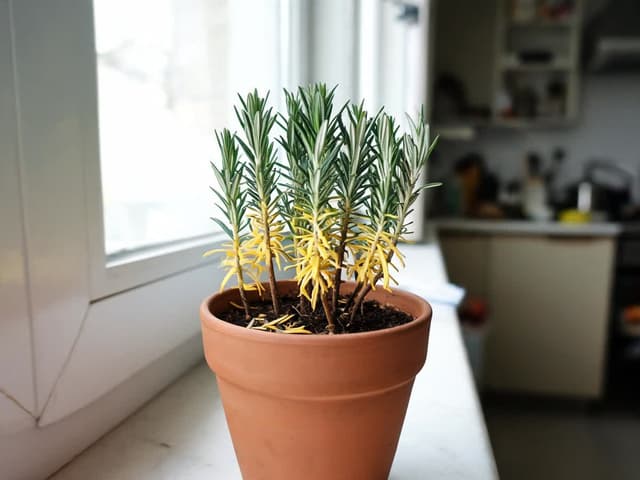
Rosemary Leaves Turning Yellow: Causes and Solutions
Rosemary with yellow leaves usually has overly wet roots. Check where the yellowing appears to see if it stems from wet roots, low light, spider mites, powdery mildew, or normal leaf shed, and learn how to save the plant.
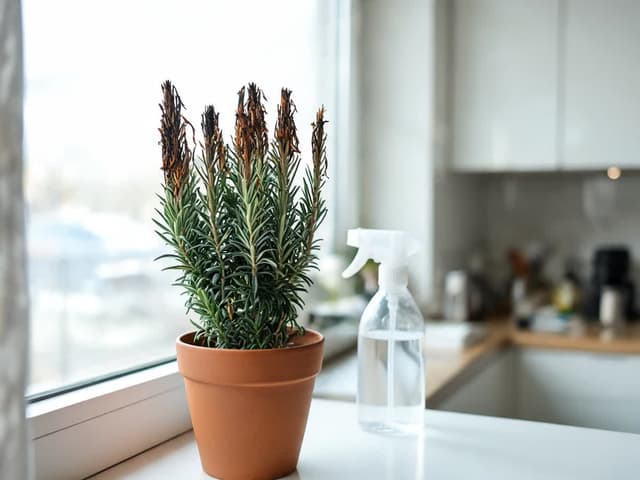
Is Your Rosemary Dying? How to Save Soap-Burned Rosemary
Rosemary with soap-burned leaves can usually be saved: the damage stays on the affected needles. Rinse the leaves, wait a week, scrape the stems, and prune only what is brown inside.