How often to water a peace lily without waiting for it to wilt
A peace lily wilts completely when thirsty and bounces back within hours of watering. Using this dramatic droop as a reminder is common online advice, but it is actually harmful to your plant. Learn the correct watering intervals based on light, three simple moisture tests, and how to calibrate your plant's schedule.

How often to water your peace lily depends entirely on the light it receives, not the day of the week. In medium indirect light, most pots need water every 5 to 9 days. In brighter indirect light, that interval shrinks to 4 to 7 days. In a dim corner of the room, expect it to take 7 to 12 days. This interval is the result of testing the soil, not following a calendar: you water when the top 1.2 inches (3 cm) of soil is dry, and your plant's unique rhythm becomes clear after tracking just two waterings.
The peace lily (Spathiphyllum) is famous for having the most dramatic thirst signal of any houseplant. Its leaves collapse all at once, making the pot look like an absolute disaster, only to perk back up a few hours after a good watering. It is tempting to use this dramatic droop as a natural alarm clock, and half the advice on the first page of Google recommends doing just that. However, wilting happens with both underwatering and overwatering, and that is where this shortcut becomes dangerous.
Quick summary:
Starting point by light level: 4 to 7 days in bright indirect light, 5 to 9 days in medium light, and 7 to 12 days in low light. Adjust this to your specific pot.
The test that decides: push your finger 3 cm into the soil. If it feels dry at the tip, it is time to water. If it is still damp, wait 2 days and test again.
Water thoroughly until it drains out of the bottom holes, and empty the saucer within 30 minutes.
Do not use the drooping leaf as a reminder. The genus profile at the Missouri Botanical Garden is literal: let the soil dry between waterings, "but do not allow to wilt."
How many days between waterings for a peace lily
An indoor peace lily typically needs water every 5 to 9 days in medium indirect light, every 4 to 7 days near a bright window, and every 7 to 12 days in a dark corner. Light is the driving force: the more light the plant receives, the more it transpires, the faster the soil dries out, and the sooner it needs a drink.
Location | Starting interval | What to check |
|---|---|---|
Near a bright window, with a sheer curtain | every 4 to 7 days | dry soil in the top 3 cm |
6 to 10 feet (2 to 3 meters) from a window | every 5 to 9 days | dry soil in the top 3 cm |
Corner of a room, far from windows | every 7 to 12 days | dry soil in the top 3 cm |
Treat these numbers as a starting estimate and the right column as your confirmation. These windows change depending on the size and material of the pot, the current season, and how dry the air is inside your home.
The interval also depends on the rest of the environment: how much light the species can handle and the temperature and humidity ranges where it thrives.
Why it wilts completely, and why this makes a terrible reminder
The peace lily grows naturally on the tropical rainforest floor, where the soil remains damp almost all the time but never waterlogged. Its leaves are thin, wide, and filled with water, causing them to collapse quickly when the pot runs dry. This is not just drama: the plant evolved without needing to store water because its natural habitat never runs dry.

The signal itself is highly reliable. The mistake is using it as your cue to water, for three reasons:
1. The symptom does not distinguish between underwatering and overwatering. The Clemson Cooperative Extension notes this in its indoor plants watering factsheet: "symptoms of overwatering and underwatering are similar. Both lead to poor root health, root decline, and possibly death" (HGIC 1459, revised on June 21, 2024). A wilted peace lily with dry soil is thirsty. A wilted peace lily with soggy soil has rotting roots and will die if you water it. If you water automatically whenever you see the leaves droop, you get it right in one case and kill the plant in the other.
2. Wilting every week takes a heavy toll. By the time the plant collapses, the delicate outer roots have already dried out and died. The plant must constantly regrow them, consuming valuable energy that would otherwise go toward growing new leaves and flowers. After a few months of this wilt-and-water cycle, you will typically notice slow growth, fewer blooms, and dry leaf tips on older foliage.
3. Botanical guidelines recommend the exact opposite. The Missouri Botanical Garden, in its profile on the Spathiphyllum genus, summarizes watering in a single sentence: "Grow in consistently moist but not soggy soil. Let the soil dry between waterings, but do not allow to wilt."
Your goal is to water in the sweet spot between these two extremes: after the surface soil has dried, but before the leaves begin to droop. This is a simple two-to-three-day window that is easy to hit once you stop looking at the calendar and start looking at the soil.
How to know when it is time: three 10-second tests
The Clemson Cooperative Extension lists four ways to check soil moisture. Three of these work exceptionally well for peace lilies indoors:
The finger test. Push your finger into the soil up to the first knuckle, about 1.2 inches (3 cm). If it feels dry at the tip, it is time to water. If it still feels cool and damp, wait. This is the most reliable test and costs nothing.
The pot weight. Dry soil is noticeably lighter than wet soil. Pick up the pot right after watering to get a feel for its weight, then lift it again every two days. With a week of practice, you will know if it needs water before even touching the soil.
The chopstick test. Insert a wooden chopstick or bamboo skewer deep into the center of the pot and pull it out. If it comes out clean and dry, the soil has dried out deep down. If soil sticks to it, there is still moisture at the bottom where the active roots are.
How to find your plant's watering interval in two steps. Water the plant thoroughly and write down the date. Lift the pot to memorize its weight. Starting the next day, test the soil with your finger once a day and note when it finally feels dry. Repeat this process once. If both trials match, that is your watering interval for that specific pot, in that room, during this season. Recheck whenever the seasons change or if you move the plant to a new spot.
The interval is highly specific to your plant and your home. A peace lily in a 7.8-inch (20 cm) plastic pot in a humid bedroom might go 12 days between waterings. The same lily in a 5.5-inch (14 cm) terracotta pot near a sunny window might need water in 4 days.
How much water to use and how to apply it
Proper watering means thorough watering. The Clemson Cooperative Extension advises watering "until water runs out of the drainage holes in the bottom of the pot." In addition to wetting the entire root system, this running water flushes out fertilizer salts and minerals from tap water, which build up in the soil and burn leaf tips.

The step-by-step process:
Confirm with your finger that the top 1.2 inches (3 cm) of soil is dry.
Take the pot to the sink if possible. This makes draining much easier.
Water slowly in circles, covering the entire surface. Very dry soil can repel water at first: if it puddles on top, pause, wait 2 minutes, and then continue.
Stop watering when you see a steady trickle coming out of the drainage hole. For a 6-inch (15 cm) pot, this is usually 8.5 to 17 fl oz (250 to 500 ml). For an 8-inch (20 cm) pot, expect 17 to 32 fl oz (500 to 950 ml).
Let it drain completely, and empty the saucer within 30 minutes. A pot sitting in standing water suffocates the roots.
If your plant lives in a decorative cachepot without drainage holes, remove the inner plastic pot to water it and only return it after it has finished draining. Water pooling invisibly at the bottom of a cachepot will rot the roots just as quickly.
Use room-temperature water. The Clemson Cooperative Extension recommends between 62°F and 72°F (17°C to 22°C): ice-cold water straight from the tap on a winter day can shock the roots.
Watering from the top vs. watering from the bottom
Both methods work, but bottom watering has a specific advantage for this plant. The Missouri Botanical Garden notes that Spathiphyllum does very well with sub-irrigation, which is the technical term for bottom watering.
Top watering is the standard method and is essential for flushing out built-up salts. Use this most of the time.
Bottom watering is ideal when the soil has dried out completely and is repelling water, or when using a highly peaty soil mix where water just runs down the sides without wetting the root ball. Place the pot in a tub with 1.2 to 2 inches (3 to 5 cm) of water, wait 15 to 30 minutes, then remove it and let it drain. The soil will draw up moisture evenly through capillary action. For any potted plant, Virginia Cooperative Extension's guide to properly watering container houseplants explains how to check that the whole root zone got wet, including after bottom watering.
The difference between proper sub-irrigation and a common mistake is the timer. Bottom watering is a quick 15-to-30-minute bath, with the pot removed at the end. Leaving a saucer permanently filled with water is entirely different: it keeps the roots submerged and suffocated 24 hours a day, which is exactly how root rot starts.
What changes your watering schedule
Light. This is the most influential factor. More light means more transpiration and faster-drying soil. If you move your plant, its watering schedule will change, and you will need to recalibrate.
The pot. Terracotta is porous and breathes through its walls, meaning it dries out several days faster than plastic or glazed ceramic pots of the same size. Large pots hold more soil and retain moisture longer. Small pots dry out quickly and are less forgiving of delays.
The season. In winter, days are shorter, the plant grows slower, and it consumes less water, stretching the interval between waterings. However, indoor heating and dry winter air can cause the soil surface to dry out quickly, giving a false impression. This is when the chopstick test is more useful than the finger test, as the surface may be dry while the bottom of the pot is still waterlogged.
Air conditioning and heating. Both systems dry out indoor air and accelerate evaporation. A plant placed directly in the path of an A/C vent or heater will need more frequent watering and will likely develop brown leaf tips.
Root-bound. When the roots take over the entire pot, little soil is left to hold water, and the plant begins to wilt 2 or 3 days after each watering. If this is what is happening, the problem is not the frequency: it is the pot. The peace lily actually likes to be a bit root-bound, and the Missouri Botanical Garden recommends repotting only when necessary, "in February or March." What matters there is not the month, but the moment in the cycle: the end of winter, just before the plant starts growing again. In the Northern Hemisphere, February and March are exactly that, so the date on the care sheet stands as is. The peace lily care guide covers repotting and the rest of the routine.
What water to use, and why the tips turn brown
This species is sensitive to fluoride in treated water. Fluoride rises with the water through the leaf and accumulates at the tip and margin, where the water evaporates. When the concentration exceeds the limit, the cells die and that dry, brown tip with a yellow halo around it appears. The University of Missouri Extension describes the mechanism and illustrates the article with a photo of a peace lily with fluoride damage (David Trinklein, January 3, 2019).
Water type | Is it suitable? | Notes |
|---|---|---|
Rainwater or distilled | excellent | leaves the least mineral residue |
Carbon-filtered water | fair | removes chlorine, but does not remove fluoride or minerals |
Tap water left out for 24 hours | acceptable | chlorine evaporates, but fluoride remains |
Softened water | no | adds sodium and chloride to the soil |
The Missouri Botanical Garden recommends using room-temperature water that has been allowed to stand to let chlorine dissipate. The Clemson Cooperative Extension is direct about softened water: do not water with softened water, as the sodium and chloride will accumulate in the soil and damage the plant.
If, in addition to brown tips, entire leaves are turning yellow, then it is no longer a matter of tap water. The yellow leaves guide separates the causes.
Six mistakes that rot peace lilies
Watering on a fixed day of the week. Plants do not follow a calendar. A winter Sunday and a summer Sunday have very different water requirements.
Watering in tiny sips. Giving the plant half a cup of water every day only wets the surface. The deeper roots stay dry, salts build up, and the plant remains thirsty even though the surface looks damp.
Leaving water in the saucer. Letting a pot sit in its own runoff suffocates the roots. Always empty the saucer within 30 minutes.
Forgetting about the cachepot. Water pooling at the bottom of a decorative outer pot is invisible, making it an easy way to accidentally overwater.
Misting instead of watering. Misting the leaves raises humidity for just a few minutes and does not get a single drop of water into the soil. The two practices are completely separate.
Sugar water. The plant already makes its own sugar: the University of Wisconsin extension summarizes photosynthesis as the formation of sugar that gives the plant the energy it needs to grow (Bruce Spangenberg, February 16, 2026). What the root absorbs from the soil is water and mineral salt. The sugar you pour into the pot only feeds fungus and bacteria in wet soil, which is the opposite of what you want.
What to do if you have already overwatered
The signs of overwatering usually appear together: soil that stays wet a week after watering, a sour smell, yellowing leaves starting from the bottom of the plant, tiny black gnats flying around when you move the pot, and a wilted plant despite the wet soil. That last sign is critical: it means the roots have stopped absorbing water entirely.
What to do: stop watering immediately, remove the pot from any saucer or cachepot containing water, and move the plant to a brighter spot (out of direct sunlight), as light speeds up the drying process. If the top 1.2 inches (3 cm) of soil does not dry out within a week, gently slide the plant out of its pot to inspect the roots. Healthy roots are firm and light-colored. Rotted roots are brown, mushy, and fall apart easily: trim away any mushy roots with sterilized shears and repot the plant in fresh soil.
The gnats, if they appeared, have their own treatment and disappear along with the excess water. The guide to gnats in the soil explains their cycle.
When symptoms are subtle, comparing photos is much more helpful than reading a description. Bloom can identify your plant from a photo and, with Premium, diagnose diseases based on images of the symptoms, helping you tell the difference between yellowing from overwatering and yellowing from a fungal infection.
Growing peace lilies in water without soil
This plant can survive with its roots fully submerged in clean water without any soil. This works because the roots receive both water and dissolved oxygen at the same time, which is very different from roots suffocating in soggy, compacted soil.
If you want to try this: wash all the soil off the roots, use a container where only the roots are submerged while the stems remain dry, change the water every 7 to 10 days, and use rainwater or dechlorinated tap water. The plant will grow slower and produce fewer flowers than it would in soil, as pure water lacks natural soil minerals.
How to water your plant before traveling
For trips up to 10 days, a peace lily in medium light will manage just fine: water it thoroughly on the day you leave, empty the saucer, and move the pot away from bright windows to reduce transpiration.
For trips longer than 10 days, self-watering using capillary action can keep it hydrated without drowning: place the pot on a damp cotton towel with one end submerged in a basin of water, kept out of direct sunlight. The soil will draw up the water it needs. Do not leave the pot sitting directly inside the basin, as this mimics the root-rotting effects of leaving water in a saucer for weeks.
Frequently Asked Questions
How do I know if my peace lily needs water?
Push your finger 1.2 inches (3 cm) into the soil. If it feels dry, it is time to water. If it is still damp, wait 2 days and check again. You can also lift the pot: dry soil makes the pot feel noticeably lighter. Do not wait for the leaves to droop, as drooping can indicate both underwatering and overwatering.
Can you overwater a peace lily?
Yes, and it is the most common mistake. Overwatering forces air out of the soil, rotting the roots and causing the plant to wilt even when the soil is wet. The Clemson Cooperative Extension notes that the symptoms of overwatering and underwatering are similar, with both leading to root decline. When in doubt, check the soil first.
Is it better to water a peace lily from the top or the bottom?
Both methods are effective. Top watering is the standard way to wash away accumulated salts in the soil. Bottom watering is excellent when the soil has dried out completely and is repelling water: place the pot in 1.2 to 2 inches (3 to 5 cm) of water for 15 to 30 minutes, then remove it. Avoid leaving the pot in standing water permanently.
Do peace lilies prefer dry or moist soil?
They prefer consistently moist, but never soggy, soil. The Missouri Botanical Garden recommends letting the soil dry out slightly between waterings, but without letting the plant wilt. In practice, water when the top 1.2 inches (3 cm) of soil is dry while the bottom still retains some moisture.
Does sugar water help peace lilies?
No. Plants produce their own sugars through photosynthesis, and their roots only absorb water and minerals from the soil. Adding sugar to the pot feeds fungi and bacteria in damp soil, which can attract pests. If you want more blooms, use consistent indirect light and a diluted fertilizer instead of sugar.
Conclusion
Start today: water your peace lily thoroughly until water drains from the bottom, empty the saucer after 30 minutes, and note the date. Starting tomorrow, test the soil with your finger once a day and record when it feels dry. Repeat this once. Within two weeks, you will know your plant's exact watering interval and no longer have to rely on wilted leaves.
If you want to check whether your leaves are showing signs of thirst, overwatering, or something else, Bloom can identify your plant and analyze its symptoms from a photo. The app is available for iPhone and iPad.
The habit of testing the soil before watering is a great practice for almost any houseplant, not just peace lilies.
Related articles
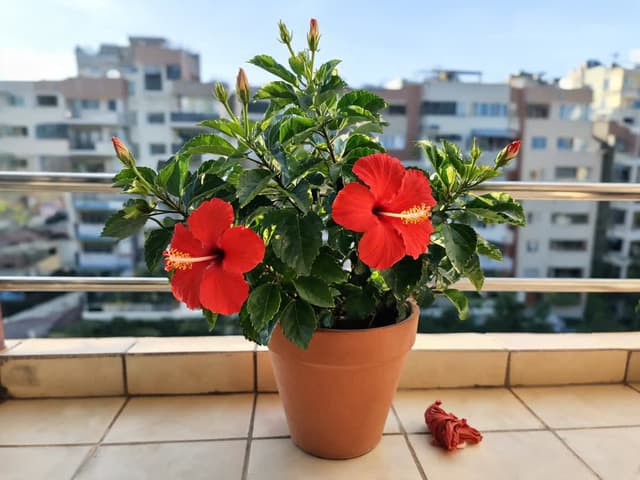
How to Care for Hibiscus: Sun, Watering, Fertilizer, and Pruning for Flowers
How to care for hibiscus: 6 hours of direct sun, evenly moist soil without waterlogging, half-strength fertilizer in spring and summer, and pruning in early spring. Find out why the flower lasts one day and why buds drop before opening.
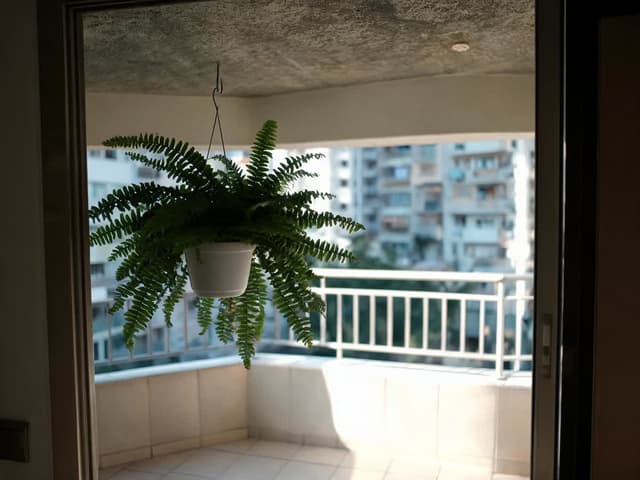
Do Ferns Like Sun or Shade? It Depends on the Type
Ferns prefer bright shade: plenty of light, but no direct sun on their fronds. Tuberous sword fern is the exception that handles sun. Here is the ideal light for each type, where to place pots, and how fronds show too much or too little light.
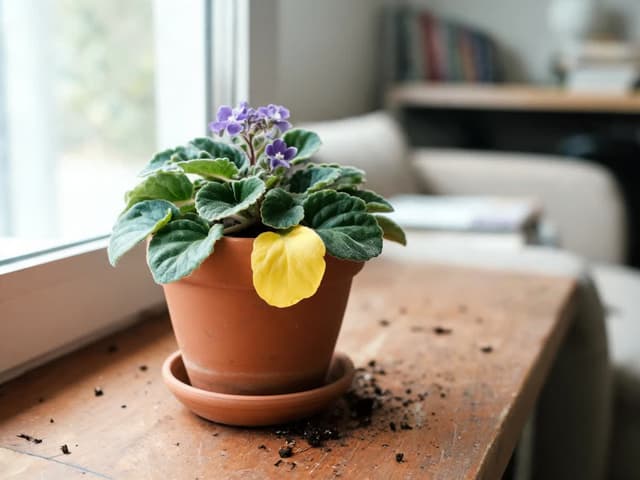
African Violet Yellow Leaves: Causes and What to Do
Yellow leaves on an African violet usually stem from overwatering, and the first place to check is the center of the plant. Losing one lower leaf at a time is normal. Identify whether age, watering, cold water, sunlight, cold drafts, or fertilizer is the culprit based on the yellowing pattern, and see what to do today.