How to water a monstera: how much, where to pour, and what to do with the saucer
How to water your monstera (Monstera deliciosa): how much water to give each time, when to empty the saucer, whether bottom watering is worth it, what water to use, and what to do with aerial roots and dusty leaves.
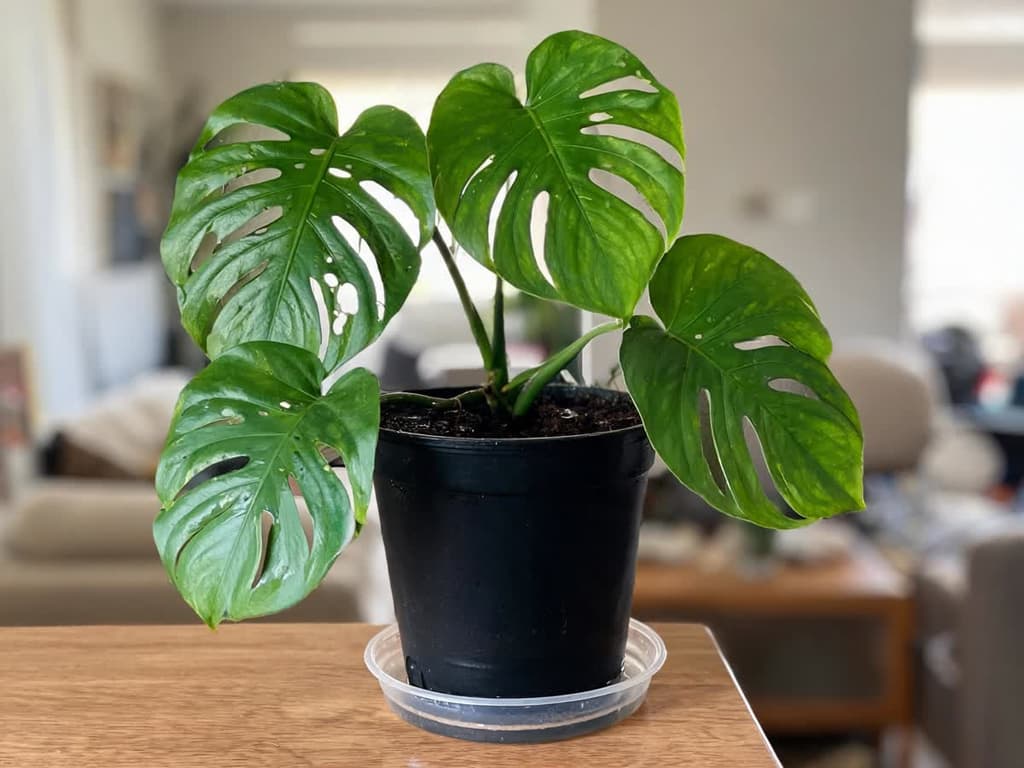
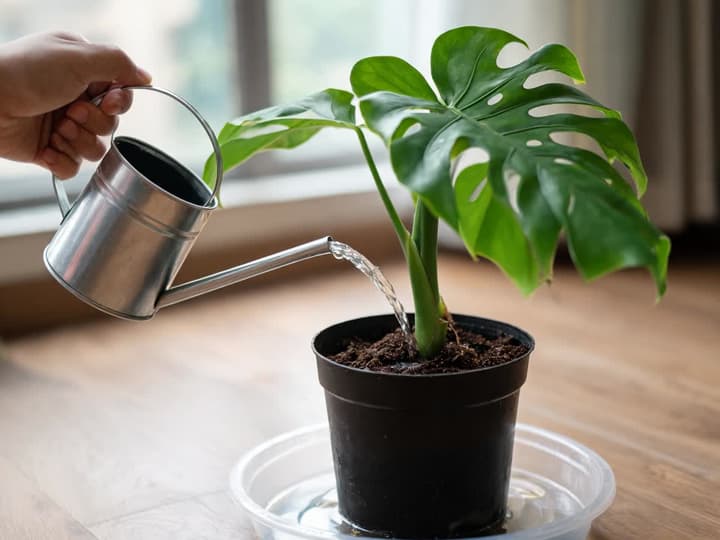
To water a monstera (Monstera deliciosa), slowly pour water onto the soil around the stem until it runs out of the drainage hole. Wait 10 to 20 minutes and discard any water left in the saucer. If the plant is climbing a moss pole (a moss-covered stake that supports the stem), moisten the moss as well.
When to water comes down to a soil test. The NC State Extension recommends watering thoroughly and waiting for a quarter to a third of the potting soil to dry out. The guide on how often to water a monstera converts this fraction into inches for each pot size.
Quick summary:
Water until it drains through the hole. The water needs to wet all of the soil, not just the top layer.
Empty the saucer in 10 to 20 minutes. A monstera must not sit with the bottom of its pot resting in water.
Water from above. Bottom watering (placing the pot in a basin of water) is reserved for overly dry soil or heavy pots. On the next watering, water from the top to flush out salts.
Tap water works. Monsteras are not among the plants sensitive to chlorine and fluoride in water.
Do not mist the leaves. Misting helps spread anthracnose, a fungal disease.
How much water to give a monstera each time
Water until water runs out through the drainage hole. This is the right amount for any pot size, because with soil in good condition, water drains only after moistening the soil from top to bottom. The University of Missouri Extension advises moistening the entire soil with each watering, not just the top 2.5 cm (1 inch).
UConn Extension offers a practical sign: the amount is right when water starts running out of the hole about 1 minute after you start watering. The same extension explains that shallow watering, with little water, leads to weak roots.
The water that drains out through the hole does not return to the plant. It carries away the salts that fertilizer and previous waterings left behind in the soil, which is why it goes down the drain. Overwatering a monstera comes from watering again before the soil dries out or from letting the pot sit in saucer water. A thorough watering that drains through the hole does not cause overwatering.
Step-by-step guide to watering a monstera
To water, you will need a watering can with a narrow spout, water, and a sponge to remove water from the saucer.
Check the soil. Insert your finger or a wooden skewer into the soil. Water only if the top quarter of the soil is dry, as explained in the guide on when to water a monstera.
Use room-temperature water. Clemson Extension recommends water between 62 and 72 °F (17 and 22 °C), with neither ice-cold nor hot water.
Water the soil around the stem. Pour slowly and move around the pot so the water does not carve a single channel. Keep the leaves dry, as recommended by the University of Missouri Extension.
Stop when it drains through the hole. If water runs out of the hole within seconds, the soil may have shrunk and pulled away from the pot. In that case, submerge the entire pot in a bucket or sink filled with water until air bubbles stop rising.
Moisten the moss on the pole. If the monstera climbs a moss pole, pour water onto the moss until it turns dark and damp.
Empty the saucer. After 10 to 20 minutes, dump out the water from the saucer or soak it up with a sponge.
What to do with saucers and cachepots
Discard the water in the saucer 10 to 20 minutes after watering. That is the time the University of Wisconsin Extension allows for the water to finish draining. UConn accepts up to about 1 hour. This guide follows the shorter timeframe of 10 to 20 minutes because the soil at the bottom stays waterlogged as long as there is water in the saucer. Standing water in the saucer keeps the bottom soil waterlogged and deprives the roots of the air they need, UConn explains.
A cachepot is the decorative pot, usually without a drainage hole, where the actual pot sits inside. The University of Minnesota Extension instructs to remove the plant from the cachepot, water it in the sink, let it drain completely, and only then return it. If the monstera is too large to take out of the cachepot, remove the water from the bottom with a sponge 20 minutes after watering.
Pots without drainage holes trap excess water, and no watering technique can fix that: switch to a pot with a drainage hole. Pot and soil selection can be found in the guide on potting mix for monsteras.
Top watering or bottom watering for monsteras?
Water your monstera from the top, directly onto the soil. Top watering pushes water through the entire soil profile and forces it out the drainage hole, carrying away salts from fertilizer and tap water. Bottom watering involves placing the pot in a basin of water so the soil draws moisture up through the hole. It wets the soil, but the salts remain.
The Missouri Extension explains that bottom watering wets all the soil, but anyone who always waters this way sees a white salt crust form on top of the soil. The University of Maryland recommends avoiding bottom watering. Florasense, a brand that sells a pot moisture sensor, directs you to alternate between the two, without citing a source. This guide follows the extensions: top watering is the default, because it is the only one of the two that removes salt from the soil.
Bottom watering is kept for two scenarios. In the first, the soil has dried out so thoroughly that water runs straight down the sides, and the whole pot goes into water, as detailed in the section below. In the second, the pot is too heavy to carry to the sink. Leave that pot in the basin until the soil surface turns moist, as described by the University of Missouri Extension. For the next watering, return to watering from above.
The soil dried out so much that water runs down the sides
Soil left without water for too long shrinks and pulls away from the pot wall. Water runs down the gap, exits through the drainage hole in seconds, and the roots stay dry. UConn describes this issue and its remedy: submerge the whole pot in a bucket or sink filled with water. Pull the pot out when air bubbles stop rising and let it drain thoroughly before returning it to its saucer.
Flushing salts from the soil every 4 to 6 months
A white crust on the soil surface or around the drainage hole is salt left behind by water and fertilizer. The University of Maryland recommends leaching the soil every 4 to 6 months. Pour clean water in an amount equal to 3 times the pot's volume and let it drain completely. For a 10-liter pot (about 2.6 gallons), that requires 30 liters of water (about 8 gallons), making this flush easiest in the shower or outside in the yard.
The Bloom care card on salt buildup in monsteras details the signs and the fix:
What water to use for a monstera
Use tap water. The University of Missouri Extension states that chlorine and fluoride in city water do not harm plants. The University of Minnesota Extension adds that chlorine in drinking water stays below the level that harms plants.
The exception is a few houseplants sensitive to fluoride and chlorine, which develop brown leaf tips. Iowa State University Extension cites spider plants, dracaenas, prayer plants, and calatheas. The monstera is not on the list.
UConn and the University of Maryland advise filling the watering can the day before. After a day in the can, water loses chlorine through evaporation and reaches room temperature. The University of Maryland also recommends discarding the bottom 2.5 to 5 cm (1 to 2 inches) of water in the can, where minerals settle. No one has measured the effect of letting water sit overnight or dumping out the bottom layer on monsteras. If it is convenient for you, fill the can the day before and dump the bottom layer, and your water will already be at room temperature. If not, use water straight from the tap.
Rainwater also works, and the University of Maryland recommends it because it contains no added chemicals. Three English-language guides—from two brands and a blog—advise against tap water: one recommends letting it sit for 24 hours, and two prefer rainwater or distilled water. None cite a source. The only water to avoid is softened water from a home water softener. The University of Maryland explains that this water contains more dissolved minerals than other sources.
Monstera aerial roots: should you wet them or not?
Moisten the moss on the pole where the aerial roots attach. The University of Wisconsin Extension recommends also watering the moss-covered stake so that aerial roots can draw water and nutrients from it. An aerial root is a thick root that grows on the stem above the soil, which the plant uses to anchor itself and seek water.
No one has tested whether free-hanging aerial roots benefit from misting, and none of the consulted extensions advise wetting them. The safest choice for the plant is to guide the root onto the moss pole or tuck its tip into the pot's soil. That way, the root receives moisture during routine waterings. Options for guiding, tucking in, or trimming are covered in the guide on how to care for a monstera.
Misting monstera leaves with water
Do not mist monstera leaves. UConn, in its factsheet on the monstera itself, advises avoiding misting to prevent spreading anthracnose. Anthracnose is a fungal disease that starts by yellowing the leaf edge and then turns it brown.
The Penn State Extension adds that misting does not increase the humidity around the plant. Misted water evaporates within minutes, and even daily misting does not change the humidity. The Missouri Extension has a different opinion and says that daily misting helps the plant tolerate dry air. This guide follows UConn and Penn State: UConn wrote the guidance for this species, and Penn State explains why misting does not work.
Spider Farmer, a grow equipment brand, and the blog A Beautiful Mess state that misting hydrates a monstera. Misted water does not reach the roots, and watering must still happen at the soil level. For dry air, NC State recommends a humidifier or resting the pot on a tray of wet pebbles, making sure the bottom of the pot does not sit in water.
How to clean dust off the leaves
Wipe both sides of each leaf with a soft, damp cloth. That is the method from the Clemson Extension for smooth leaves, like those of the monstera. The University of Wisconsin Extension recommends dusting monstera leaves without specifying a set interval. Clean them when dust appears on the leaf.
Clemson does not recommend products that clean and shine leaves. For a thorough cleaning, the Ohio State University Extension suggests taking the plant to the shower and using lukewarm water. The same extension warns that hot water and cold water injure leaves. After showering, let the monstera drain before returning it to the saucer, just like with a normal watering.
Signs you are watering your monstera incorrectly
Water droplets on leaf tips and margins indicate soil that is too wet. These drops have a name, guttation: the plant releases water through leaf margins. The University of Wisconsin Extension states that monsteras "sweat" when the soil is overly wet. Wait for the top quarter of the soil to dry out before your next watering.
Before watering a monstera with drooping leaves, check the soil. If the soil is dry, the plant is thirsty. If the soil is wet, another issue is responsible, and watering again will waterlog the roots. The causes of yellow leaves on a monstera, and whether to trim them, are covered in the guide on yellow leaves on a monstera. Brown or black spots on the leaves have distinct causes, explained in the guide on brown spots and leaf tips on monsteras.
When soil stays waterlogged for too long, roots rot. The care card on root rot in monsteras shows what the roots look like and what to do:
Growing a monstera directly in a container of water without soil is a different process: that is how you root a cutting. The step-by-step instructions are in the guide on propagating monsteras.
Frequently asked questions
Can I bottom water my monstera?
Yes, but only as an exception. Bottom watering wets all of the soil, but it does not flush out salts, which build up into a white crust on top of the soil. Use a basin for a pot too heavy to lift to the sink and remove the pot once the soil surface feels moist. For severely dry soil, submerge the pot in a bucket until bubbles stop rising. Next time you water, water from above until it drains through the hole.
Can a monstera sit in saucer water?
No. Standing water in the saucer keeps the bottom soil soggy, starving the roots of air and causing them to rot. Empty the saucer 10 to 20 minutes after watering. If the pot rests inside a cachepot without drainage holes, remove the water from the bottom of the cachepot using a sponge or a cup.
Can I use tap water on a monstera?
Yes. The University of Missouri Extension states that chlorine and fluoride in municipal tap water do not harm plants. Monsteras are also not listed on Iowa State's roster of sensitive plants. Filling your watering can the day before is optional. It brings the water to room temperature, which Clemson recommends. Avoid water from a water softener.
Do I need to wet my monstera's aerial roots?
Moisten the moss pole where aerial roots have attached, as recommended by the University of Wisconsin Extension. No extension recommends misting free-hanging aerial roots, and nobody has measured any benefit. Direct those roots toward the moss pole or bury their tips in the pot's soil. That way, they receive moisture with every routine watering.
Next time you water your monstera
Before your next watering, check that the saucer is empty and that the top quarter of the soil has dried out. Then water slowly until runoff appears, moisten the moss pole, and empty the saucer 10 to 20 minutes later. If water runs straight down the sides in seconds, submerge the pot in a bucket until bubbles stop.
The Bloom app for iOS builds a personalized watering schedule for your monstera and reminds you when to check the soil. The watering schedule is included in the free plan.
Related articles
How to Care for a Maidenhair Fern: Light, Water, and Revival Tips
Learn how to care for a maidenhair fern indoors: bright indirect light, consistently moist soil, high humidity, and how to revive it if it dries out completely.
How to Propagate Spider Plants: Root the Pup Before Cutting
The safest spider plant cutting comes from a pup still attached to the mother plant: rest the plantlet on soil in a small pot, wait for roots to establish, and only then cut the stolon. Learn when the pup is ready, whether rooting in water is worth it, how to divide the clump, and why plants fail to produce babies.
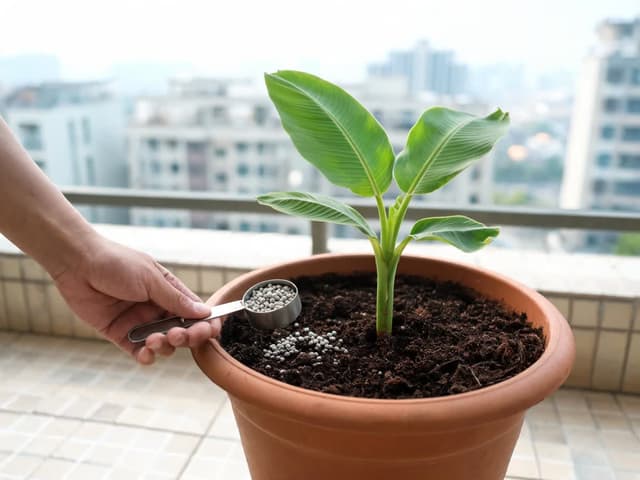
Banana plant fertilizer: fertilizing potted and backyard plants
Banana plant fertilizer needs more potassium than nitrogen, in a 3-1-6 ratio. For a potted plant on a balcony, use the label dose in spring and summer. In the backyard, fertilize every 2 months, adjusting the amount by mat age. Learn the formula, timing in Brazil, and signs of deficiency or excess.