Lucky Bamboo Fertilizer: How Much to Use in Water and Soil
Lucky bamboo fertilizer: in water, use 1/4 the label dose every 2 months; in soil, once a month, only in spring and summer. Learn which fertilizer to use, when not to fertilize, and why brown tips are rarely a sign of underfeeding.
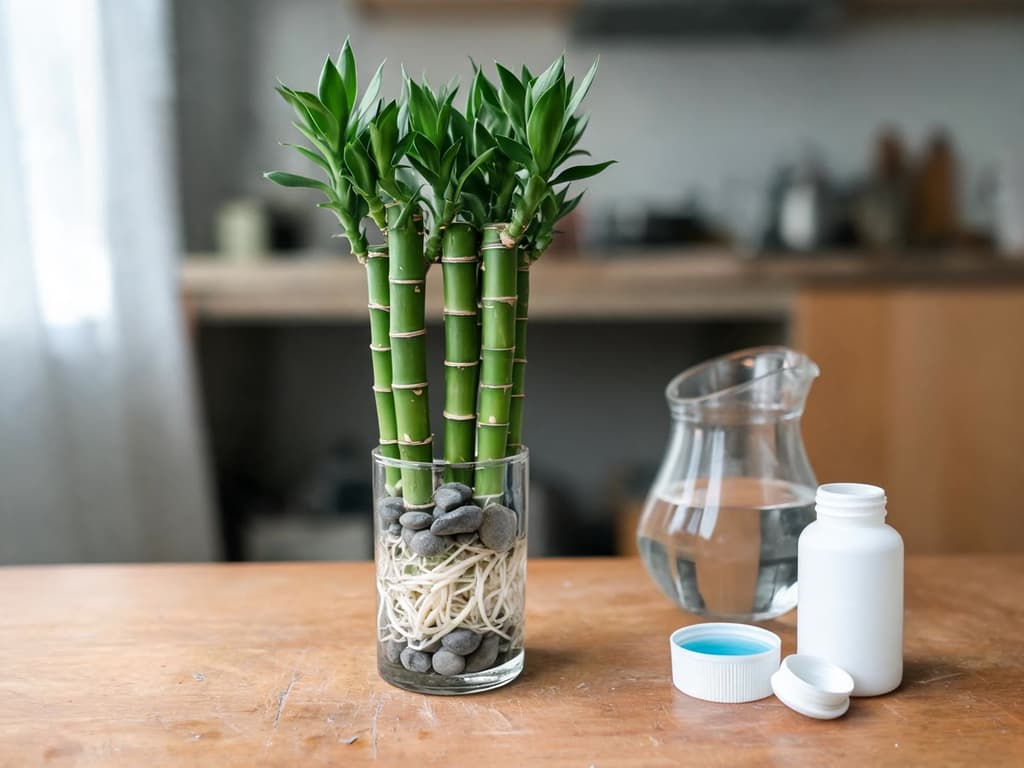
The fertilizer for lucky bamboo is a liquid indoor plant fertilizer, used very diluted. In water, use 1/4 of the dose indicated on the label, every 2 months. In soil, fertilize once a month, only in spring and summer (in Brazil, from September to March). These doses come from Clemson University Extension in the United States (the university service that advises the public on plants).
Before buying fertilizer, look at the symptom that brought you here. Brown leaf tips, leaves yellowing from the bottom up, and faded color have other causes in technical sources: dry air and fluoride in the water (brown tips), excess fertilizer (yellowing from the bottom up), and low light (faded color). For all three symptoms, adding more fertilizer makes it worse or changes nothing.
Lucky bamboo is not a true bamboo. It is a dracaena (Dracaena sanderiana), and dracaena reference sources apply directly to it.
Quick summary:
In water: 1/4 of the label dose of a liquid houseplant fertilizer, every 2 months, always in freshly changed water.
In soil: houseplant fertilizer, once a month, only in spring and summer. In autumn and winter, no fertilizer.
Steer clear of fertilizer containing superphosphate (an ingredient that typically carries fluoride) and fertilizer rich in boron. Excess fluoride and boron burn the leaf tips of dracaenas.
A stalk yellowing from the bottom up while still firm is a sign of too much fertilizer. Change all the water and hold off on fertilizing for 2 months.
Lucky bamboo fertilizer in water: how much and how often
In water, the plant needs a little fertilizer, because clean water contains no nutrients. NC State Extension, from North Carolina State University, summarizes growing in water like this: a weekly water change and a weak liquid fertilizer. The NC State factsheet does not state the dosage.
Two institutions publish the dosage. Clemson recommends liquid houseplant fertilizer at 1/4 of the label dose, every 2 months. The plant information service at the New York Botanical Garden uses the same 1/4 dilution, or weaker. There, the limit is fertilizing at most once a month.
Both agree on the 1/4 dilution. For the interval, Clemson recommends once every 2 months. The New York Botanical Garden caps it at once a month. This guide follows Clemson because it is a university extension service and because the longer interval is safer: in a pot without drainage holes, fertilizer salts (the mineral residue left by fertilizer in water) only clear out when you change the water.
A Brazilian gardening blog recommends half the label dose, once a month. That equals twice the concentration and twice the frequency suggested by Clemson. None of the technical sources consulted recommend numbers that high.
How to fertilize lucky bamboo in water, step by step
Do your normal weekly water change: remove the stalks, wash the vase and rocks, and fill with fresh water. Use filtered, rain, or distilled water.
Read the houseplant watering dose on the label and divide it by 4. Example: if the label calls for 4 mL per liter of water, use 1 mL per liter.
Mix this dose into a pitcher with the fresh water, and only then pour it into the vase.
Mark the date. The next feeding will be in 2 months. During the water changes between feedings, use plain water.
Always apply fertilizer in freshly changed water, never directly into old water. Old water already holds accumulated salts from the week, making your calculated dose stronger than it seems.
Which fertilizer to use on lucky bamboo
Use a liquid fertilizer, or water-soluble powder, formulated for indoor foliage plants. This is the type recommended by Clemson and the New York Botanical Garden. All published doses for water culture refer to this kind of fertilizer.
Three precautions when picking a label:
Without superphosphate. The Clemson dracaena factsheet warns that superphosphate often has high fluoride levels. The name appears in the package ingredients list.
Low in boron and fluoride. The University of Florida dracaena production guide links scorched tips to excess boron, fluoride, or salts. Because of this, the guide calls for fertilizer and water low in these elements. On the package, compare the guaranteed analysis and choose the label with the lowest boron (B) content.
With micronutrients, and low boron. The same Florida guide recommends fertilizers with micronutrients, as long as the boron content remains low. Micronutrients include iron, manganese, zinc, and other trace elements that the plant uses in tiny amounts.
No source has published an exact NPK ratio (the three numbers on the label: nitrogen, phosphorus, and potassium) specifically for lucky bamboo in home pots. The Florida guide uses ratios with higher nitrogen than phosphorus, but aimed at commercial greenhouse production. The guide on plant fertilizer explains how to read those three numbers and compare product labels.
Homemade and organic fertilizers in water: are they worth it?
No one has tested worm casting tea, manure tea, or banana peel water on lucky bamboo grown in water. Every dose published by extension services and botanical gardens specifies water-soluble liquid fertilizer.
No one has published an organic fertilizer dosage for water culture. Liquid fertilizer is the safest option, and the only one with dosages published by extension services and botanical gardens.
Lucky bamboo fertilizer in soil
In soil, Clemson recommends houseplant fertilizer once a month, only during the growing season. Clemson does not state the dilution for soil. The Oregon manual calls for fertilizing dracaenas sparingly. Therefore, the safest option is to use 1/4 of the label dose, the same dilution published for water. The dracaena fact sheet from the same university mentions spring and summer. In autumn and winter, outside the growing season, the plant gets no fertilizer. In Brazil, that means fertilizing from September to March and stopping from April to August.
In soil, part of the fertilizer salt washes out through the pot's drainage hole with every watering. In water, salts only leave during the weekly water change.
The plant disease manual from Oregon State University advises fertilizing dracaenas lightly. It links brown tips to the combination of too much fertilizer and soil that dries out too much between waterings.
In practice:
Fertilize only when the soil is already moist, right after a normal watering, and never when the soil is dry.
Water thoroughly until water drains from the bottom hole, then empty the drip saucer.
If a white crust forms on the soil surface or around the pot rim, flush the soil. Water generously and let it drain through the hole for a few minutes. The Florida guide uses this same leaching technique to wash out excess salts. The page on salt buildup on lucky bamboo illustrates the signs.
Green algae in the water: does fertilizer feed algae?
It feeds them, along with light. The University of Illinois Extension, when teaching how to grow plants in water at home, recommends using an opaque container. Light reaching water with nutrients favors algae.
A glass vase with lucky bamboo combines both factors: light penetrating the glass and dissolved fertilizer. The more fertilizer and the brighter the light, the faster the glass and pebbles turn green.
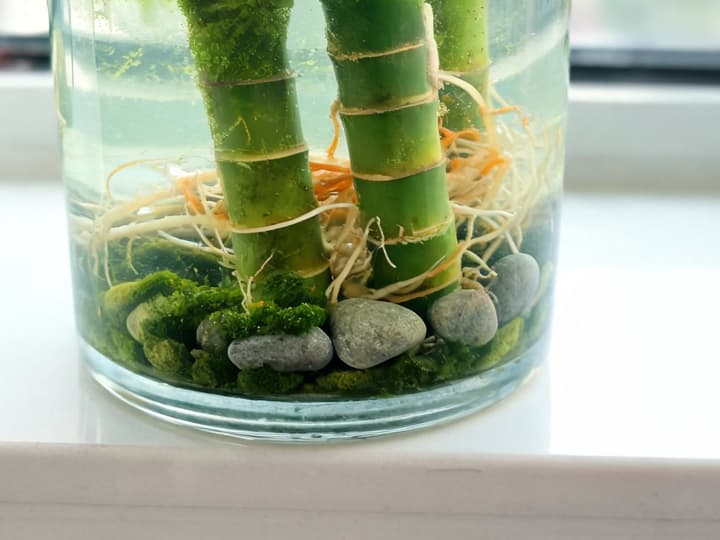
Three solutions, and none of them involve adding more fertilizer:
Switch out the clear vase for a ceramic one or another opaque material that blocks light. Algae will grow much slower, though you will no longer see the roots.
Keep the clear vase away from direct window placement while still in a bright spot. Algae will develop more slowly.
Stick to the 1/4 dose every 2 months and scrub the glass and pebbles during the weekly water change.
When not to fertilize lucky bamboo
Fertilizer does not help a stressed plant. In these situations, wait:
A plant you just bought or received. The University of Florida guide recommends waiting about 4 weeks before fertilizing or repotting a dracaena, counting from its arrival in your home.
Soft or rotting stalks. A yellow stalk that squishes under pressure has rotted, and fertilizer cannot revive dead tissue. The solution is cutting above the firm portion and placing the top in clean water to root. Resume fertilizing only after new roots appear.
Freshly cut cuttings. Keep cuttings in plain, clean water until roots emerge. According to Clemson, roots typically appear within 2 to 3 weeks.
A firm stalk yellowing from the bottom up. This points to overfertilizing: replace the water and skip the fertilizer.
Soil, in autumn and winter. Outside the growing season, the plant grows little, and fertilizer builds up in the soil.
Signs of overfertilizing lucky bamboo
The most telltale sign is a stalk yellowing from the base upward while remaining firm when squeezed. The New York Botanical Garden notes this exact condition: excessive fertilizer burns the plant and causes it to turn yellow from the bottom up. The recommendation is to change the water and stop fertilizing.
The second sign is scorched, brown, and dry leaf tips and edges. Clemson's dracaena factsheet notes that tips and margins burn or yellow when plants receive too much fertilizer. Fluoride in water causes the exact same symptom. Check both possibilities before adjusting your routine.
Gently press the base of the stalk with your fingers to distinguish overfertilizing from rot. A firm stalk yellowing from the bottom up indicates excess fertilizer. A soft, mushy stalk indicates rot.
What to do when there is too much fertilizer:
In water: empty the vase, rinse the stones under running water, and fill with fresh water, adding no fertilizer. Wait 2 months before fertilizing again, then restart at 1/4 dose.
In soil: leach the soil with plenty of water, allowing it to drain out the bottom hole for several minutes, and skip feedings for the next 2 months.
Scorched leaves will not turn green again. The Florida guide states that damaged leaf tissue does not recover. True improvement shows when new leaves grow without brown tips.
Yellow leaves, brown tips, slow growth: is it a lack of fertilizer?
Almost never. None of the consulted sources describes a symptom of fertilizer deficiency specific to lucky bamboo. The symptoms that lead people to think about fertilizer have other recorded causes:
What you see | Reported cause | Does fertilizer help? |
|---|---|---|
Brown, dry leaf tips and edges, green center | Dry air (Clemson; NC State); fluoride, boron, or soluble salts in water or fertilizer (University of Florida; Oregon) | No. With fluoride or salts, it makes it worse |
Stalk yellowing from the bottom up, still firm | Too much fertilizer (New York Botanical Garden) | No. It is the cause |
Stalk yellow and soft | Rot, which NC State links to overwatering | No |
Faded color, stretched stalk, weak growth | Insufficient light (New York Botanical Garden) | No. It lacks light |
Older arrangement gradually yellowing, with clean water and no recent fertilizer | Plant depleted by the arrangement's format (New York Botanical Garden) | No. Only the top can be saved |
Brown tips have more than one cause in technical sources: dry air, fluoride and salts in the water, and excess fertilizer. Tap water in Brazil receives fluoride by law, and dracaenas are among the few plants sensitive to it, according to the Missouri Botanical Garden. Letting water sit removes chlorine, but does not remove fluoride. The page on brown tips in lucky bamboo lists the other causes of this same symptom.
Pale, stagnant plants are usually sitting too far from a window. The New York Botanical Garden links low light to weak growth, stretched stems, and poor color. Fertilizer cannot replace the light foliage needs to make food. The guide to plants for low light explains why a plant in deep shade stops growing. The page on slow growth in lucky bamboo breaks down the causes of this symptom.
Potted arrangements also have a finite lifespan. The New York Botanical Garden explains that growers strip nearly all foliage from the stalks so they resemble bamboo. This cuts down on photosynthesis (the plant's food production powered by light). Twisting the stalks into shapes can also hinder nutrient flow from roots to foliage. An arrangement like this often exhausts itself within 2 years. When the top stays green and vigorous, cutting and rooting that top produces a fresh, viable plant.
A yellow leaf on a firm stem can stem from excess fertilizer, dim light, or an exhausted arrangement. The page on yellow leaves on lucky bamboo outlines the indicators for each cause. Another option is taking a photo of the leaf with Bloom (available for iOS). The photo diagnostic tool on the Premium plan checks the symptom against known plant conditions.
Frequently asked questions
What should you put in lucky bamboo water?
Use filtered, rain, or distilled water, changed every week. Every 2 months, add liquid houseplant fertilizer at 1/4 the label dose, according to Clemson. Do not add sugar, vitamins, or homemade brews: no technical source has published dosages for these items, and liquid fertilizer remains the safest option.
How do you keep lucky bamboo deep green?
Provide bright, indirect light and use distilled or rain water free of fluoride. Faded color usually stems from insufficient light, while brown tips can come from fluoride, dissolved salts, or dry air. Feeding at 1/4 dose every 2 months supports nutrition, but it will not make up for low light or poor water quality.
How can you speed up lucky bamboo growth?
Plant the stalks in a pot with drainage using houseplant potting mix, staking taller stalks until roots anchor firmly. Water whenever the top inch of soil dries out, and place the plant near a bright window out of direct sun. In water, growth is naturally slow. Upping the fertilizer dose will not speed things up: excess salts turn the stalk yellow from the base up and scorch leaf tips.
Can you use aquarium or orchid fertilizer on lucky bamboo?
No technical source has tested aquarium or orchid fertilizer on lucky bamboo. If you choose an orchid fertilizer, pick a liquid or water-soluble powder without superphosphate. Use 1/4 of the label dose, every 2 months. There is no published dose for aquarium plant food, so liquid houseplant fertilizer remains the safest option.
Does foliar feeding work on lucky bamboo?
None of the reviewed sources recommend misting fertilizer directly onto lucky bamboo leaves. Every guide instructs applying fertilizer to the water or soil where roots take it up. The guide on foliar feeding covers why foliage absorbs very little nutrition.
What to do today for your lucky bamboo
If the plant is in water, do a complete water change, wash the vase and pebbles, and note the date. Fertilize with 1/4 the label dose only if three things are true: the last feeding was more than 2 months ago, the stalk is firm, and the plant has been in your home for more than 4 weeks.
If it is in soil, fertilize once a month in spring and summer, with moist soil and 1/4 the label dose. In autumn and winter, do not fertilize.
If brown tips or yellowing leaves brought you here, hold off on feeding. Switch to distilled or rain water, and move the plant closer to a bright window away from direct sun. If the plant in your glass is a pothos rather than lucky bamboo, water feeding amounts are different: see the guide on pothos fertilizer.
Sources
Clemson Cooperative Extension, Home & Garden Information Center: How to Grow and Care for Lucky Bamboo and Dracaena. Accessed on October 5, 2026.
New York Botanical Garden, Plant Information Service: How can I save my lucky bamboo plant that is yellowing?. Updated on September 12, 2026.
NC State Extension Gardener Plant Toolbox: Dracaena sanderiana.
McConnell, Chen, Henny, and Everitt, Cultural Guidelines for Commercial Production of Interiorscape Dracaena, UF/IFAS Extension (EP149).
Pacific Northwest Plant Disease Management Handbook, Oregon State University: Dracaena-Tip Burn (March 2026 revision).
Missouri Botanical Garden: How to Water Indoor Plants.
University of Illinois Extension: Hold on to summer with home hydroponics.
Related articles
How to Care for a Maidenhair Fern: Light, Water, and Revival Tips
Learn how to care for a maidenhair fern indoors: bright indirect light, consistently moist soil, high humidity, and how to revive it if it dries out completely.
How to Propagate Spider Plants: Root the Pup Before Cutting
The safest spider plant cutting comes from a pup still attached to the mother plant: rest the plantlet on soil in a small pot, wait for roots to establish, and only then cut the stolon. Learn when the pup is ready, whether rooting in water is worth it, how to divide the clump, and why plants fail to produce babies.
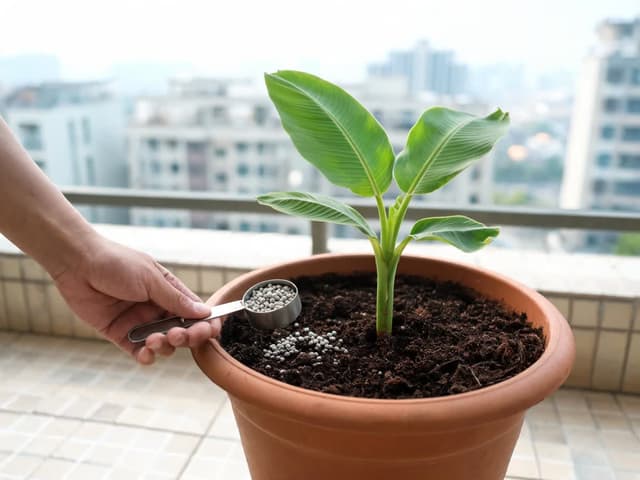
Banana plant fertilizer: fertilizing potted and backyard plants
Banana plant fertilizer needs more potassium than nitrogen, in a 3-1-6 ratio. For a potted plant on a balcony, use the label dose in spring and summer. In the backyard, fertilize every 2 months, adjusting the amount by mat age. Learn the formula, timing in Brazil, and signs of deficiency or excess.