Does lucky bamboo like sun? Ideal light and where to place it
Lucky bamboo does not like direct sun: it burns the leaves. But a dark corner also weakens the plant. Learn how much light it needs, where to place the pot in a home in Brazil, and how to read signs of too much or too little light.
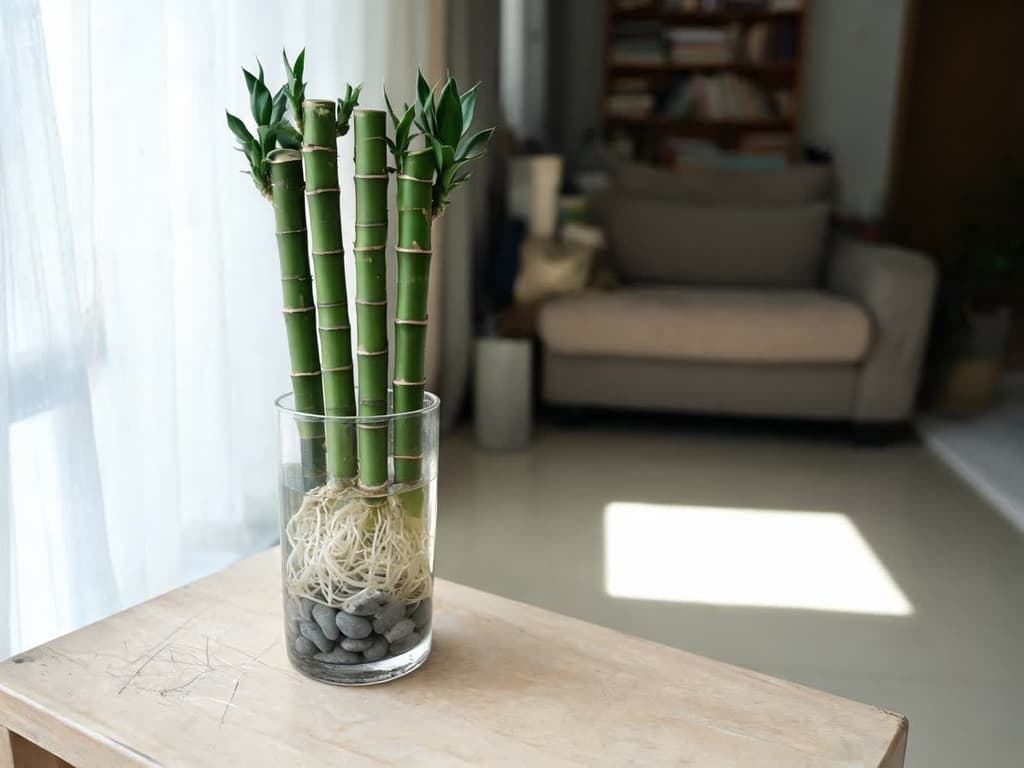
Lucky bamboo does not like direct sun. It wants bright light all day long, without sunbeams hitting the foliage. Direct sun burns the leaves, which bleach and then dry into brown patches.
In a dark corner, the plant survives for months, but new stems stretch out, the leaves grow smaller, and the green loses its richness. The right spot lies between the two: near a bright window, safely out of the path of direct sun.
Despite the nickname, lucky bamboo is a dracaena (Dracaena sanderiana), not a bamboo. NC State Extension describes the plant as a tropical shrub from West Africa. Garden bamboo, in the same database, requires full sun, which is why the advice to "put it in the sun to grow" does not apply here.
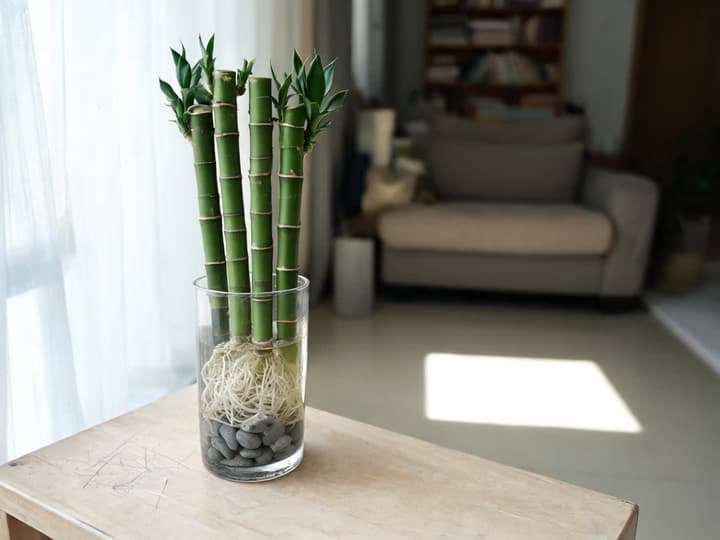
Does lucky bamboo like sun?
No. Lucky bamboo is a plant that thrives in bright, indirect light. NC State Extension, from North Carolina State University, classifies the species as a plant suited for dappled sunlight (the light filtering through tree leaves) down to deep shade. This classification corresponds to less than 2 hours of direct sun per day, or none at all. Indoors, the same plant profile recommends bright, but indirect light all year round. Because of this, indoors, zero direct sun on the foliage is the safest choice.
The lucky bamboo profile from the Clemson University extension service states that direct sun damages the leaves and turns them brown.
If you read that it "needs sun to bounce back," that advice does not apply to this plant. The other extreme is just as unhelpful: "shade" does not mean a dark corner, where the plant slowly weakens. The RHS profile, the UK's gardening charity, tolerates full sun and partial shade, but calls for full light with protection from hot sun. This article follows the university extension services (NC State, Clemson, and Arizona), which provide the most detailed guidance: bright light, with no direct sun on the foliage.
How much light lucky bamboo needs in lux
Lux is the unit that measures how much light reaches a point; a light meter shows this value. The University of Arizona Extension divides indoor plants into three light ranges. Dracaena sanderiana falls into the medium range: 75 to 150 foot-candles (fc), the light unit used in the United States. In lux, the medium range runs from about 800 to 1,600. In practice, the medium range means a well-lit room, with no sunbeams hitting the foliage.
On that same list, the species carries a note: according to the source, it can also be gradually acclimated to grow in low light. The low range spans 25 to 75 fc (around 270 to 800 lux). Below the ideal range, however, the same source notes smaller leaves and less vibrant color.
The same source translates the medium range into distance from the window: 4 to 8 feet (1.2 to 2.4 m), which eliminates the need for a light meter.
Where to place lucky bamboo at home
The best spot for lucky bamboo is 4 to 8 feet (1.2 to 2.4 meters) from a window that gets sunlight. Another good option is right next to a bright window where the sun never shines in directly.
The American and English sources refer to the northern hemisphere. In Brazil, which is in the southern hemisphere, the sun passes through the northern part of the sky. Because of this, north and south are reversed compared to the sources, while east and west remain the same:
Window in Brazil | Light it provides | Where to place lucky bamboo |
|---|---|---|
North-facing | Direct sun for a large part of the day; between June and August the sun sits lower and reaches deeper into the room | 4 to 8 feet (1.2 to 2.4 m) from the window, or behind a sheer curtain |
East-facing | Morning sun, which is gentler | 4 to 8 feet (1.2 to 2.4 m) from the window |
West-facing | Afternoon sun, the hottest of the day | Outside the patch of sunlight the window casts on the floor; close only if the sun does not strike the foliage |
South-facing | Bright light with practically no direct sun year-round | Right against the glass; even there the light may be low |
Center of the living room, hallway, interior wall | Low light | Only temporarily: the plant survives, but weakens |
Clemson recommends rooms with east- or north-facing windows. That advice was written for the Northern Hemisphere, and in Brazil it becomes east or south. The University of Arizona adds a caveat about the side without sun: it usually provides low light even right next to the window. This article follows Arizona, which measures light in ranges and distance. If you only have a south-facing window, place the pot right against the glass and watch the new shoot. If it stretches, move the pot to an east- or north-facing window.
The Royal Horticultural Society (RHS), the horticulture society of the United Kingdom, suggests a sunny window filtered by a sheer curtain for dracaenas. The curtain lets light through and blocks direct sunbeams. It is the solution when the only available spot is a north-facing window.
Turn the pot every week, as the RHS recommends for lucky bamboo, so that all the leaves receive light.
Too much light or too little light: the signs on the plant
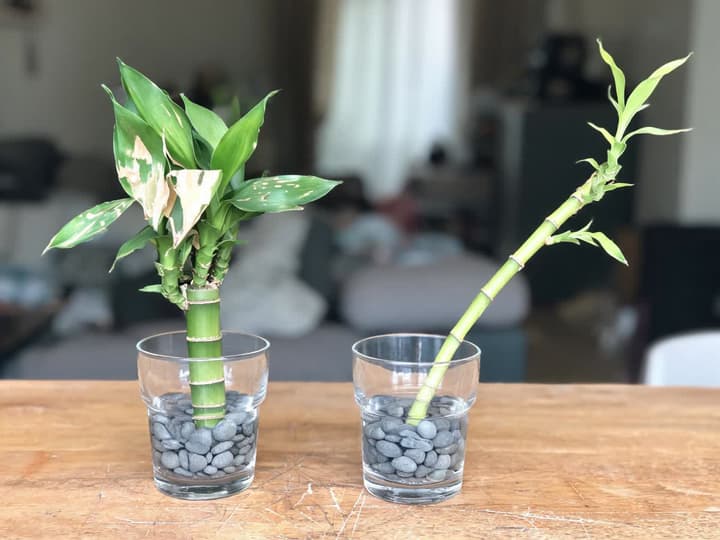
Leaves show trouble before the stems do. Too much sun marks the leaves turned toward the window. Too little light shows up in new growth, which emerges thin and pale.
What you see | Likely cause | What to do |
|---|---|---|
Pale, bleached spots in the center of the leaf, later turning dry and brown, on leaves facing the window | Direct sun | Move it out of the sun today; marked leaves will not turn green again |
Entire leaf turning yellow, across several top leaves at once, in a sunny spot | Direct sun | Move it out of the sun and monitor new growth |
New stem thin and elongated, leaning toward the window, small and widely spaced leaves, pale green color | Too little light | Move it closer to the window in small stages, never straight into direct sun |
Only leaf tips and margins dry and brown, with the rest remaining green | Multiple causes; tap water and dry air are among them | Switch to filtered water or rainwater (see the section on brown tips) |
What sunburn looks like on lucky bamboo
The University of Arizona describes excess light on houseplants: the leaf yellows entirely, because the sun destroys the green pigment. Over time, large, brown patches of dead tissue appear, which is leaf scorch. Clemson cites, for dracaenas, dry, rounded patches and streaks on leaves that get too much sun.
Burned sections do not recover. You can snip the damaged leaf at the base with clean scissors, or leave it until it dries out completely. The plant remains alive as long as the stalk stays firm.
Lucky bamboo in low light: etiolation
Etiolation is the stretched, pale growth of a plant searching for light. The University of Arizona explains what happens to any houseplant kept below its ideal light level. Leaves grow smaller, color turns less vibrant, and growth turns looser and leggy, leaving open gaps between leaves.
According to the same source, a plant getting far less light than it needs can survive anywhere from a few months to a year, gradually declining. That is why a dark corner is deceptive. The plant does not die immediately, so the owner assumes the spot works.
The fix is to move the plant in small stages. Shift the pot closer to the window, into the medium light range, and never straight into direct sun. No source has measured the exact pace of this move; short steps are the safest approach. Stem sections that already stretched will not shrink back. Clemson notes for dracaenas in general that new leaves emerge thicker and stronger once the plant sits in a brighter location.
Brown tips on lucky bamboo are not always from sun
Brown tips and edges with green leaf centers have several causes. The RHS lists overwatering, underwatering, fluoride in tap water, intense sun, dry air, cold drafts, and heater warmth. NC State notes for lucky bamboo that dry air browns leaf tips. For fluoride, the RHS recommends filtered water or rainwater. The lucky bamboo dry tips page covers the other causes behind this symptom.
To tell sun damage apart from other problems, check which leaves are affected. Sun scorches leaves facing the window. Water quality and dry air brown the tips of all leaves, including those turned away from the window. If entire leaves are yellowing, you can find the causes on the lucky bamboo yellow leaves page.
Lucky bamboo in water or soil: do light requirements change?
The foliage requires the exact same light in both mediums. What changes is how light affects the container and your watering routine.
In water, inside a glass vase, light reaches the water as well. The University of New Hampshire Extension explains that algae thrive on light, moisture, and fertilizer. The same source recommends blocking light from the water whenever possible. That guidance applies to growing plants in water in general. For lucky bamboo, the same logic holds true: in a clear vessel, light on the water fuels algae, especially if the water contains fertilizer. No source has measured this on lucky bamboo.
You have two options to prevent algae. Use an opaque container, such as ceramic or frosted glass, or keep a clear vase further from the window, inside the medium light range.
In soil, light changes your watering schedule. The University of Arizona advises watering and fertilizing less when a plant receives less light. Soil in a pot kept in a darker corner takes longer to dry out. Watering on the same schedule as a pot sitting right by a window can waterlog the root system.
Lucky bamboo in offices under artificial light
In an office, light levels are usually low to medium for lucky bamboo. The University of Arizona notes that offices provide low- to medium-level artificial light. This light stays on for about 10 hours a day from Monday through Friday, and stays off over the weekend.
If your desk sits far from a window, a grow light paired with a timer can supplement the lighting. The same source recommends cool white fluorescent tubes roughly 12 inches (30 cm) above the plants. According to the publication, most plants require 12 to 16 hours of artificial light daily.
No study has evaluated lucky bamboo grown solely under office ceiling fixtures. The safest choice is placing it on a desk near a window, or using a grow light on a timer.
On that same University of Arizona list, the snake plant falls into the low light tier, one step below lucky bamboo. The peace lily shares the medium tier with it. For a genuinely dim corner, there are plants for low light that hold up better than lucky bamboo.
What to do today if lucky bamboo got sun or sat in the dark
If your lucky bamboo leaves look scorched, or if new stems have stretched out in the dark, assess the stalk before worrying about the foliage. A green, firm stalk indicates a living plant, meaning the issue is purely its location.
If the pot was in the sun, pull it out of direct light today without delay. Place it 4 to 8 feet from a north- or east-facing window, or behind a sheer curtain.
If the pot was tucked into a dark corner, move it closer to the window in small stages, until it reaches the 4 to 8 foot range.
In both situations, do not expect scorched or discolored leaves to turn green again. If you prefer, snip heavily damaged leaves at the base with clean scissors.
Over the following week, inspect new growth. A fresh leaf emerging green and spotless confirms that the new location works.
Leaves sometimes display more than one symptom at once. In that scenario, Bloom (available for iOS) cross-references a photo of your plant against known diseases to pinpoint the most likely cause. Photo diagnosis is included in the Premium plan.
Is lucky bamboo toxic to dogs and cats?
Yes. NC State records the species as toxic to dogs and cats if ingested, due to saponins, the plant's toxic substances. Signs include vomiting, excessive drooling, and, in cats, dilated pupils. The same factsheet warns that the sap can irritate human skin. The ASPCA, an American animal poison control center, lists dracaenas as toxic to dogs and cats.
Frequently asked questions
Can lucky bamboo stay in the sun?
Not in direct sunlight. NC State classifies the species as needing less than 2 hours of direct sun per day, or none at all. Indoors, it recommends bright, indirect light. Foliage exposed to direct sunlight through a window fades and then dries into brown patches. Hanging a sheer curtain between the pot and window solves the issue.
Can lucky bamboo stay on a balcony or patio?
Only on a shaded porch or balcony, and only during warm weather. Clemson approves of keeping lucky bamboo outdoors in a shady spot, provided nighttime temperatures remain above 65 °F (18 °C). Balconies with direct sunlight burn the foliage. Whenever night temperatures drop below 65 °F (18 °C), bring the pot indoors.
Can lucky bamboo stay in a windowless bathroom or bedroom?
Not for very long. Without a window, light levels are low to nonexistent, and the plant merely survives. According to the University of Arizona, it can hold on for several months up to a year while steadily declining. A room with a bright window works fine, as long as direct sunlight does not hit the foliage.
Why does lucky bamboo turn yellow in the sun?
Direct sunlight breaks down the green pigment in the leaf. First, the leaf yellows or bleaches completely, and then brown patches of dead tissue develop. Sunburned foliage will not regain its green color. Move the pot out of the sun and monitor new growth, which should emerge green and unblemished.
Where to keep lucky bamboo from today on
Place your lucky bamboo 4 to 8 feet (1.2 to 2.4 meters) from a north- or east-facing window. At a south-facing window, set the pot right against the glass, though the light may still prove low even there. A week from now, check on new leaves: faded spots indicate you need less light, while a spindly, pale stem means it needs more. You can find the full profile for this species on the lucky bamboo page.
Sources
NC State Extension: Dracaena sanderiana (Plant Toolbox). Accessed October 5, 2026.
Clemson Cooperative Extension (HGIC): How to Grow and Care for Lucky Bamboo. Accessed on October 5, 2026.
University of Arizona Cooperative Extension: Indoor Plant Selection and Care (az1025). Accessed on October 5, 2026.
NC State Extension: Bambusa multiplex (Plant Toolbox). Accessed October 5, 2026.
Clemson Cooperative Extension (HGIC): Dracaena. Accessed October 5, 2026.
ASPCA: Dracaena. Accessed on October 5, 2026.
Royal Horticultural Society: Dracaena sanderiana. Accessed on October 5, 2026.
Royal Horticultural Society: How to grow dracaena. Accessed on October 5, 2026.
Royal Horticultural Society: Houseplants for students. Accessed October 5, 2026.
UNH Extension: Hydroponics at Home. Accessed on October 5, 2026.
Related articles
How to Care for a Maidenhair Fern: Light, Water, and Revival Tips
Learn how to care for a maidenhair fern indoors: bright indirect light, consistently moist soil, high humidity, and how to revive it if it dries out completely.
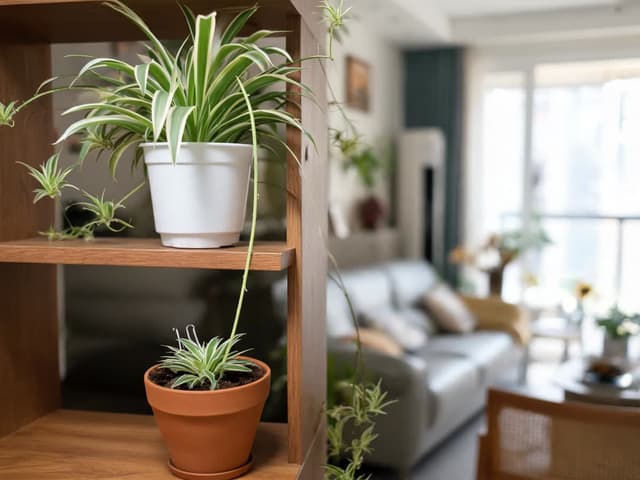
How to Propagate Spider Plants: Root the Pup Before Cutting
The safest spider plant cutting comes from a pup still attached to the mother plant: rest the plantlet on soil in a small pot, wait for roots to establish, and only then cut the stolon. Learn when the pup is ready, whether rooting in water is worth it, how to divide the clump, and why plants fail to produce babies.
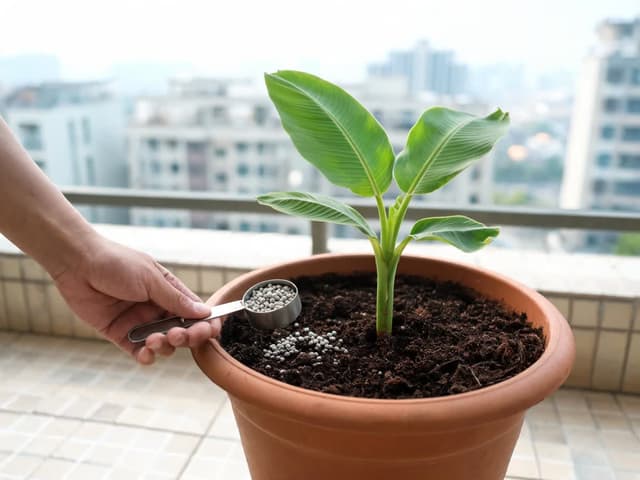
Banana plant fertilizer: fertilizing potted and backyard plants
Banana plant fertilizer needs more potassium than nitrogen, in a 3-1-6 ratio. For a potted plant on a balcony, use the label dose in spring and summer. In the backyard, fertilize every 2 months, adjusting the amount by mat age. Learn the formula, timing in Brazil, and signs of deficiency or excess.