How to Propagate Dipladenia: Cuttings, Water or Soil, and Layering
To propagate dipladenia, take a 4 to 6-inch non-flowering stem tip cutting and bury the base in moist soil. Cover the pot with a perforated bag. Learn where to cut without harming the parent plant, whether water rooting works, how long roots take, and how to layer.
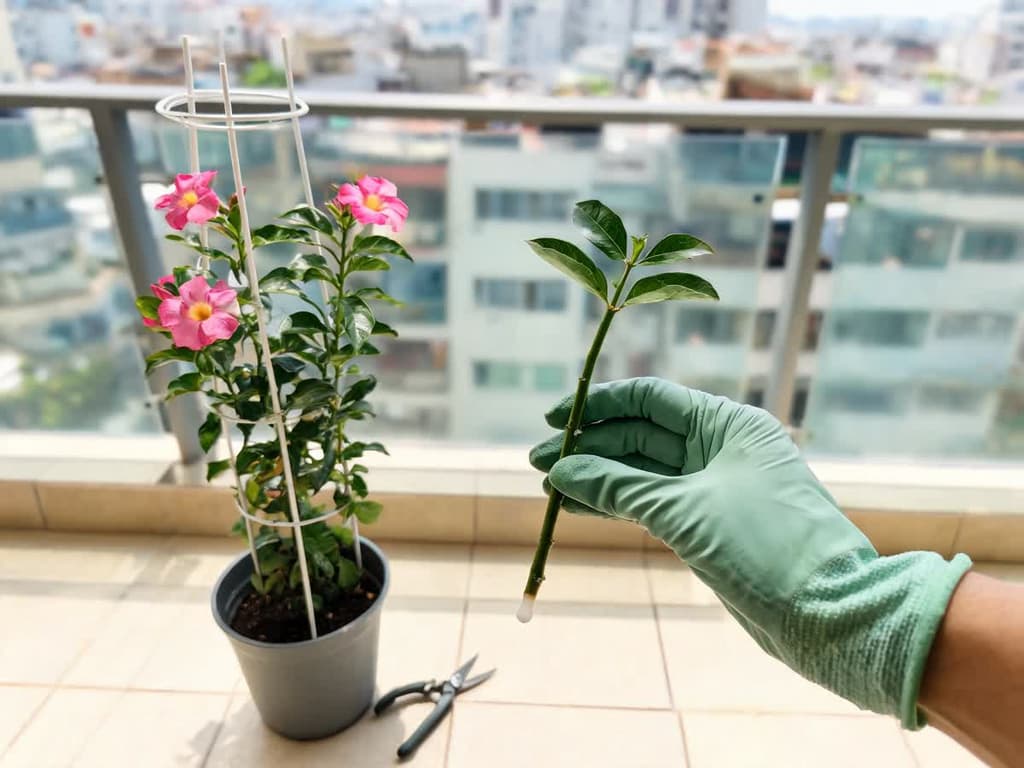
To propagate dipladenia, take a 4 to 6 inch tip cutting from a non-flowering stem, and bury the base in moist soil. Cover the pot with a clear plastic bag with small holes, and keep it in bright light, out of direct sun. In a nursery, with the base of the cutting kept between 70 and 75 °F (21 to 24 °C), roots emerge in about 4 weeks. This data comes from the production guide from UF/IFAS, the University of Florida extension service. No one has measured the timeline at home, where temperatures fluctuate more.
Dipladenia and mandevilla are names for the same plant genus, Mandevilla, and propagation works the same way for both. Stem cuttings work for both the compact container dipladenia and the climbing vine on a wall. The vine also allows another method that avoids cutting the stem before roots form: layering.
Method | When to use | Time until rooting | Does the plant come out true to the parent plant? |
|---|---|---|---|
Tip cutting | Any dipladenia, potted or climbing | About 4 weeks at 21–24 °C in a nursery (UF/IFAS) | Yes |
Layering | Climber with a long stem that reaches the ground or a neighboring pot | 6 to 12 weeks (Iowa State, rule for long and flexible stems) | Yes |
Seed | Only if the plant forms a seed pod | No published data | May not turn out identical |
Confirm that the vine is a dipladenia
Dipladenia has three easy-to-check signs. The leaves grow in pairs, opposite each other on the stem, according to the NC State Extension. The flower is funnel-shaped, with 5 petals. A cut stem releases milky white sap.
A red-flowered vine in the yard might be a different plant, with a different way to take cuttings. If one of the three signs is missing, take a photo and identify it before cutting. Bloom (available for iOS) identifies the plant by photo, and the dipladenia plant profile shows what it looks like.
Where to cut dipladenia without harming the mother plant
Cut the tip of a long, healthy stem that has no flowers or buds. Taking 10 to 15 cm from the tip will not kill the dipladenia. Clemson Extension notes that even when pruned almost to the ground, mandevilla blooms the same summer on new growth.
The cut branch sprouts again just below the cut. According to UF/IFAS, a cut made in spring or summer usually produces one new shoot per branch. Take cuttings from different branches scattered across the plant, and the mother plant will have no visible gap.
Put on gloves before cutting. The white sap can irritate the skin, warn UF/IFAS and the RHS, the Royal Horticultural Society of the United Kingdom. The RHS adds that the plant can cause mild stomach upset if ingested. Collect the cutting scraps away from children and pets. None of the consulted sources measures the risk of dipladenia to dogs and cats. The list of toxic plants for pets shows the houseplants that already carry a warning.
Tip cutting or single-node cutting
Technical sources use two types of cuttings, and both root successfully. The RHS teaches tip cuttings: soft new growth in late spring, or semi-ripe growth in summer. Semi-ripe growth is firmer, but still green. In both cases, the RHS directs you to provide bottom heat. The node is the point on the stem where leaves emerge.
The UF/IFAS production guide uses a different cut: a piece of mature stem with a single node, treated with rooting hormone. This hormone is a powder or liquid sold in garden centers that stimulates rooting. This cutting was described for nursery production under constant mist over the cuttings, equipment that almost nobody has at home. A 2023 study on Mandevilla sanderi, the species of potted dipladenia, rooted tip cuttings (Kentelky and colleagues, Scientific Papers, Series B, Horticulture).
At home, take a tip cutting, 10 to 15 cm long. Soft, new growth roots faster, but wilts more easily, according to Purdue Extension, from Purdue University. A plastic bag with small holes over the pot holds humidity around the cutting. If the stem bends without resistance, cut lower down, at the point where it is already firm, like the RHS semi-ripe cutting.
Step-by-step guide to propagating dipladenia from cuttings
Prepare a small pot with drainage holes at the bottom. Fill it with lightweight potting soil mixed with perlite or vermiculite (light granules that keep the soil loose). Water the soil until it drains from the hole.
Put on gloves. Cut a 4 to 6-inch (10 to 15 cm) stem tip, just below a node, using clean shears.
Strip the leaves from the bottom half of the cutting and keep only the upper leaves.
If you have rooting hormone powder, apply it to the base of the cutting. It is optional.
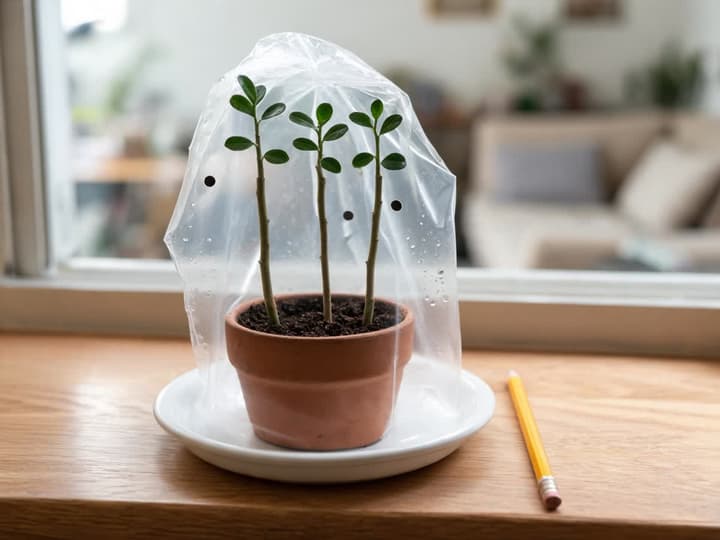
Make a hole in the soil with a pencil. Insert the cutting until you cover at least 1 node, and firm the soil around it.
Cover the pot with a clear plastic bag and poke a few small holes in it to allow air circulation.
Leave the pot in bright, indirect light, with no direct sun, in the warmest room of the house. UF/IFAS roots the cutting with bottom temperatures between 21 and 24 °C. Keep the soil moist without waterlogging, and open the bag for a few minutes if water droplets bead up inside.
Plant the cutting right after cutting it. In the 2023 study, cuttings were dipped in hormone and planted immediately, and they rooted. Casa e Jardim magazine instructs letting the cutting dry for a few hours so the sap seals the cut, but no technical source has tested this waiting period.
The hormone helped, but not in every case. In the 2023 study, two products increased rooting in dipladenia. In a second batch, planted only in peat, the treated cutting did not root better than the one without hormone. UVM Extension, from the University of Vermont, also considers hormone optional.
The type of soil did not change the result. The same study compared pure peat (dark soil from decomposed moss, sold in bags) with a fifty-fifty mix of peat and perlite. Roots formed the same in both. The cutting needs moist soil without standing water at the bottom, which is why the pot needs a drainage hole.
Dipladenia cuttings in water or in soil
Root dipladenia cuttings directly in soil. The sources that detail dipladenia propagation root cuttings in soil or peat moss. These include UF/IFAS, the RHS, the 2023 study, and commercial cultivar patents, and none tested water.
Extension services disagree on water propagation in general. Purdue advises against putting cuttings in water: roots lack oxygen, turning out weak and adapting poorly to soil. UVM considers the choice a matter of personal preference and lists vines such as ivy and pothos among those that root easily in water. With no trials on dipladenia, soil is the safer choice because roots develop where they will ultimately live.
The guide for rosemary reaches the same conclusion in favor of soil for the same reason: technical sources teach only planted cuttings. If you still want to try water, change the water when it turns cloudy and keep the leaves out of it. Move the cutting from water to soil when roots reach 2 to 3 inches (5 to 8 cm), as UVM directs.
How long dipladenia cuttings take to root
In a nursery setting, dipladenia cuttings root in about 4 weeks with bottom heat between 21 and 24 °C, according to UF/IFAS. Nurseries that breed commercial cultivars report similar timeframes in patents under greenhouse conditions. The patent for 'TVMD303', a cultivar bred in São Paulo, records initial roots in about 3 weeks. Cuttings are ready in 20 to 25 days in summer, between 20 and 35 °C. In winter, between 20 and 25 °C, it takes 25 to 30 days.
New growth at the top of the cutting indicates that roots have likely formed. To confirm, gently tug the cutting: if it offers resistance, roots are holding it, teaches UVM. Once the cutting resists a tug, remove the plastic bag. Do not yank the cutting out to look, as new roots snap easily.
A soft, black base combined with falling leaves indicates the cutting has rotted. According to Iowa State, waterlogged soil is one of the most common causes of root rot. Discard the rotted cutting and take a new cutting in fresh soil that is moist but never soggy.
Best time to propagate dipladenia cuttings in Brazil
The best time to take dipladenia cuttings in Brazil runs from late spring to late summer, from November to March. The RHS recommends softwood cuttings in late spring and semi-ripe cuttings in summer. The RHS is based in the Northern Hemisphere, where late spring falls in May. In Brazil, late spring is November and summer runs from December to March. You can already start in October if the cutting stays in a warm room.
What the cutting demands is warmth: 21 to 24 °C at the base, according to UF/IFAS. In winter, between June and August, cuttings root only if kept in a heated spot. In nurseries with greenhouses kept between 20 and 25 °C, the 'TVMD303' patent reports rooting in about 3 weeks in winter as well.
Layering: propagating vines without severing the stem
Layering makes roots grow on a stem still attached to the parent plant. It works for climbing dipladenia, which has long, flexible stems. Iowa State Extension, from Iowa State University, teaches the method for plants with long, flexible stems. No technical source has tested layering on dipladenia.
Choose a long stem that reaches garden soil or a nearby pot filled with potting mix.
Strip the leaves from the section that will be buried.
Bury that section 2 to 4 inches (5 to 10 cm) deep, keeping at least 1 node under the soil. Leave the tip of the stem exposed above ground.
Pin the stem into the soil with a landscape staple or bent wire.
Keep the soil moist. Roots form in 6 to 12 weeks, according to Iowa State.
Once the stem is firmly anchored by roots in the soil, sever its connection to the mother plant.
Iowa State recommends layering for plants whose cuttings die before rooting, noting that it requires neither special soil nor humid air. Air layering wraps a section of the stem with moist sphagnum moss high on the plant, suited for rigid stems that cannot bend. On a climbing vine, simple layering is easier.
Dipladenia propagation from seed
Dipladenia grown from seed may not retain the characteristics of the mother plant, states the 2023 study. Nearly every retail dipladenia is a hybrid, a variety created by crossing multiple species, according to NC State.
Patents for commercial cultivars reveal how they are developed. The nursery crosses two plants, selects one resulting seedling, and multiplies it solely through cuttings. Cuttings keep the variety true to type, generation after generation.
Seeds develop inside a long, slender pod. On Mandevilla laxa, another species in the genus, pods grow in pairs and seeds carry a tuft of hairs. This description comes from the reference resource Trees and Shrubs Online. The patent for a commercial cultivar records roughly 100 seeds per pod. No technical source publishes germination timelines or temperatures for dipladenia. If you want an exact duplicate of your plant, stick to cuttings.
From rooted cutting to permanent pot
A cutting rooted directly in soil can move into its permanent pot once roots reach about 1 inch (2.5 cm), advises Purdue. Use high-quality potting mix and a pot with drainage holes at the bottom. After transplanting, Purdue advises moving the young plant to a bright, sunny spot.
Mature dipladenias need full sun to bloom abundantly, according to UF/IFAS. Start with morning sun and gradually increase sun exposure as the young plant puts out new foliage. From that point on, watering, fertilizing, and staking follow the guide on how to care for dipladenia.
Frequently asked questions
Can you divide dipladenia roots to propagate it?
None of the technical sources in this guide describe root division for dipladenia. Patents describe the root systems of commercial cultivars as either thin or thick and fleshy, depending on the variety. Digging up the plant to divide it puts the mother plant at unnecessary risk. Tip cuttings and layering propagate the plant without disturbing the root system.
Do dipladenia cuttings need direct sun to root?
No. Purdue advises keeping cuttings in bright, indirect light while they root, without direct sun. Without roots, cuttings wilt quickly. Direct sun should only be introduced gradually after transplanting.
How many cuttings should you take to guarantee a plant?
Take at least three cuttings. Not every cutting takes root. In the 2023 study, hormone treatments increased the percentage of Mandevilla sanderi cuttings that rooted. Consequently, a portion of untreated cuttings failed to root. Three cuttings fit comfortably in a small pot under the same plastic bag.
Related articles
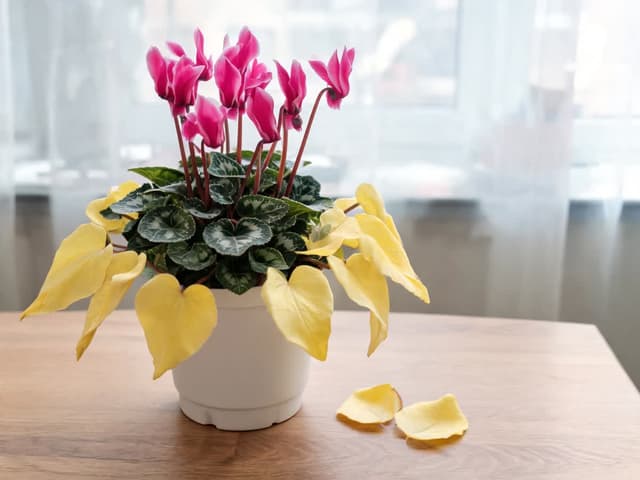
Cyclamen with Yellow Leaves: Causes and What to Do
A cyclamen with yellow leaves might just be going dormant. Learn how the tuber and the time of year tell dormancy apart from rot, heat, thirst, and mites, and what to do in each case.
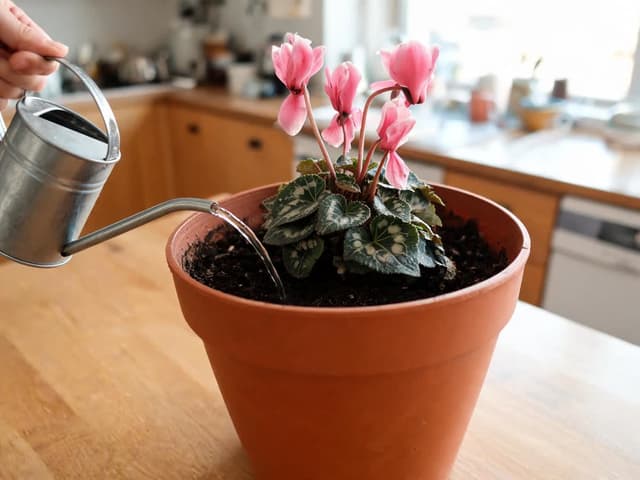
How to Water Cyclamen: Bottom Watering, Edge Watering, and the Wilt Test
How to water cyclamen without rotting the tuber: when the soil surface dries out, from below for 15 minutes or around the edge, never in the center. Plus the test to tell wilting from thirst apart from rot.
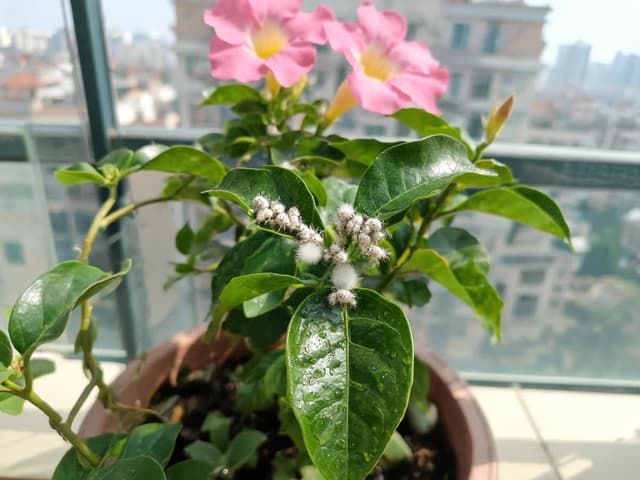
Dipladenia with Sticky White Dots: Which Pest Is It?
A sticky white dot on a dipladenia is almost always a mealybug, but whiteflies, aphids, spider mites, and the plant's own sap leave similar marks. See the test that separates each one and the source-backed treatment.