How to care for rosemary: sun, watering, and potted rosemary drying out
How to care for rosemary at home: direct sun for 6 hours, fast-draining soil, and watering only when the soil dries out. Plus how to save supermarket rosemary that turns black and dries out.
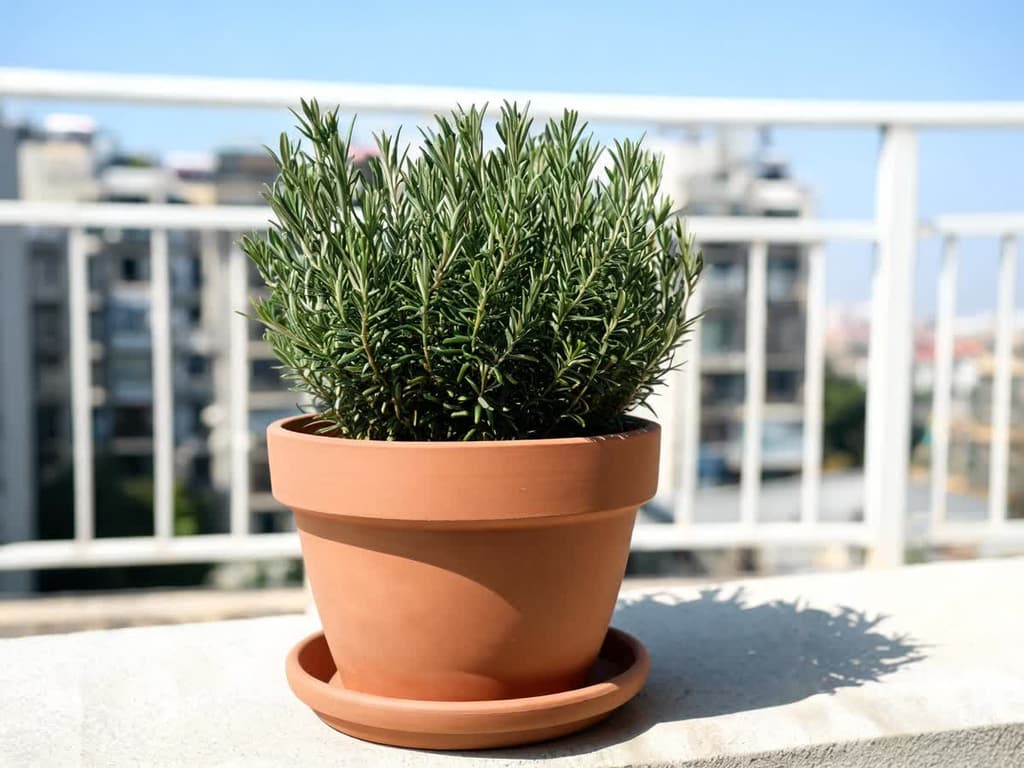
To care for rosemary, leave the pot where it receives direct sun for 6 hours or more a day. Use soil that lets water drain quickly and a pot with drainage holes at the bottom. Water only when the soil is dry to the touch, until water drains through the hole. Excess water is the most common cause of death for rosemary, according to NC State Extension. NC State Extension is the research service of North Carolina State University.
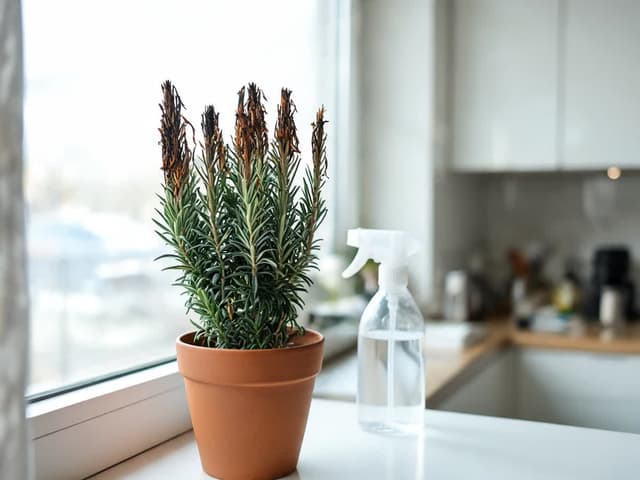
If your rosemary has black leaves or drying branches, you can still try to save it. Take the plant out of the pot and look at the roots. Firm, white roots are a sign that you can try to save it. Brown, mushy roots indicate rot, and the plant will only recover if some white portion remains.
Rosemary quick care sheet
Care | What to do |
|---|---|
Light | Direct sun for 6 hours or more per day |
Window in Brazil | The one facing north, which receives the most sun |
Watering | When the soil feels dry to the touch, until it drains from the hole; empty the saucer right after watering |
Soil | Light and well-draining, with up to 25% coarse sand |
Pot | At least 12 inches wide and deep, with multiple drainage holes |
Fertilizer | Minimal: for pots in the same soil for over a year, a bit of granular fertilizer in late spring |
Harvesting | New shoots, at most the top third of the plant |
Cold | An established plant tolerates down to 18°F (-8°C); in pots, roots suffer sooner |
Pets | The ASPCA classifies rosemary as non-toxic to dogs and cats |
How to identify rosemary
Rosemary is a shrub with slender leaves resembling pine needles, featuring a strong seasoning scent when you crush a leaf. The leaves are green on top and whitish underneath, covered in short fuzz. Over the years, the lower branches become stiff and brown, like wood.
The current scientific name is Salvia rosmarinus. The former name, Rosmarinus officinalis, still appears on many plant tags, according to the RHS, the United Kingdom's horticultural society. The rosemary profile provides botanical data for the species. NC State notes that people confuse rosemary with santolina, another shrub with fragrant gray foliage.
If you found a shrub like this in your yard and do not know if it is rosemary, take a photo with the Bloom app (available for iOS). The app shows the species name before you use the plant in cooking.
Light: does rosemary prefer sun or shade?
Rosemary loves sun. NC State calls for 6 hours or more of direct sun per day. UF/IFAS, from the University of Florida, gives the same number.
UNH Extension, from the University of New Hampshire, points to a south-facing window, which gets the most sun there. In Brazil, the window with the most sun is north-facing. A south-facing window gets almost no direct sun in Brazil and is not enough for rosemary.
Indoors, rotate the pot once a week, as directed by UF/IFAS, so that all sides of the plant receive light.
How to water rosemary without waterlogging
Water rosemary when the soil is dry to the touch. Push your finger into the soil up to the first knuckle. If it comes out dry, water it. If it comes out moist or with soil sticking to it, wait another day and check again.
Water until liquid drains from the bottom hole, as recommended by Illinois Extension at the University of Illinois. Empty the saucer beneath the pot as soon as water stops draining. Standing water in the saucer keeps the bottom of the soil soggy, which is where roots rot.
Frequency changes with sun, heat, and pot size. UF/IFAS cites "about once a week" for potted rosemary grown indoors. Even so, the soil decides, not the calendar. A small pot in summer sun dries out much faster than the same pot during a rainy winter.
Potted rosemary also dies of thirst. UNH Extension at the University of New Hampshire explains that potting soil dries out quickly and the plant suffers from lack of water. That same plant rots if the soil stays overly wet. Curling leaves signal that the plant is suffering from either too little or too much water, according to the same source. That is why the rule is to check the soil before each watering, rather than watering less as a precaution.
UVM Extension at the University of Vermont views leaves losing their green color as a sign of underwatering. NC State identifies overwatering as the most common cause of death. The soil distinguishes between the two: soggy for days points to overwatering, dry as dust points to thirst.
Soil and pots: how to avoid waterlogged soil
Rosemary requires light soil that lets water drain through quickly. The RHS recommends mixing up to 25% coarse sand by volume into potting mix. NC State notes that rosemary tolerates almost any type of soil, except for clay, which retains water. Lavender, another Mediterranean plant, requires the same well-draining soil and direct sun.
To care for potted rosemary, the RHS recommends a container at least 12 inches (30 cm) wide and deep, with multiple drainage holes. A cachepot is a decorative outer pot without holes that holds the plant's container. A pot without holes, or a cachepot without room for water to drain, leaves roots sitting in standing water.
Rain can also soak rosemary. The RHS warns that cold, wet soil causes roots to rot, even in mild winters. During rainy weeks, move the pot to a sheltered spot, such as a porch or against a protected wall.
Rosemary in pots or in garden beds
In the ground, rosemary grows larger and needs less maintenance. The RHS states that established rosemary planted in garden soil does not need extra watering; during the first year, water during dry spells. Choose a spot with 6 hours or more of direct sunlight and light soil; if your soil is clay, build a raised bed or keep the rosemary in a pot.
When planting in a garden bed, do not bury it deep: the root ball (the block of soil and roots) should only have a thin layer of soil over it. Leave at least 18 inches (45 cm) between plants, according to the RHS. In pots, rosemary stays smaller and depends on you for all its water.
Supermarket rosemary: why it dries out and how to save it
Three things typically harm supermarket rosemary: the plastic sleeve around the pot, an overly small container, and a lack of sunlight.
The plastic or foil sleeve traps the water that drains from the hole. UF/IFAS warns that this sleeve retains more moisture than rosemary likes and accepts two approaches: keeping the sleeve and monitoring the soil, or removing it. This guide advises removing it, because without the sleeve, water exits the pot without relying on your attention. Place the pot on a saucer that you can easily empty.
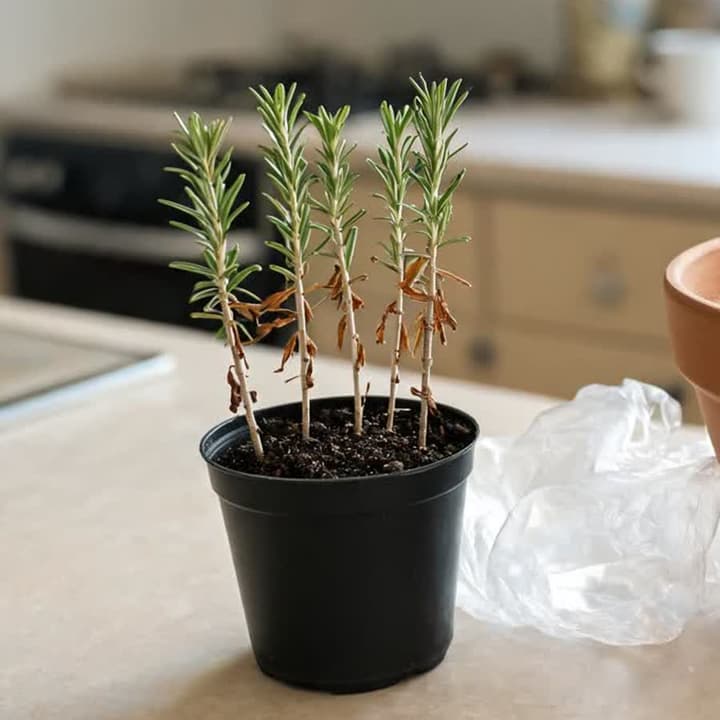
Look at the base of the plant: if several separate stems emerge from the soil, it is a cluster of cuttings planted together, not a single trunk. A cutting is a piece of stem snipped to develop roots. NC State describes this production method using multiple cuttings in the same pot, spaced 1 to 2 inches (2.5–5 cm) apart. Once rooted, the same source directs moving each one into its own pot.
Move the rosemary into a pot with drainage holes, one size up from its current one, using well-draining soil; the RHS recommends a width of 12 inches (30 cm) for mature plants. If each stem already has its own roots, separate the stems and pot each one individually, as NC State directs. If the roots are tangled, move the entire root ball into the new pot.
Place the pot in the sunniest window in the house. On a kitchen counter, far from the window, rosemary will not receive its 6 hours of direct sunlight.
Black leaves and dry stems: overwatering or underwatering?
Soil that has stayed wet for days, black or limp leaves, and drying branches indicate waterlogged roots. NC State notes that excess water is the most common cause of decline and death in rosemary. Root rot and gray mold are common diseases on it, according to the same source. Underwatering symptoms look different: dry, brittle, light-brown needles, with soil as dry as dust.
NC State confirms only the most common cause. The soil and roots in the table provide the way to check which of the two causes you are facing.
What you see | Soil | Roots | Probable cause |
|---|---|---|---|
Black or limp leaves, lower branches drying out | Wet for days | Brown and mushy | Overwatering |
Dry, brittle, light-brown needles | Dry as dust | Dry, but firm | Underwatering |
Curling leaves | Too dry or too wet | Check both | Underwatering or overwatering |
To try to save waterlogged rosemary, remove the plant from its pot and brush away the wet soil with your hands. Use clean shears to trim off brown, mushy roots until you reach firm, white sections. Repot in dry, well-draining soil and only water once this soil feels dry to the touch. If the problem is underwatering, water slowly until moisture drains through the bottom hole. From then on, check the soil before each watering.
Also trim dry branches back to green growth. If no white roots remain, the plant will not recover. Before throwing it away, take cuttings from the green top shoots. Only 30% to 50% of them will root, so take several.
Root rot has a detailed treatment guide on the rosemary disease page:
Powdery mildew, pests, and scorched tips
Powdery mildew appears as a white powder on leaves and shoots. NC State attributes it to poor air circulation and high humidity in rosemary. Remove parts covered in powder and move the pot away from other plants. Shift the rosemary to a location with better airflow and lower air humidity.
Indoors, NC State advises monitoring rosemary for four pests. These are aphids (small insects that cluster on new growth), mealybugs (white, cotton-like masses), whiteflies, and spider mites (tiny, almost invisible mites). Against spider mites, UNH suggests a strong spray of water on the foliage every 1 to 2 days. The spray knocks the mites off, and many cannot climb back onto the plant.
For spider mites and mealybugs, UNH also mentions horticultural oil and insecticidal soap, always following the product label.
Dry tips appear when the potting soil dries out completely. The RHS warns that container soil dries out quickly on hot, sunny days. Hard frost also burns young shoots, according to the same source. If tips dry out while the soil remains constantly moist, waterlogged roots are the likely cause.
How to harvest and prune rosemary
Harvest rosemary year-round by cutting sprigs as you need them. The RHS states that soft new shoots in late spring and summer provide the best flavor. Cut with shears and maintain the plant's shape without removing all branches from the same side.
Do not remove more than the top third of the plant at once. Illinois Extension gives this limit for perennial herbs like rosemary, because the next harvest depends on new shoots. Always cut into the green, flexible portion of the stem.
Never cut into old wood, which is already brown, hard, and leafless. The RHS says to avoid this cut and notes that old rosemary rarely recovers from hard pruning. Once a year, after flowering, trim just the green tips of the branches to keep the plant bushy; unpruned, it becomes tall and bare at the base.
NC State mentions hard pruning (cutting back significantly, not just the tips) after flowering as an option to encourage bushier foliage. The RHS states that old rosemary does not recover from hard pruning. Neither evaluated the results, so this guide takes the safer approach for the plant: prune hard only into green wood and replace an old, leggy plant with a new cutting. The RHS suggests replacing rosemary every 7 or 8 years.
How to propagate rosemary from cuttings
NC State recommends propagating rosemary from cuttings because seeds take a long time to germinate. Snip a 3- to 5-inch (8 to 13 cm) green shoot tip without flowers. Strip the lower leaves, leaving foliage only on the top 1 to 2 inches (2.5 to 5 cm). Plant it in light, moist potting mix, cover the container with a clear plastic bag, and place it in a bright location out of direct sunlight and drafts.
Roots appear in 4 to 6 weeks. Only 30% to 50% of cuttings root, so take two to three times as many cuttings as you need.
Fertilizer, flowering, and cold hardiness
Rosemary needs little fertilizer. The RHS states that in-ground rosemary does not need fertilizer and thrives even in poor soil. In pots, after 1 year in the same soil, scatter a little general-purpose granular fertilizer. The recommended time is late spring or early summer, from November to January in Brazil.
Rosemary produces small blue, purple, pink, or white flowers on the previous year's wood, according to NC State. That is why pruning follows flowering, as directed by the RHS: pruning beforehand cuts off the stems that would have bloomed.
In most of Brazil, the cold does not threaten rosemary. The RHS records -8 °C for an established plant; University of Maryland Extension reports -15 °C. This guide uses the lower number, which is safer for the plant. Where it rains in winter, as in the South, the greater risk from June to August is cold, wet soil, which rots the roots.
Is rosemary harmful to dogs and cats?
The ASPCA, an American animal protection organization, classifies rosemary as non-toxic to dogs, cats, and horses. The list of plants toxic to pets shows which common household species actually require caution.
Frequently asked questions about caring for rosemary
Where should I keep rosemary in the house?
Place the rosemary in the window that receives the most direct sun, at least 6 hours a day. In Brazil, this is the north-facing window. An open balcony and a sunny yard also work. Rotate the pot once a week so all sides of the plant receive light.
How do you revive a dying rosemary plant?
Remove the rosemary from its pot and check the roots. If there are firm, white roots, trim off any brown, mushy parts and repot in fresh, dry, well-draining soil. Water only when this soil dries out to the touch. Cut back dry branches to green wood. If no white roots remain, take stem cuttings from the green branches.
How often should you water potted rosemary?
Water when the soil feels dry to the touch until water runs out of the drainage hole, then empty the saucer. UF/IFAS mentions about once a week for indoor rosemary. Small pots, sunlight, and heat make soil dry faster; during winter and rainy weather, it stays moist longer.
Can rosemary stay indoors?
It can, but it is challenging: NC State and UNH warn that keeping rosemary indoors over winter is difficult. Keep the pot right by a window with 6 or more hours of direct sunlight and rotate the container weekly. Without a sunny window, rosemary does better on a balcony.
Black leaves, white powder, and dried-out needles point to different causes in rosemary. A photo of the symptom in Bloom identifies the plant's likely diseases:
Related articles
How to Care for Syngonium: Light, Watering, Cuttings, and Pests
How to care for syngonium indoors: bright indirect light, watering when the soil surface dries, 64 to 81°F (18 to 27°C), and 40 to 60% humidity. Also cover water cuttings, thrips, yellow leaves, and pet toxicity.
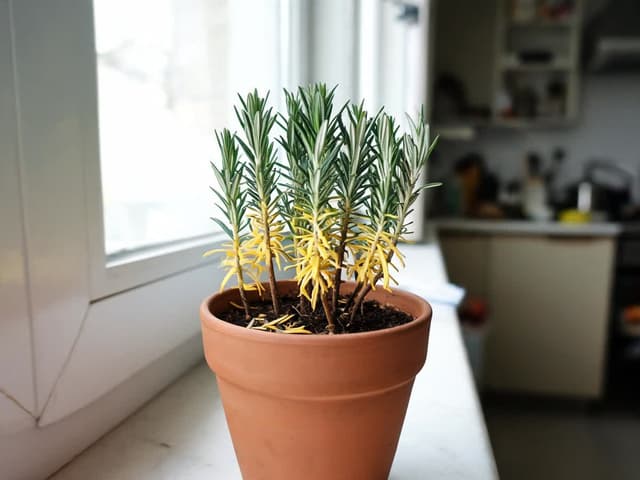
Rosemary Leaves Turning Yellow: Causes and Solutions
Rosemary with yellow leaves usually has overly wet roots. Check where the yellowing appears to see if it stems from wet roots, low light, spider mites, powdery mildew, or normal leaf shed, and learn how to save the plant.
Is Your Rosemary Dying? How to Save Soap-Burned Rosemary
Rosemary with soap-burned leaves can usually be saved: the damage stays on the affected needles. Rinse the leaves, wait a week, scrape the stems, and prune only what is brown inside.