Is Your Rosemary Dying? How to Save Soap-Burned Rosemary
Rosemary with soap-burned leaves can usually be saved: the damage stays on the affected needles. Rinse the leaves, wait a week, scrape the stems, and prune only what is brown inside.
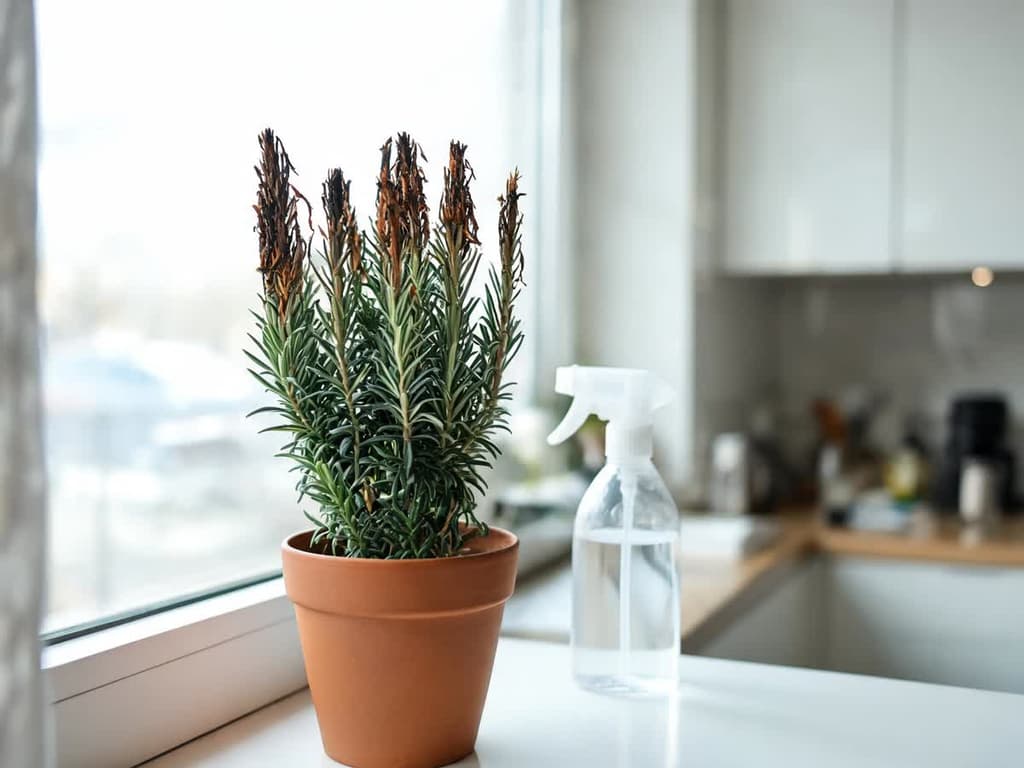
Rosemary with soap-burned leaves can usually be saved, as long as the stems stay green on the inside. UConn Extension, the public outreach service of the University of Connecticut, explains that spray injury happens all at once and does not spread. Spray injury is the damage caused by a product sprayed onto a plant. The affected needles darken and dry out, while new shoots emerge healthy. Because of this, rosemary that looks like it is dying after dish soap may have only lost the leaves that were sprayed.
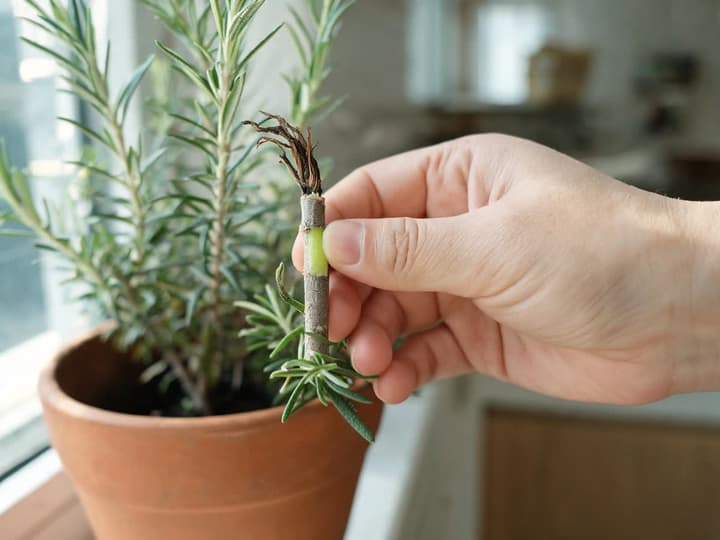
Wait a week. After that, scratch the bark of a stem with your fingernail: green underneath means a live stem, brown underneath means a dead stem. Prune only what is brown inside.
What to do today with soap-burned rosemary
Do these four things on the same day the leaves darken:
Rinse the leaves with clean water. Clemson Extension, at Clemson University, instructs you to wash the plant with clean water when it wilts within a few hours of soap application. The same applies when the leaf margins turn brown. Wet the branches completely, top and bottom.
Move the pot out of direct sunlight until the leaves dry. Clemson warns that strong sun and heat above 32 °C (90 °F) stress plants treated with soap. Keep the rosemary in a bright, well-ventilated spot, away from direct sunlight.
Do not spray any products. No dish soap, no vinegar, and no alcohol. Colorado State University Extension warns that leaf damage accumulates with every new application.
Do not water more than usual. Water only when the potting soil is dry to the touch. Stick your finger into the soil to check before every watering.
No one has measured how much dish soap in the soil harms rosemary. Overwatering is a common cause of death for rosemary, according to NC State Extension, of North Carolina State University. Because of this, the safest option is not to "flush the soil" with a lot of water, because too much water rots the roots.
Prune or wait: the green scratch test
Wait a week before pruning burned rosemary. UConn explains that spray injury can take anywhere from a few days to a week to show up completely. If you prune on the first day, you will not yet know which needles will dry out.
After that week, do the stem scratch test. The RHS (Royal Horticultural Society of the United Kingdom) recommends this test to find out whether a shrub is alive:
Scratch a small bit of the stem's bark with a fingernail or a pocketknife.
Green under the bark and smooth, firm bark: the stem is alive.
Brown under the bark and peeling or wrinkled bark: the stem is dead.
If the tip is dead, repeat the test lower down, on the thicker part of the same stem, until you find green.
What you see on the stem | What to do |
|---|---|
Black needles, but green under the bark | Do not prune the stem. Remove only the dry needles, if you want. |
Tip brown inside, green lower down | Prune only the brown tip, leaving the green section with needles on the plant. |
Stem brown inside all the way to the base | This stem is dead. Cut it at the base, where it emerges from the main trunk. |
All stems brown inside and dark trunk bark right below the soil line | The plant died. |
On live stems, do not cut into old wood. The RHS warns that rosemary usually does not recover from hard pruning and advises avoiding cuts into old wood. Old wood is the thick, brown, needleless part of the branch. Always leave a section with green needles below the cut.
How long rosemary takes to sprout new growth after dish soap
None of the consulted sources gives a recovery timeline for soap-burned rosemary. What UConn describes is the standard pattern: the damage stays on the older leaves that were sprayed, and new leaves grow in healthy. Black needles do not turn green again. The sign that your rosemary survived is a light-green tip of fresh growth on stems that passed the test.
The RHS says a plant with green under the bark can take a few months to show improvement. After cutting back dry tips, wait that long before giving up on the plant. If the green stems dry up during that time, or if no shoots appear, consider the plant dead.
If any healthy green branch is left, take cuttings from it now while you wait on the rest of the plant. The step-by-step instructions are in the guide on how to propagate rosemary, using the tip section that roots best.
Black leaves on rosemary: dish soap or root rot?
Rosemary also gets black leaves when roots rot, and the rescue process is different. What separates the two causes is the timing and location of the damage:
What you see | Dish soap | Root rot |
|---|---|---|
When it appeared | All at once, within hours to a week after spraying | Gradually, over weeks |
Where | On the needles that were wetted, all the same age | Starts on the lower branches and moves up |
Potting soil | Normal | Wet for days |
After one week | Does not get worse | Continues to get worse |
UConn notes that spray injury appears all at once and affects leaves of the same age. NC State points to root rot as a common rosemary disease, linked to overwatering. If the rosemary keeps drying out after a week, take the plant out of the pot and check the roots: brown, mushy roots mean rot. The treatment is in the guide on how to care for rosemary, in the section on black leaves and dry branches.
Other causes of a dying rosemary
Dust-dry soil and dry, brittle needles: lack of water. UNH Extension, at the University of New Hampshire, explains that potted rosemary soil dries out fast and the plant suffers from dehydration.
Thin, leggy stems with widely spaced needles: lack of sunlight. Rosemary needs 6 hours or more of direct sun, as the guide on rosemary light shows.
Burned tips after a very cold night: cold damage. The RHS notes that rosemary already well rooted in place can tolerate down to -8 °C. Care for rosemary in winter shows how to protect the pot from cold and rain.
Why dish soap burns rosemary leaves
Dish soap is made to remove grease, and the leaf has a waxy layer that protects it. UConn explains that dish soap can dissolve this wax and damage the leaf.
Dish soap is not the same thing as insecticidal soap. Insecticidal soap is a product made with potassium salts of fatty acids (a soap made from oil or fat), tested and registered for use on plants. Colorado State University Extension explains that dish soap contains other ingredients, such as degreasers, preservatives, and thickeners. Because of this, the same university does not recommend homemade dish soap against pests.
Certain conditions make plants more sensitive to soap. UConn lists:
water-stressed plants, heat above 32 °C (90 °F), or very humid air;
recently potted starts and unrooted cuttings;
tender new growth.
Supermarket rosemary is usually one of those young starts: several cuttings potted together in a small container. The soil in that pot dries out quickly.
The internet's dish soap doses vs. university recommendations
DIY recipes circulating in videos and posts range from 1.5% to 5% soap. The concentration range Clemson recommends for insecticidal soap is 1–2%:
DIY recipe | Amount | Concentration |
|---|---|---|
Social media post | 20 ml of dish soap in 500 ml of water | 4% |
Gardening blog | 50 ml of dish soap in 1 liter of water | 5% |
News site | 1 tablespoon (15 ml) of mild soap in 1 liter of water | 1.5% |
Clemson, for insecticidal soap | 1–2% of the solution | 1–2% |
Clemson warns that insecticidal soap should not be used at higher concentrations than the label states, because it can severely injure the plant. The 4% and 5% recipes use 2 to 5 times that amount, and with dish soap instead of insecticidal soap.
Extension services do not agree on dish soap. Clemson allows home mixtures but warns that the risk of plant damage increases substantially. UNH suggests a mild detergent solution applied with a cotton swab or cloth to remove scale insects one by one. UConn warns that dish soap raises the risk of damage, and Colorado State does not recommend homemade solutions. This guide follows the latter two, which document the injury. On rosemary, which you eat, use only products made for plants.
How to treat rosemary pests without burning the leaves
After using dish soap, the pest you wanted to eliminate might still be on your rosemary. The rosemary pests page shows how to identify aphids, scale, and whiteflies. Fine white webbing between the needles is usually a sign of spider mites, tiny arachnid relatives that live on the undersides of the leaves.
A stream of water first. Against spider mites, UNH suggests a strong stream of water sprayed on the foliage every 1 to 2 days. The spray knocks mites off, and many cannot make it back to the plant. Wait through the week of your stem test before starting.
Insecticidal soap, if water is not enough. Use a commercially prepared product formulated for plants, mixed at the label rate. UConn instructs testing it first on a small section of the plant and waiting at least 24 hours to see if damage appears.
At the right time and with a well-hydrated plant. Clemson directs applying early in the morning or late in the afternoon, never in direct sunlight or above 32 °C (90 °F). Never apply to a thirsty plant: water the day before if the soil is dry.
Spray the pests directly. Colorado State explains that soap only kills insects it hits directly and leaves no residual effect once dry. Aim for the undersides of the needles and shoots where the pests congregate.
Frequently asked questions about burned and dying rosemary
Do soap-burned rosemary leaves turn green again?
No. A burned needle stays marked. UConn explains that spray injury stays on affected foliage while new growth emerges healthy. The sign that rosemary has recovered is fresh growth, not old foliage turning green again.
Can mild dish soap burn plants?
It can burn them. UConn warns that soaps and dish detergents can dissolve the leaf's waxy layer, without distinguishing mild formulations from others. Colorado State does not recommend any homemade dish soap mixes against pests. For aphids and spider mites on rosemary, use a stream of water or an insecticidal soap labeled for plants at the package rate.
How can you tell if rosemary is dead?
Scratch the bark on several branches and on the stem base just below the soil line, as the RHS recommends. If everything is brown under the bark and the roots are dark and mushy, the plant died. If any stem is green inside, it is still alive and can be used for cuttings.
How long should you wait before pruning burned rosemary?
Wait one week. UConn explains that spray injury can take anywhere from a few days to a week to fully appear. Once that period passes, scratch the stems and prune only what is brown inside. Always leave a section with green needles on the branch.
Black leaves on rosemary can come from dish soap, root rot, or pests, and each cause requires a different fix. A photo of the symptom in Bloom (available for iOS) identifies likely plant diseases and pests:
Related articles
How to Care for Syngonium: Light, Watering, Cuttings, and Pests
How to care for syngonium indoors: bright indirect light, watering when the soil surface dries, 64 to 81°F (18 to 27°C), and 40 to 60% humidity. Also cover water cuttings, thrips, yellow leaves, and pet toxicity.
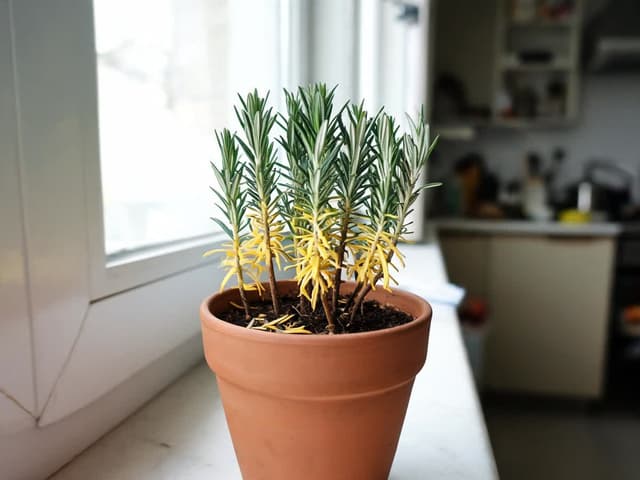
Rosemary Leaves Turning Yellow: Causes and Solutions
Rosemary with yellow leaves usually has overly wet roots. Check where the yellowing appears to see if it stems from wet roots, low light, spider mites, powdery mildew, or normal leaf shed, and learn how to save the plant.
How to Fertilize Rosemary: When, How Much, and Which Fertilizer
How to fertilize rosemary in pots and in the ground: rosemary needs very little fertilizer. Learn the right timing in Brazil, doses, coffee grounds, lime, and signs of overfertilizing.