Rosemary Leaves Turning Yellow: Causes and Solutions
Rosemary with yellow leaves usually has overly wet roots. Check where the yellowing appears to see if it stems from wet roots, low light, spider mites, powdery mildew, or normal leaf shed, and learn how to save the plant.
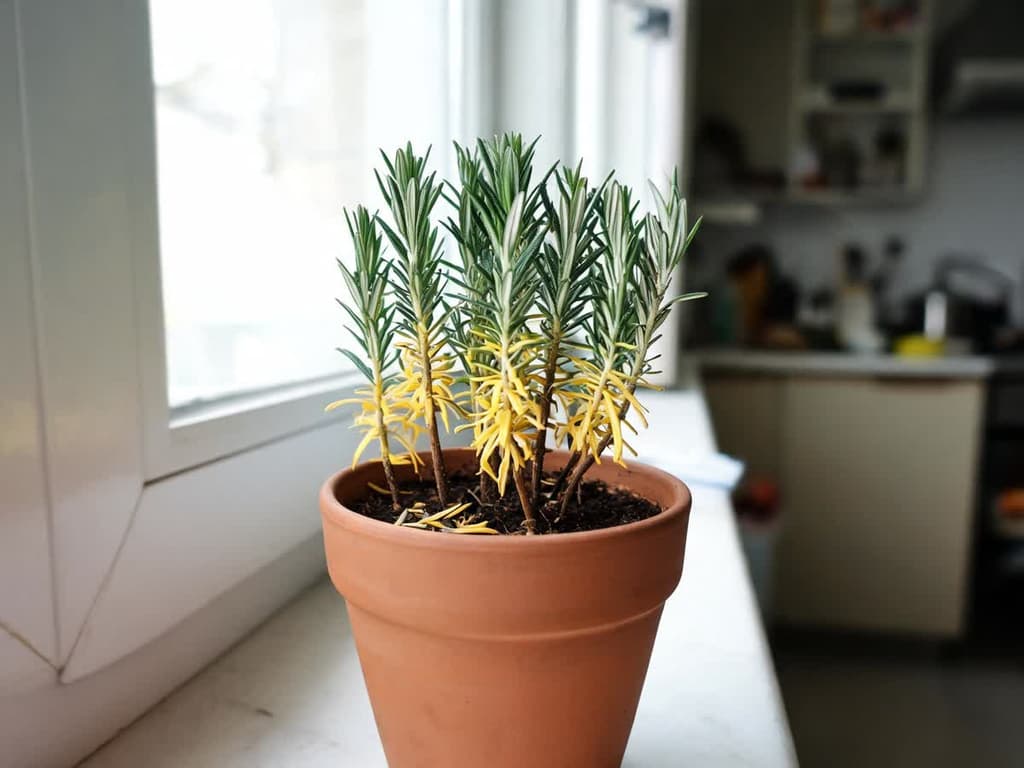
Rosemary with yellow leaves usually has roots that are too wet. NC State Extension points to overwatering as the most common cause of decline and death in rosemary. NC State Extension is the agricultural extension service of North Carolina State University. There is one exception that requires no fix: a few old leaves, the ones closest to the stem, turning yellow while the branch tips stay green is normal shedding.
You can save rosemary when the tips of the branches are green and the root system still has firm, white parts. Where the yellowing appears reveals the cause: on the older lower leaves, across the whole plant, or only on the new tips.
Before touching your rosemary: check the tips, soil, and roots
Three checks narrow down the causes of yellowing in under 10 minutes. Go in order and note what you see.
Look at where the yellowing is located. Old leaves near the stem with green tips indicate normal shedding. A whole plant turning pale yellow indicates a lack of sun or nitrogen. Only yellow new tips indicate iron, pH, or watering.
Stick your finger about an inch into the potting soil. Soil that stays wet several days after the last watering indicates overly soggy roots. Soil that is dry and pulling away from the rim of the pot indicates thirst.
If the soil was wet, take the rosemary out of its pot and look at the roots. Healthy roots are white or cream and firm. Rotted roots are brown, mushy, and shed their outer layer when pulled.
If the soil was wet and the roots were brown, head straight to the section on rosemary turning yellow from the bottom up with wet soil.
Yellow leaves near the stem, with green tips: normal leaf shed
Rosemary is an evergreen shrub, meaning it has leaves year-round. Even so, each leaf lives for only one to a few years. The Clemson Cooperative Extension, from Clemson University, explains this for evergreen plants. These plants shed their oldest leaves first, the ones closest to the stem.
During normal shedding, older leaves turn yellow, dry out, and fall off, while the new leaves at the tips of the branches stay green. According to Clemson, the plant reclaims part of the nitrogen and phosphorus from the old leaf before dropping it. This shedding can take anywhere from a few days to a few weeks.
According to Clemson, leaf drop stops being normal when new growth is affected. It is also not normal for the entire plant to turn yellow or brown.
If the yellowing appears only on older leaves near the stem, there is nothing to fix. Gently shake the branches to loosen dried leaves, or pick off any that remain attached by hand. Continue watering only when the top inch of soil feels dry.
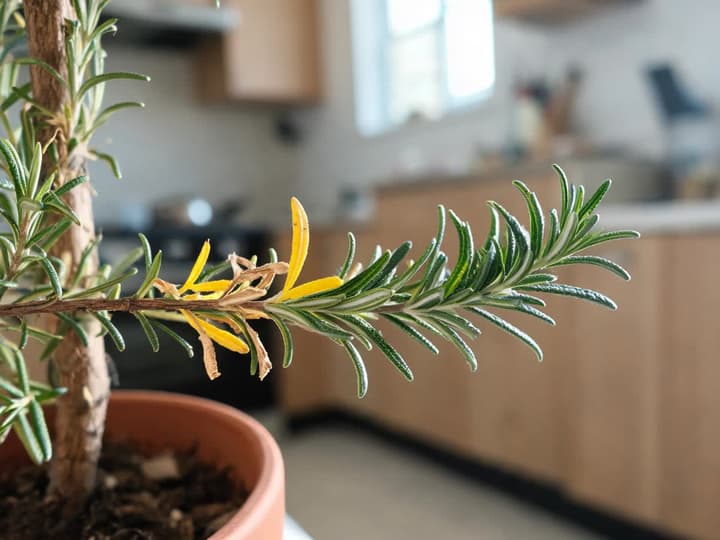
Rosemary yellowing from the bottom up with wet soil: overly wet roots
Rosemary yellowing from the bottom up with wet soil usually has roots starved of air. Wisconsin Horticulture, from the University of Wisconsin, states that overwatering is the leading cause of rosemary declining and dying. Penn State Extension, from Pennsylvania State University, warns that rosemary is sensitive to waterlogged soil.
Root rot is the disease that appears when roots stay constantly wet. Burpee, an American seed company, describes the signs on rosemary: yellow leaves, dry leaves and tips, and entire branches that turn brown and die. Penn State lists brown tips as a sign of root rot.
The risk is highest for potted plants spending the winter indoors, according to Penn State. UNH Extension, from the University of New Hampshire, notes that rosemary in cooler conditions needs less water. The exact watering routine that worked in summer can end up waterlogging the soil during winter.
To try to rescue rosemary with waterlogged roots, take these steps on the same day:
Remove the plant from its container and gently brush away the wet soil with your hands.
Use clean shears to trim off brown, mushy roots, cutting back until you reach firm, white tissue.
Repot in fresh, dry soil that drains rapidly, using a container with drainage holes at the bottom.
After every watering, wait until water stops draining out and empty the saucer beneath the pot.
Only water again when the top inch of soil feels dry.
If no white roots remain, the plant will not recover. Before discarding it, trim green stem tips to propagate rosemary cuttings.
Potted rosemary turning yellow indoors
Potted rosemary turns yellow indoors for three reasons: low light, soil that does not dry out, and water trapped beneath the pot. The three often occur together. Iowa State Extension, from Iowa State University, places rosemary among the herbs that require the most light indoors. According to Iowa State, most herbs need about 8 hours of direct sun per day when grown indoors.
The right window is the one that gets direct sun for most of the day (in Brazil, almost always the north-facing one). According to Penn State, rosemary suffers indoors during winter for two reasons: low light and improper watering, either too much or too little. The article on how much sun rosemary needs shows what to do when no window in the house provides these hours of sun.
Rosemary sold in supermarkets and gift shops usually comes in a small pot, wrapped in a plastic sleeve or foil paper. UF/IFAS, the University of Florida Extension, warns that this sleeve traps more moisture than rosemary likes. Remove the sleeve and set the pot on a saucer that you can drain.
Watering less and then watering more without checking the soil will not solve the issue. UNH Extension explains that container-grown rosemary dries out quickly and suffers from thirst, but it rots if the soil stays overly soggy. The solution is checking the potting mix before every watering: water until liquid drains from the hole once the top inch feels dry. The guide on how to care for rosemary shows how to repot supermarket rosemary, which often packs several individual seedlings into a single pot.
Entirely light yellow rosemary: lack of sunlight or nitrogen
Rosemary that turns light yellow across the entire plant, with no spots, thin branches, and slow growth, lacks sun or lacks nitrogen. Nitrogen is one of the three main nutrients in fertilizer, the N in the NPK shown on the label. Iowa State explains that when it is lacking, the plant pulls nitrogen from older leaves and sends it to new ones.
That is why a lack of nitrogen starts by yellowing the old bottom leaves and then spreads through the plant. Normal leaf shedding also starts with the bottom leaves. The difference is that, with nitrogen deficiency, the yellowing moves upward and the plant stops growing. During normal leaf shedding, the tip stays green and keeps growing.
Fix the lighting first, because rosemary with too little sun turns pale even with fertilizer. If the rosemary already gets direct sun and stays pale, a little fertilizer helps. Iowa State recommends general-purpose liquid fertilizer at half strength or quarter strength for potted herbs. The time to fertilize runs from spring to summer (from September to March in Brazil). The same source directs not to fertilize in winter (from June to August in Brazil).
Too much fertilizer also causes harm. Wisconsin Horticulture recommends fertilizing rosemary sparingly, since excess nutrients reduce flowering and aroma. Illinois Extension recommends fertilizing regularly, but refers to rosemary planted out in garden beds. For potted rosemary, this guide follows Iowa State and Wisconsin, since too much fertilizer in a pot burns the root system.
Yellowing on the new rosemary tips: iron, pH, or wet roots
Yellowing that appears first on new tip leaves points to an iron deficiency. Iowa State explains that iron does not move within the plant. Because of this, an iron deficiency appears on the newest leaves, which turn yellow with green veins.
The same Iowa State page warns that overwatering, soil with high pH, and cold cause an identical symptom. In these cases, the soil may have enough iron, but the root cannot absorb it. Soil pH measures acidity; the higher it is, the less acidic. The University of Maryland recommends a pH between 6.5 and 7.0 for rosemary.
Rosemary leaves are needle-thin, and leaf veins are barely noticeable. The clearest clue is where the yellow color appears: new yellow branch tips paired with lower leaves that stay green. Before buying iron supplements, correct your watering routine and watch upcoming new growth: if new needles emerge green, improper watering was the problem. If new tips continue emerging yellow while soil dries out between waterings, perform a soil pH test. If the pH reads higher than the range recommended by the University of Maryland, repot into fresh mix.
Yellow specks and fine webbing on rosemary: spider mites
Yellow or bronze specks on the leaves, sometimes with fine webbing between branches, indicate spider mites. The spider mite is a creature the size of a period that sucks on the leaf from underneath. Washington State University describes this stippling and explains that the mite favors warm, dry environments, like indoor settings.
Iowa State lists rosemary among the herbs that frequently pick up spider mites when grown indoors. Heavy mite infestations cause foliage to yellow, wilt, and drop.
Rinse your rosemary under a lukewarm shower or kitchen faucet, thoroughly soaking the undersides of the leaves. Wrap the pot in a plastic bag so potting soil does not wash away. As long as speckling and webs linger, apply a firm jet of water every one to two days, as suggested by UNH Extension. Mites dislodged by the blast often fail to crawl back onto the plant. Afterward, keep up a weekly rinse, following the recommendation from Washington State University.
Rosemary is a culinary herb, which changes the treatment plan. Washington State University advises against applying chemical pesticides to indoor edible herbs. To clear spider mites on rosemary, stick to plain water.
Powdery white coating before yellowing: powdery mildew on rosemary
A powdery white layer dusting the leaves that later turn yellow indicates powdery mildew. Powdery mildew is a fungal condition that coats foliage in fine white residue. The undersides of rosemary leaves naturally feature a whitish stripe, according to Illinois Extension; powdery mildew appears as white dust on top of the leaves. NC State Extension explains that stagnant air circulation and high humidity trigger powdery mildew on rosemary.
Burpee highlights powdery mildew as a common struggle with indoor rosemary. Penn State advises leaving ample space between containers so air circulates freely. Trim off coated branches, move the rosemary away from surrounding houseplants, and water the soil directly without wetting the foliage. As long as white powder persists, skip the water rinses used against spider mites.
Dry, brittle yellow leaves: thirst, heat, or fertilizer burn
Leaves that yellow and turn crisp and brittle, paired with bone-dry potting mix, indicate severe thirst. Potted rosemary dries out fast, particularly in small containers on hot days. Water slowly until moisture drains through the drainage hole, and check the soil before each watering from that point on.
Indoors, dry tips are not always caused by a lack of water. Illinois Extension, from the University of Illinois, explains that dry indoor air turns rosemary tips brown. The same source warns that watering more in this case rots the roots. If the soil is moist and the tips dry out, check the roots: firm, white roots indicate dry air, while brown roots indicate rot. Against dry air, Illinois Extension recommends a pebble tray with water under the pot. The pot sits on the pebbles without touching the water. Do not use the tray if there is white powder on the leaves, as high humidity promotes powdery mildew.
Too much fertilizer also yellows and dries out leaves. The University of Maryland describes the signs: brown tips and edges, lower leaves dropping, and a white crust on the soil surface. In a large pot, flush out the excess fertilizer with clean water until it drains from the hole. Use a volume of water at least equal to the size of the pot and repeat a few times. In a small pot, the same source recommends replacing the soil.
Frost also burns rosemary, and the guide on caring for rosemary in winter details the lowest temperatures it can handle in garden soil and in containers. Lavender, another Mediterranean plant adapted to dry soil, turns yellow from the same lighting and watering issues, as covered in the guide on lavender with yellow leaves.
What yellowing rosemary leaves indicate
What you see | Likely cause | What to do |
|---|---|---|
Old yellow leaves near the main stem, green tips | Normal leaf shed | Nothing; gently shake off dried leaves |
Yellowing from the base upward, moist soil days after watering | Waterlogged or rotted roots | Inspect roots, cut away rotted sections, and replace potting soil |
Whole plant pale yellow, weak spindly stems | Lack of direct sunlight or nitrogen deficiency | Provide direct sun first; apply mild fertilizer if light is already good |
Only new growth tips yellow | Iron deficiency, high soil pH, or waterlogged roots | Adjust watering; test soil pH if symptoms persist |
Yellow speckles and fine webbing | Spider mites | Blast with water every 1–2 days; switch to weekly rinses afterward |
White powder followed by yellowing | Powdery mildew | Prune mildewed branches and improve ventilation |
Dry, brittle yellow leaves, completely dry soil | Thirst | Water thoroughly until water drains from the bottom |
Brown leaf tips and a white crust on top of the soil | Excess fertilizer | Flush soil with plain water, or repot in fresh soil if in a small pot |
Aphids, scale insects, and whiteflies can also turn rosemary leaves yellow. On culinary herbs, begin with a strong rinse of water. The page on rosemary with yellow leaves lists every pest and disease known to cause yellowing foliage on rosemary.
Is yellow rosemary toxic to cats?
The ASPCA, an American animal welfare organization, classifies rosemary as non-toxic to dogs, cats, and horses. The ASPCA list includes only this classification for rosemary and does not address yellow leaves separately. If your cat vomits or becomes lethargic after biting any plant, take them to the veterinarian.
Frequently asked questions about yellow rosemary leaves
Does rosemary need to be watered every day?
No. The RHS, the Royal Horticultural Society, states that in-ground rosemary firmly settled in place requires no supplemental watering. In containers, water only when the top inch of soil feels dry, soaking until liquid flows from the drainage hole. Daily watering keeps the soil constantly soggy, causing roots to rot.
How can you tell if rosemary is getting too much or too little water?
Press your finger an inch into the soil. Damp soil paired with limp yellow leaves indicates too much water, and the roots turn brown and soft. Dry soil accompanied by brittle, dry yellow leaves points to underwatering. Both conditions can leave leaf tips brown. Always inspect the soil first, and if it feels moist, check the roots.
Do coffee grounds help rosemary with yellow leaves?
There is no proof that it helps. Researcher Linda Chalker-Scott from Washington State University gathered measurements of decomposing coffee grounds. The pH varied from 4.6 to 8.4 (summary published by the University of Arizona Extension). In other words, grounds can make the soil more acidic or more alkaline. In a thick layer, grounds compact and block the passage of water and air to the roots.
What should you check first when rosemary turns yellow?
Check the tips of the branches and test the soil. Green tips with older yellow leaves near the center indicate normal shed. Damp soil remaining several days after watering means you need to slide the plant out of its pot to inspect the root system. Prune away brown, mushy roots, replace the potting mix, and hold off on watering until the top inch dries out.
What to do with your rosemary right now
Today, look at the tips of the branches and poke your finger an inch into the soil: these two clues immediately distinguish normal shedding from soggy roots and thirst. If your yellowing pattern does not match any row in the table, taking a photo of the foliage helps pinpoint the problem. Bloom (available for iOS) identifies diseases from a symptom photo on the Premium plan and provides exact steps to fix them.
Related articles
How to Care for Syngonium: Light, Watering, Cuttings, and Pests
How to care for syngonium indoors: bright indirect light, watering when the soil surface dries, 64 to 81°F (18 to 27°C), and 40 to 60% humidity. Also cover water cuttings, thrips, yellow leaves, and pet toxicity.
Is Your Rosemary Dying? How to Save Soap-Burned Rosemary
Rosemary with soap-burned leaves can usually be saved: the damage stays on the affected needles. Rinse the leaves, wait a week, scrape the stems, and prune only what is brown inside.
How to Fertilize Rosemary: When, How Much, and Which Fertilizer
How to fertilize rosemary in pots and in the ground: rosemary needs very little fertilizer. Learn the right timing in Brazil, doses, coffee grounds, lime, and signs of overfertilizing.