Does Rosemary Like Sun or Shade? How Much Sun It Needs, in Pots and Indoors
Rosemary thrives in full sun: 6 hours or more of direct sun a day. Here is the effect of partial shade, which indoor window works, the right grow light, and how to tell low light from root issues.
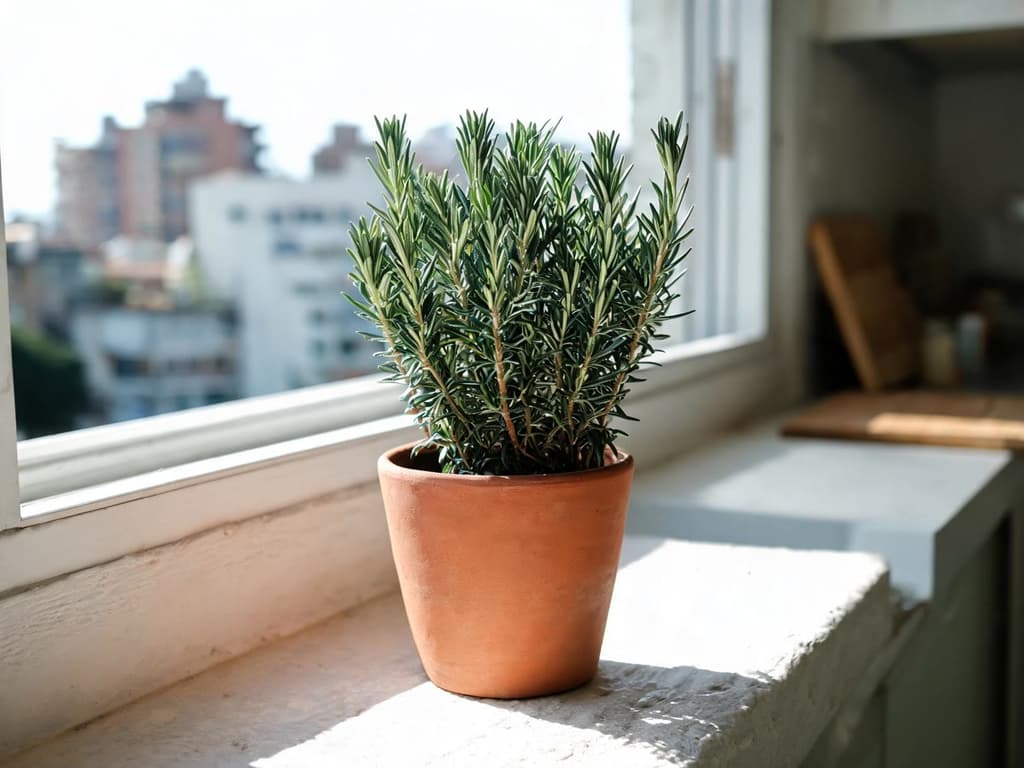
Rosemary likes sun, and full sun: 6 hours or more of direct sun per day. This is the measure from NC State Extension and UF/IFAS, two extension services linked to American universities. Rosemary tolerates shade, but it grows less and yields fewer stems for cooking. UF/IFAS is based in Florida, where summers are hot and humid, just like in much of Brazil.
Direct sun means actual sunbeams hitting the plant. Bright room light, even if strong, does not count. Indoors, rosemary (Salvia rosmarinus, formerly called Rosmarinus officinalis) needs the sunniest window you have, and sometimes a grow light.
Quick summary:
Outdoors or on a balcony: 6 hours or more of direct sun per day.
Indoors: about 8 hours of direct sun, right up against the sunniest window, or a grow light positioned 15–30 cm (6–12 inches) from the leaves for 12–16 hours.
Heavy shade: in a field study, plants grown under 25% sunlight produced 43% less essential oil (the compound that gives the leaves their scent and flavor) per plant.
Rosemary likes sun: how many hours per day
Rosemary needs at least 6 hours of direct sun per day. NC State Extension classifies the plant as full sun and defines the term: 6 hours or more of direct sun. UF/IFAS repeats the same measurement. The RHS (Royal Horticultural Society), the United Kingdom's horticultural society, calls rosemary a "sun-loving Mediterranean shrub."
Some people recommend 4 to 6 hours of sun. University extension services call for 6 hours or more, and this article follows the extensions.
To count the hours, monitor the spot on a sunny day. Note the time the sun first hits the pot and the time it moves away. Subtract any time that a building, tree, or balcony overhang casts shade on the pot.
Lavender belongs to the same family as rosemary and requires the same 6 hours of direct sun. The lavender care guide explains that it also needs soil that dries quickly between waterings. For lavender in very hot climates, UF/IFAS permits midday shade; for rosemary, the same extension calls for full sun.
Can strong sun burn rosemary?
Intense sunlight by itself will not burn rosemary that already lives in the sun. UF/IFAS notes that rosemary requires full sun and handles Florida's heat well. Some say rosemary "loves the sun but hates the heat." This article follows UF/IFAS, which is a university extension service and recommends full sun even in Florida's heat.
Two specific situations harm rosemary in the sun:
Abrupt location changes. A plant kept in shade is not accustomed to the sun. This happens with pots sitting for days on supermarket shelves or inside a living room. Moved straight into full sun, it develops pale patches on the leaves that later dry out.
Roots too hot in a dark pot. In a black or dark pot in the sun, soil can reach 11–17 °C (20–30 °F) above air temperature, according to the NC State Extension. Roots exposed to 45 °C (113 °F) for 30 minutes already suffer severe damage.
In summer, choose clay or light-colored pots for rosemary kept in the sun. NC State highlights two factors to control: pot color and direct sun hitting the pot itself. With a dark pot, keep the container shaded while leaving the foliage in the sun.
Rosemary in partial shade: it survives, but yields less
Rosemary tolerates partial shade. NC State lists tolerance to "part shade" among the plant's traits, alongside drought tolerance. In partial shade, however, rosemary grows slower and produces thin, spindly stems.
The idea that "rosemary loses its scent in the shade" has a measured answer. A 2020 study (Raffo and colleagues, in the journal European Food Research and Technology) grew rosemary under 100%, 50%, and 25% sunlight. Essential oil is the substance that gives the leaf its smell and flavor.
At 25% light (heavy shade): the plant grew significantly less and produced 43% less essential oil per plant than plants in full sun.
At 50% light (partial shade): the oil concentration in fresh leaves rose by 29% compared to full sun.
In practice, partial shade does not rob rosemary leaves of their fragrance. Under heavy shade, the plant grows far less, reducing the total oil harvested per plant.
Rosemary indoors: the right window
Rosemary survives indoors, but it demands more light than most herbs. The Iowa State University Extension places rosemary among herbs that need more light than usual indoors. The same source states that most herbs need around 8 hours of direct sun per day when grown indoors.
Penn State Extension gives 6 hours as a minimum for herbs in general. For rosemary, follow Iowa State's 8 hours, because it belongs to the group of herbs that require the most light.
The right window is the one that gets direct sun for the most hours of the day. In Brazil, it is almost always the north-facing one. Windows facing east (morning sun) or west (afternoon sun) also work, provided the sun hits the pot for several hours. In the Northern Hemisphere, the sunniest window is the south-facing one. That is why sources from the United States recommend this window.
Three practices make a difference by the window:
Press the pot close to the glass. Light levels drop quickly as a plant moves away from the window. The succulent light guide lists light readings by distance.
Rotate the pot frequently. Penn State recommends rotating the pot so all sides of the plant receive equal light.
Keep the air moving. The same extension advises placing rosemary in a window with full sun and good air circulation. Stagnant, humid air fosters fungal leaf diseases.
Gauging how much light reaches your pot is difficult by eye alone. Bloom (available for iOS) includes a light meter that uses your phone's camera to confirm whether a spot receives direct light.
Artificial light for rosemary
Grow lights solve the problem when no window provides the hours of sun rosemary demands. Iowa State recommends full-spectrum bulbs, which emit every color of light, just like the sun. Keep the light 15–30 cm (6–12 inches) above the foliage, set on a timer for 12 to 16 hours per day. An LED or fluorescent fixture works well.
Penn State describes a simple setup: two 40-watt cool-white fluorescent tubes. Position them 15–30 cm (6–12 inches) above the herbs, running 14 to 16 hours a day. Artificial lighting can also supplement a window: keep rosemary against the glass during the day and run the grow light to cover the missing hours.
Signs of low light in rosemary (and what looks like low light, but isn't)
Insufficient light leaves rosemary weak, with thin stems and tiny leaves. Penn State describes the effect on herbs: they grow spindly and tall, with smaller leaves and weaker aroma. Dry, gray foliage or brown tips point to other causes, outlined in the table below.
What you see | Most likely cause | What to do |
|---|---|---|
Thin, leggy stems with small, widely spaced leaves | Insufficient light | Move the pot to a spot with more hours of sun or supplement with a grow light |
Faint aroma when rubbing the leaves | Insufficient light (heavy shade) | Move the pot to a spot with more hours of sun or supplement with a grow light |
Pale or yellowish patches turning brown and dry after moving the pot into the sun | Sunburn from an abrupt move | Move it back to a bright spot without direct sun for 1 week; then introduce 1 to 2 hours of direct sun daily |
White or grayish powder on the leaves | Powdery mildew, a fungus favored by stagnant air and high humidity | Space the pot away from other plants and open the window |
Brown tips and soil that stays wet days after watering | Root rot caused by overwatering | Wait for the soil to dry out before watering again |
Brown tips with dry soil, indoors | Dry indoor air | Do not increase watering: dry tips stem from dry air, not dry soil |
Wilting plant with wet soil | Waterlogged roots | Check the drainage hole and space out waterings |
NC State links powdery mildew to poor air circulation and high humidity. Bloom's rosemary powdery mildew profile also notes shaded areas among the causes:
Brown tips have two causes that call for different care. Penn State says brown tips are a sign of rotting roots. Illinois Extension warns that indoors, rosemary loses water quickly to dry air, which turns the tips dark. The same source says brown tips, in this case, are not a reason to water more. What separates the two cases is the soil: wet soil points to the roots, dry soil points to the air.
Overwatering is, according to NC State, the most common reason rosemary declines and dies. Lavender, from the same family, yellows through the same root-suffocation mechanism. Moving the pot into the sun will not rescue rotted roots.
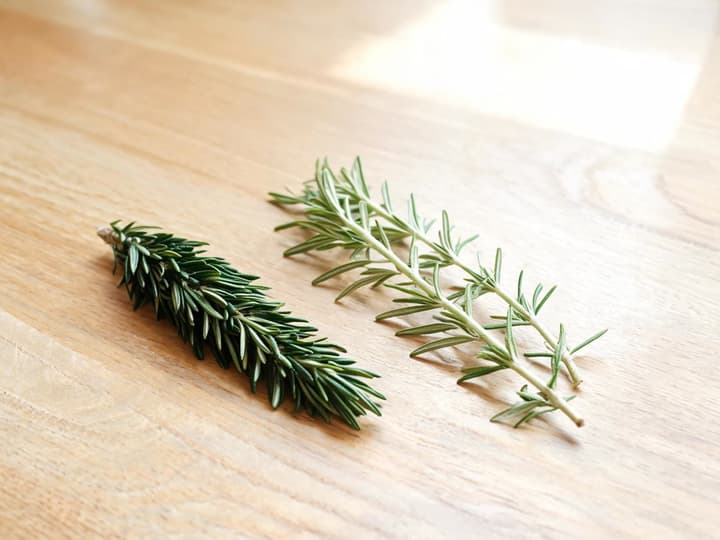
How to move rosemary into the sun without burning it
Moving rosemary from shade to sun is the right thing to do, but the transition must be gradual. The UConn Extension, from the University of Connecticut, describes the process for plants that will live in full sun:
First week: leave the pot in a bright spot without direct sunlight.
Following week: provide 1 to 2 hours of direct sunlight each day.
After that: gradually increase the daily sun exposure each week until it reaches full sun.
The same source notes that sunburn can take weeks to appear fully: it starts as faint yellowing before turning into dry, brown tissue. A patch appearing two weeks after a move can therefore still stem from sun exposure.
Frequently asked questions
Can rosemary stay indoors?
Yes, placed against the window that gets direct sun for the most hours (in Brazil, almost always north-facing). Iowa State recommends about 8 hours of direct sun per day for indoor herbs. Without that window, use a grow light 15–30 cm (6–12 inches) from the leaves, kept on for 12 to 16 hours a day.
Can rosemary grow in shade?
It survives in partial shade, but grows slower and develops thin, spindly stems. In deep shade, a study testing 25% sunlight measured 43% less essential oil per plant. Essential oil provides its aroma and taste. To produce full, healthy stems, rosemary needs 6 or more hours of direct sun each day.
What is the best spot for a potted rosemary?
The best location receives 6 or more hours of direct sun: an open balcony, a sunny ledge, a patio, or an unshaded window. Use a clay or light-colored pot with a drainage hole at the bottom. The spot also needs airflow, as stagnant, humid air encourages powdery mildew, a fungus that dusts foliage with white powder.
Can rosemary take afternoon sun?
Yes. Rosemary tolerates afternoon sun, and UF/IFAS recommends full sun even in Florida's heat. Acclimate plants that previously grew in shade gradually. Avoid dark pots in direct sun: soil inside can run 11–17 °C (20–30 °F) hotter than the surrounding air.
Where to start
Count the hours of direct sunlight hitting the pot's current spot on a clear day. Outdoors, 6 hours or more suffice; indoors, aim for roughly 8 hours. If it receives less, move the container to your home's sunniest window or balcony. Transition it week by week, following the acclimation steps above. If no spot in your home reaches those hours, a grow light will make up the difference.
Related articles
How to Care for Syngonium: Light, Watering, Cuttings, and Pests
How to care for syngonium indoors: bright indirect light, watering when the soil surface dries, 64 to 81°F (18 to 27°C), and 40 to 60% humidity. Also cover water cuttings, thrips, yellow leaves, and pet toxicity.
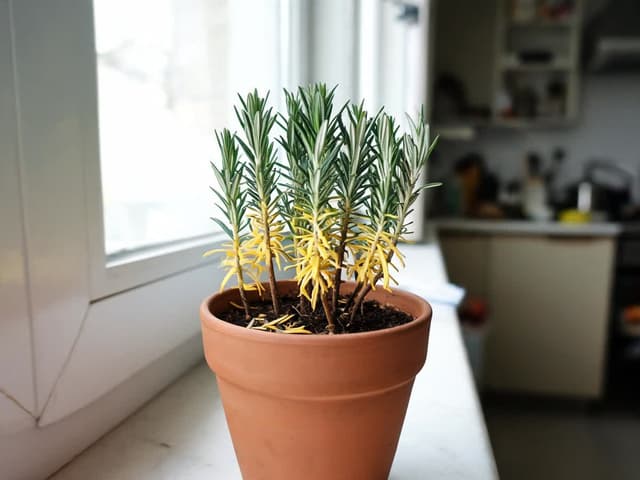
Rosemary Leaves Turning Yellow: Causes and Solutions
Rosemary with yellow leaves usually has overly wet roots. Check where the yellowing appears to see if it stems from wet roots, low light, spider mites, powdery mildew, or normal leaf shed, and learn how to save the plant.
Is Your Rosemary Dying? How to Save Soap-Burned Rosemary
Rosemary with soap-burned leaves can usually be saved: the damage stays on the affected needles. Rinse the leaves, wait a week, scrape the stems, and prune only what is brown inside.