Musaceae
Flowering Banana (Musa ornata): Complete Care Guide
Musa ornata
A sun-loving tropical plant that thrives in heat and high humidity. Water regularly keeping the soil evenly moist but never waterlogged. Feed monthly with a potassium-rich fertilizer during the growing season. Protect from frost and cold drafts.
Every 7 days
Direct sun
13° - 38°C
60% - 90%
Categories
What is Flowering Banana?
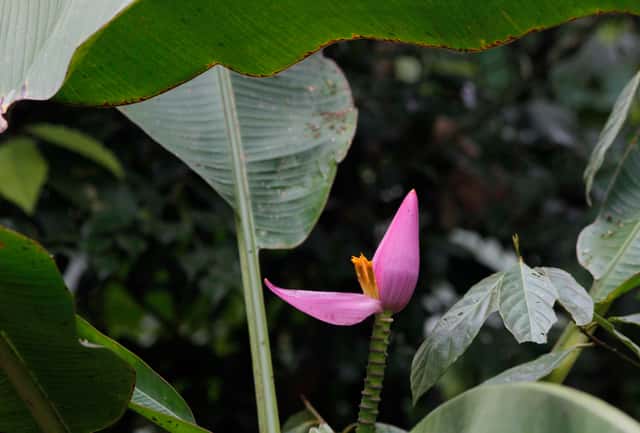
Flowering Banana (Musa ornata) is a medium-care plant from the Musaceae family. Musa ornata, commonly known as the Flowering Banana or Ornamental Banana, is a small tropical banana plant native to South Asia (Bangladesh, India, Myanmar). It is prized not for its fruit but for its stunning inflorescence of pink to lavender bracts with yellow-orange tubular flowers. Unlike edible...
Flowering Banana grows up to 2.7m, with spread of 213cm, watering every 7 days, 13°C – 38°C, 60–90% humidity. It is suitable for indoor environments and safe for pets.
Unlike many popular species, Flowering Banana is safe to keep around pets. Without adequate drainage, root rot can develop within 14 days.
How to Care for Flowering Banana?
TLDR: Flowering Banana needs Direct sun, watering every 7 days, and temperatures between 13-38°C with 60-90% humidity.
How Often Should You Water Flowering Banana?
Water every 7 days, keeping the soil consistently moist. During heat waves, check soil moisture more frequently. Avoid waterlogging — roots in saturated soil rot quickly.
How Much Light Does Flowering Banana Need?
Requires full sun (6–8 hours of direct sunlight daily). Indoors, place near the brightest window or supplement with high-intensity grow lights. Pale or yellowing leaves indicate insufficient light.
What Is the Best Soil for Flowering Banana?
Prefers fertile, organically rich, well-draining soil. For containers, use a mix of quality potting soil, bark fines, and perlite. In garden beds, amend clay soils heavily with compost.
What Pot Should You Use for Flowering Banana?
Wide, sturdy containers 20–24 inches (50–60 cm) in diameter with drainage holes. Ceramic or heavy-duty polyethylene pots work well. Avoid shallow containers — roots need depth to develop properly.
Care Schedule
Fertilize
Every 30 days
Misting
Every 3 days
Repot
Every 730 days
What Is Flowering Banana and Where Does It Come From?
Musa ornata, commonly known as the Flowering Banana or Ornamental Banana, is a small tropical banana plant native to South Asia (Bangladesh, India, Myanmar). It is prized not for its fruit but for its stunning inflorescence of pink to lavender bracts with yellow-orange tubular flowers. Unlike edible banana varieties, its small fruits are inedible, but the plant makes a spectacular ornamental specimen in tropical gardens and large containers.
How to Propagate Flowering Banana?
Pup Division
Divide in spring or early summer for best results. Water thoroughly after transplanting.
- 1 Wait for pups (offshoots) to reach 12–18 inches tall
- 2 Dig out the pup with a spade, keeping as many roots as possible
- 3 Plant immediately in fertile, moist growing medium
- 4 Keep in partial shade for 2 weeks until established
Materials needed:
Seed Propagation
Germination is irregular and may take several weeks. Pup division is strongly preferred for reliable results.
- 1 Lightly scarify seeds with fine sandpaper
- 2 Soak in warm water for 24 hours
- 3 Sow in moist, well-draining seed mix
- 4 Cover with plastic wrap and maintain at 77°F (25°C) until germination
Materials needed:
How Big Does Flowering Banana Grow?
TLDR: Flowering Banana can reach up to 2.7m tall with Fast growth rate.
Max height
2.7m
Spread
2.1m
Growth rate
Fast
Foliage
Evergreen
Plant Uses
Ornamental
Great for decoration
Is your plant showing symptoms?
Click on the symptom to discover possible causes:
What Diseases Commonly Affect Flowering Banana?
TLDR: Flowering Banana is susceptible to 12 known diseases. Monitor regularly for early detection.
Anthracnose
Anthracnose is a fungal disease caused by fungi in the genus Colletotrichum that affects many plants, including vegetables, fruits, and trees. The disease thrives in cool, wet conditions, causing dark, sunken lesions on leaves, stems, flowers, and fruits.
Fusarium Wilt
Fusarium wilt is a serious fungal disease caused by the soil-borne fungus Fusarium oxysporum. The fungus invades roots and blocks the water-conducting vessels (xylem) of the plant, causing progressive wilting and eventual death. Host-specific forms of the pathogen exist that attack different plant species.
Mosaic Virus
Mosaic virus is a group of plant viruses that cause mottled, patchy patterns on leaves and can affect a wide variety of plants. The virus creates characteristic yellow, white, and green mosaic patterns, often accompanied by stunted growth and deformed plant parts. This highly contagious disease spreads rapidly through insect vectors and contaminated tools.
Aphids
Aphids are small, soft-bodied, pear-shaped insects (1/16 to 1/8 inch long) that feed by sucking nutrient-rich sap from plants. They reproduce rapidly and can quickly weaken plants, causing distorted growth and transmitting plant viruses. Aphids come in various colors including green, black, red, yellow, brown, and gray. They secrete honeydew, a sticky substance that attracts ants and encourages sooty mold growth.
Meaning & Symbolism
In South Asian cultures, the banana plant symbolizes fertility, abundance, and renewal. Its colorful bracts represent tropical vitality and exuberance.
Fun Facts
Native to South Asia (Bangladesh, India, Myanmar) and introduced to tropical regions worldwide as an ornamental plant
Despite producing fruit, the small bananas are dry and inedible — all the visual appeal lies in the colorful bracts
A single plant can produce multiple pups throughout the year, quickly forming lush clumps
The bracts remain vivid for several weeks, making it one of the longest-lasting tropical flower displays
Frequently asked questions
How often should I water my Flowering Banana?
Can Musa ornata grow indoors?
Is the Flowering Banana toxic to pets?
When does Musa ornata bloom?
How do I propagate my Flowering Banana?
Compare with similar plants
| Attribute | Difficulty | Light | Watering | Pet Safe |
|---|---|---|---|---|
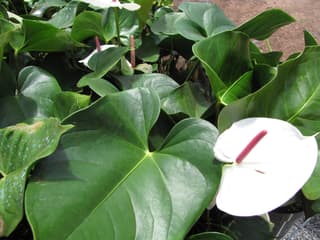
| Flamingo Flower | Medium | Partial shade | 5d | ⚠️ |
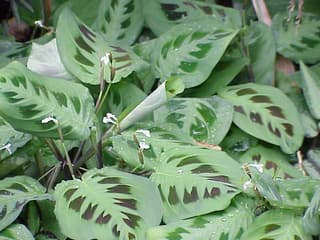
| Prayer Plant | Medium | Partial shade | 3d | ✓ |
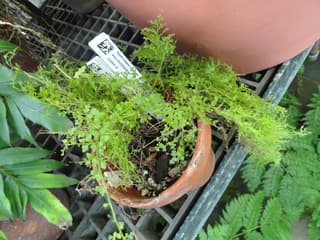
| Boston Fern | Medium | Partial shade | 3d | ✓ |
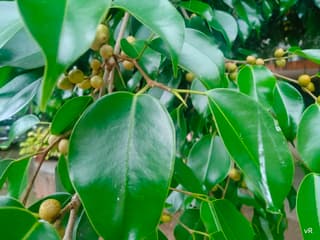
| Weeping Fig | Medium | Partial shade | 10d | ⚠️ |