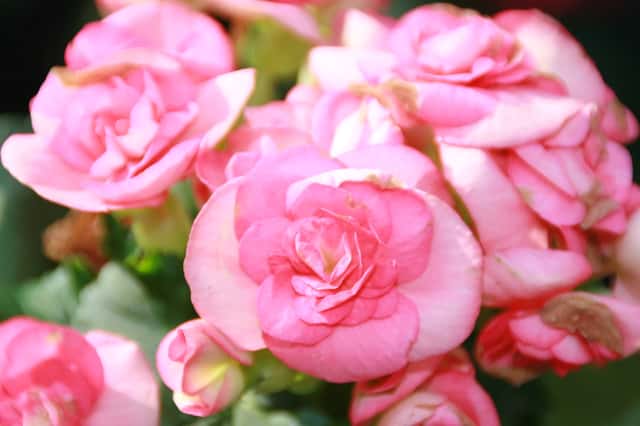
Begoniaceae
Rieger Begonia (Begonia × hiemalis): Complete Care Guide
Begonia × hiemalis
Place in bright indirect light, water every 4 days allowing the topsoil to dry slightly between waterings, and maintain 50–70% humidity. Keep temperatures between 15–22°C. Fertilize every 14 days during blooming with a high-phosphorus liquid fertilizer.
Every 4 days
Partial shade
15° - 22°C
50% - 70%
Categories
What is Rieger Begonia?
Rieger Begonia (Begonia × hiemalis) is a medium-care plant from the Begoniaceae family. Rieger Begonia (Begonia × hiemalis) is a stunning ornamental hybrid created by crossing Begonia socotrana with tuberous begonias. It blooms prolifically in autumn and winter, producing double or single flowers in shades of pink, red, white, orange, and yellow. Compact and bushy, it is one of the mos...
Rieger Begonia grows up to 30cm, spread of 30cm, watering every 4 days, 15°C – 22°C, 50–70% humidity. It is suitable for indoor environments and not safe for pets.
Without precautions, ingestion can cause irritation in pets. Keep out of reach of cats and dogs. Without adequate drainage, root rot can develop within 8 days.
How to Care for Rieger Begonia?
TLDR: Rieger Begonia needs Partial shade, watering every 4 days, and temperatures between 15-22°C with 50-70% humidity.
How Often Should You Water Rieger Begonia?
Water every 4 days when the top of the soil feels dry to the touch. Always water directly at the base, never overhead — wet foliage encourages fungal diseases. Use room-temperature water and ensure the pot drains freely.
How Much Light Does Rieger Begonia Need?
Bright indirect light (5,000–15,000 lux) is ideal. Place near an east or north-facing window. Avoid direct sun, which scorches the delicate flowers and leaves, and avoid deep shade, which prevents blooming.
What Is the Best Soil for Rieger Begonia?
Use a well-draining, peat-based mix with pH 5.5–6.5. A blend of peat moss, perlite, and coarse sand works well. Never let the roots sit in waterlogged soil.
What Pot Should You Use for Rieger Begonia?
Terracotta or ceramic pot with ample drainage holes. Avoid oversized pots — Rieger Begonias prefer slightly snug root conditions. Empty saucers after each watering to prevent root rot.
Care Schedule
Fertilize
Every 14 days
Rotate
Every 30 days
Repot
Every 365 days
What Is Rieger Begonia and Where Does It Come From?
Rieger Begonia (Begonia × hiemalis) is a stunning ornamental hybrid created by crossing Begonia socotrana with tuberous begonias. It blooms prolifically in autumn and winter, producing double or single flowers in shades of pink, red, white, orange, and yellow. Compact and bushy, it is one of the most popular indoor flowering plants during the cold season, often given as a holiday gift.
How to Propagate Rieger Begonia?
Stem cutting
Always use clean, sterilized tools to prevent fungal infections. Ventilate the plastic bag regularly to prevent mold. Ideal rooting temperature is 20–22°C.
- 1 Cut a healthy stem 7–10 cm long, just below a leaf node
- 2 Remove the lower leaves, keeping only 2–3 leaves at the top
- 3 Dip the cut end in rooting hormone powder or gel
- 4 Plant in a moist mix of peat and perlite (1:1)
- 5 Cover with a clear plastic bag to retain humidity and place in a warm, bright spot (no direct sun)
- 6 Keep the substrate slightly moist and wait 4–8 weeks for rooting
Materials needed:
How Big Does Rieger Begonia Grow?
TLDR: Rieger Begonia can reach up to 30cm tall with Fast growth rate.
Max height
30cm
Spread
30cm
Growth rate
Fast
Foliage
Evergreen
Warning: Toxic Plant
This plant can be toxic if ingested. Keep out of reach of:
Plant Uses
Ornamental
Great for decoration
Is your plant showing symptoms?
Click on the symptom to discover possible causes:
What Diseases Commonly Affect Rieger Begonia?
TLDR: Rieger Begonia is susceptible to 14 known diseases. Monitor regularly for early detection.
Powdery Mildew
Powdery mildew is a common fungal disease caused by various fungi species including Erysiphe, Podosphaera, Oïdium, and Leveillula. It affects over 10,000 plant species worldwide. The disease thrives in warm, dry climates with high humidity and appears as a distinctive white powdery coating on plant surfaces.
Gray Mold (Botrytis Blight)
Gray mold, caused by the fungus Botrytis cinerea, is a widespread necrotrophic pathogen affecting over 1,400 plant species. It thrives in cool, humid conditions and attacks weakened or aging plant tissues, causing soft rot and characteristic gray fuzzy growth.
Root Rot
Root rot is a serious fungal disease that affects the root system of plants, causing them to decay and die. It is primarily caused by overwatering, poor drainage, or soil-borne fungi such as Pythium, Phytophthora, Rhizoctonia, and Fusarium. The disease thrives in waterlogged conditions where roots are deprived of oxygen, making them susceptible to fungal infection.
Pythium Root Rot
Pythium root rot is a serious fungal disease caused by various Pythium species including P. aphanidermatum, P. ultimum, and P. irregulare. These water molds are present in practically all cultivated soils and attack plant roots under wet conditions, causing rapid wet rot that can extend into the stem. The disease is favored by poor drainage, overwatering, and specific temperatures depending on the species.
Meaning & Symbolism
Joy, warmth, and gratitude — a symbol of color and cheer during the coldest months.
Fun Facts
Rieger Begonias were developed in the 19th century by crossing Begonia socotrana — native to the island of Socotra in Yemen — with Andean tuberous begonias.
Unlike most flowering plants, they bloom naturally in autumn and winter, making them one of Europe's most popular Christmas and holiday gifts.
The most toxic part of the plant is underground — the tubers and roots can contain up to 6% of their dry weight in calcium oxalate crystals.
A single plant can produce dozens of simultaneous blooms during peak flowering, which can last up to 3 months under ideal conditions.
Frequently asked questions
How often should I water my Rieger Begonia?
Is Rieger Begonia toxic to cats and dogs?
Why is my Rieger Begonia dropping flowers?
Can Rieger Begonia tolerate direct sun?
How do I get my Rieger Begonia to rebloom?
Compare with similar plants
| Attribute | Difficulty | Light | Watering | Pet Safe |
|---|---|---|---|---|
| Dark Fieldcap | Medium | Low light | 2d | ⚠️ |
| Azalea | Medium | Partial shade | 3d | ⚠️ |
| Bougainvillea | Medium | Direct sun | 7d | ⚠️ |
| Wild Lettuce | Medium | Direct sun | 7d | ⚠️ |



