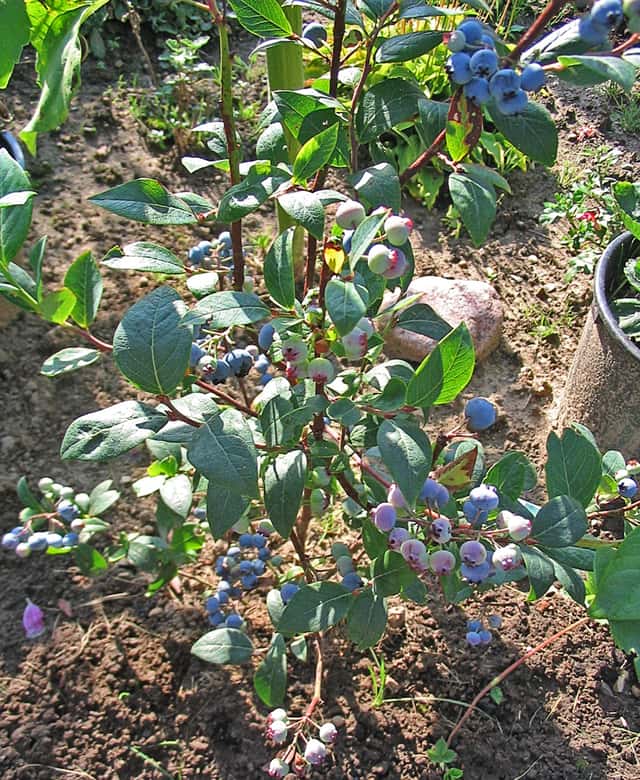
Ericaceae
How to Grow Blueberry (Vaccinium sp)
Vaccinium sp
Blueberries thrive in full sun and require highly acidic, well-draining peaty soil (pH 4.0–5.5). Water regularly every 2–4 days during the growing season, keeping soil consistently moist but not waterlogged. Fertilize with acid-forming fertilizers in early spring. Prune annually in late winter to remove old wood and encourage new fruiting canes.
Every 3 days
Direct sun
-29° - 35°C
50% - 70%
Categories
What is Blueberry?
Blueberry (Vaccinium sp) is a medium-care plant from the Ericaceae family. Vaccinium sp, commonly known as blueberry, is a genus of flowering shrubs in the Ericaceae family native to North America. These deciduous or semi-evergreen shrubs produce small, sweet, dark blue to purple berries highly prized for their nutritional value and flavor. The genus includes dozens of spe...
Blueberry grows up to 1.5m, spread of 120cm, watering every 3 days, -29°C – 35°C, 50–70% humidity. It is not suitable for indoor environments and safe for pets.
Unlike many popular species, Blueberry is safe to keep around pets.
How to Care for Blueberry?
TLDR: Blueberry needs Direct sun, watering every 3 days, and temperatures between -29-35°C with 50-70% humidity.
How Often Should You Water Blueberry?
Water every 2–4 days during the growing season, maintaining consistently moist soil. Blueberries have shallow roots and are sensitive to drought stress. Avoid waterlogging as it promotes root rot. During winter dormancy, reduce watering significantly.
How Much Light Does Blueberry Need?
Blueberries require full sun—at least 6–8 hours of direct sunlight per day—for optimal fruit production. Partial shade is tolerated but significantly reduces flowering and fruiting. Place in the sunniest location available in your garden.
What Is the Best Soil for Blueberry?
Plant in acidic soil with a pH of 4.0–5.5. Use a peat-based mix enriched with organic matter. Avoid alkaline or compacted soils. If native soil is not acidic enough, amend with elemental sulfur or use raised beds filled with a blueberry-specific mix.
What Pot Should You Use for Blueberry?
Use large outdoor containers (at least 45 cm diameter) or raised garden beds with acid-mix soil. Terracotta or fabric pots work well for container growing. Ensure excellent drainage holes.
Care Schedule
Fertilize
Every 30 days
What Is Blueberry and Where Does It Come From?
Vaccinium sp, commonly known as blueberry, is a genus of flowering shrubs in the Ericaceae family native to North America. These deciduous or semi-evergreen shrubs produce small, sweet, dark blue to purple berries highly prized for their nutritional value and flavor. The genus includes dozens of species adapted to diverse environments, from lowbush varieties in cold northern forests to highbush cultivars in temperate regions. Blueberries are celebrated for their antioxidant-rich berries and ornamental fall foliage.
How to Propagate Blueberry?
Stem Cutting
Use sterile tools and fresh cuttings from vigorous plants. Maintain high humidity around cuttings and mist lightly every other day. Keep temperature consistent to encourage rooting.
- 1 Take 4-6 inch softwood cuttings from healthy, actively growing shoots in spring.
- 2 Remove lower leaves, keeping 2-3 leaves at the tip.
- 3 Dip the cut end in rooting hormone powder.
- 4 Insert into a moist, acidic propagation mix (peat and perlite).
- 5 Cover with a plastic bag or humidity dome to retain moisture.
- 6 Place in bright indirect light at 18-22°C.
- 7 Roots typically develop in 6-8 weeks; transplant when established.
Materials needed:
Seed Propagation
Cold stratification is essential for most species. Seedlings grow slowly and may take 2-3 years to produce fruit. Named cultivars do not come true from seed.
- 1 Extract seeds from ripe berries and rinse clean.
- 2 Stratify seeds in moist peat at 4°C for 60-90 days in the refrigerator.
- 3 Sow seeds on the surface of acidic, sterile seed-starting mix.
- 4 Do not cover seeds; they need light to germinate.
- 5 Keep moist and at 18-22°C; germination takes 4-6 weeks.
- 6 Transplant seedlings when they have 2-3 true leaves.
Materials needed:
How Big Does Blueberry Grow?
TLDR: Blueberry can reach up to 1.5m tall with Slow growth rate.
Max height
1.5m
Spread
1.2m
Growth rate
Slow
Foliage
Deciduous
Plant Uses
Edible
Can be consumed
Ornamental
Great for decoration
Medicinal
Medicinal properties
Medicinal Uses
- Traditionally used by Indigenous peoples of North America for treating coughs, infections, and as a blood tonic.
- Rich in antioxidants, used in herbal medicine to support urinary tract health and eye health.
Culinary Uses
- Fresh berries eaten raw or in jams, pies, muffins, and smoothies.
- Dried berries used as trail mix or in baked goods.
- Leaves used in herbal teas.
Is your plant showing symptoms?
Click on the symptom to discover possible causes:
What Diseases Commonly Affect Blueberry?
TLDR: Blueberry is susceptible to 16 known diseases. Monitor regularly for early detection.
Gray Mold (Botrytis Blight)
Gray mold, caused by the fungus Botrytis cinerea, is one of the most common fungal diseases in plants. It affects over 200 plant species, including ornamentals, vegetables, fruits, and houseplants. The disease thrives in cool, humid conditions with poor air circulation, causing grayish spots and soft rot on infected tissues.
Rust
Rust is a common fungal disease caused by fungi in the order Pucciniales that affects a wide variety of plants. The disease gets its name from the characteristic orange, yellow, or reddish-brown pustules that appear on leaves, resembling metal rust. This obligate fungal parasite requires living plants to survive and can cause significant economic losses in agricultural crops.
Powdery Mildew
Powdery mildew is a common fungal disease caused by various fungi species including Erysiphe, Podosphaera, Oïdium, and Leveillula. It affects over 10,000 plant species worldwide. The disease thrives in warm, dry climates with high humidity and appears as a distinctive white powdery coating on plant surfaces.
Canker
Canker is a disease caused by various fungi and bacteria that create necrotic, sunken areas on bark of branches, stems, and trunks. Pathogens enter through wounds and natural openings, especially when plants are stressed. Canker can gradually weaken or kill branches by disrupting water and nutrient flow.
Meaning & Symbolism
Blueberries symbolize abundance, longevity, and good health. They hold deep cultural significance for many Indigenous peoples of North America, who used them for centuries as food, medicine, and dye.
Fun Facts
Blueberries are one of the few fruits native to North America and have been eaten by Indigenous peoples for over 13,000 years.
A single blueberry bush can produce up to 6 kg of fruit per year once fully mature.
Blueberries are among the richest natural sources of antioxidants, particularly anthocyanins, which give the berries their distinctive blue-purple color.
Some wild blueberry (Vaccinium angustifolium) plants in North America are estimated to be over 13,000 years old—among the oldest living plants on Earth.
Frequently asked questions
How often should I water my blueberry plant?
What soil pH do blueberries need?
Are blueberries toxic to pets?
Do blueberries need full sun?
How do I propagate blueberries?
Compare with similar plants
| Attribute | Difficulty | Light | Watering | Pet Safe |
|---|---|---|---|---|
| Dark Fieldcap | Medium | Low light | 2d | ⚠️ |
| Azalea | Medium | Partial shade | 3d | ⚠️ |
| Muriel's Bamboo | Medium | Partial shade | 3d | ✓ |
| Bougainvillea | Medium | Direct sun | 7d | ⚠️ |




