Sapindaceae
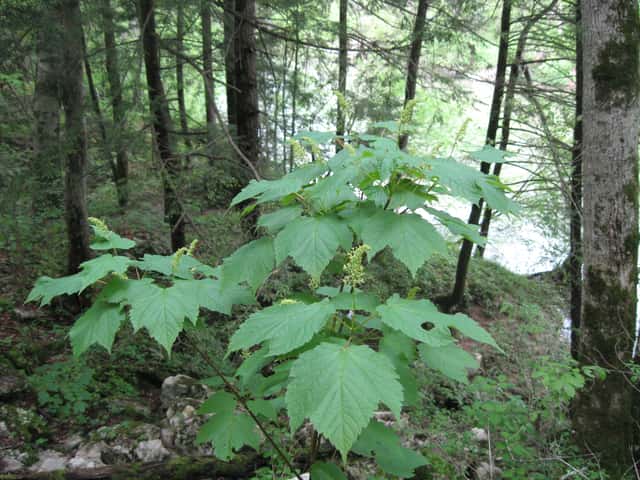
Mountain Maple (Acer spicatum)
Acer spicatum
Plant in partial shade with consistently moist, well-draining loamy soil. Extremely cold-hardy (to -35°C). Water weekly during the growing season. Ideal for naturalized woodland gardens.
Every 7 days
Partial shade
-35° - 30°C
40% - 70%
Categories
What is Mountain Maple?
Mountain Maple (Acer spicatum) is a medium-care plant from the Sapindaceae family. Mountain Maple (Acer spicatum) is a small deciduous shrub or understory tree native to eastern North America. It thrives on rocky slopes and stream banks in cool, shaded forests, producing brilliant yellow, orange, and red foliage in autumn. Its erect racemes of small greenish-yellow flowers appear...
Mountain Maple grows up to 7.6m, spread of 610cm, watering every 7 days, -35°C – 30°C, 40–70% humidity. It is not suitable for indoor environments and safe for pets.
Unlike many popular species, Mountain Maple is safe to keep around pets.
How to Care for Mountain Maple?
TLDR: Mountain Maple needs Partial shade, watering every 7 days, and temperatures between -35-30°C with 40-70% humidity.
How Often Should You Water Mountain Maple?
Water every 7 days, keeping soil consistently moist but never waterlogged. Apply a thick layer of organic mulch to retain moisture and keep roots cool during summer heat.
How Much Light Does Mountain Maple Need?
Prefers partial shade to dappled sunlight, mimicking its natural understory habitat. Tolerates morning sun but avoid harsh afternoon exposure. Perfect for north-facing gardens.
What Is the Best Soil for Mountain Maple?
Use well-draining, slightly acidic loamy soil (pH 5.5-7.0) rich in organic matter. Avoid heavy clay or sandy soils. Amend with compost at planting time to improve moisture retention.
What Pot Should You Use for Mountain Maple?
Not recommended for containers (landscape tree). Plant directly in the ground in a permanent location.
Care Schedule
Fertilize
Every 90 days
What Is Mountain Maple and Where Does It Come From?
Mountain Maple (Acer spicatum) is a small deciduous shrub or understory tree native to eastern North America. It thrives on rocky slopes and stream banks in cool, shaded forests, producing brilliant yellow, orange, and red foliage in autumn. Its erect racemes of small greenish-yellow flowers appear in early summer.
How to Propagate Mountain Maple?
Seed Propagation
Seeds require cold stratification to break dormancy. Keep substrate slightly moist throughout the process.
- 1 Collect ripe samaras in late summer
- 2 Cold-stratify seeds for 90-120 days in refrigerator
- 3 Sow in well-draining moist medium in spring
- 4 Keep in shaded location until germination
- 5 Transplant seedlings after first true leaves appear
Materials needed:
How Big Does Mountain Maple Grow?
TLDR: Mountain Maple can reach up to 7.6m tall with Slow growth rate.
Max height
7.6m
Spread
6.1m
Growth rate
Slow
Foliage
Deciduous
Plant Uses
Ornamental
Great for decoration
Culinary Uses
- Sap can be tapped for syrup production, similar to sugar maple but in smaller quantities
Is your plant showing symptoms?
Click on the symptom to discover possible causes:
What Diseases Commonly Affect Mountain Maple?
TLDR: Mountain Maple is susceptible to 6 known diseases. Monitor regularly for early detection.
Anthracnose
Anthracnose is a fungal disease caused by fungi in the genus Colletotrichum that affects many plants, including vegetables, fruits, and trees. The disease thrives in cool, wet conditions, causing dark, sunken lesions on leaves, stems, flowers, and fruits.
Verticillium Wilt
Verticillium wilt is a soil-borne fungal disease caused primarily by the fungi Verticillium dahliae and V. albo-atrum. These pathogens infect plant roots and grow within the vascular tissues, blocking water and nutrient transport, resulting in wilting and eventual plant death. The disease affects over 350 plant species including vegetables, fruits, ornamental flowers, and trees. The fungi can survive in soil for more than 10 years as resistant structures called microsclerotia.
Leaf Spot
Leaf spot is a common fungal disease caused by various pathogens including Alternaria, Ascochyta, Colletotrichum, Septoria, and Venturia. It primarily affects leaves, causing discolored spots that can lead to premature leaf drop if left untreated.
Scale Insects
Scale insects are small sap-sucking pests that appear as brown, shell-like bumps on plant stems and leaves. There are over 25 species, divided into armored (hard) and unarmored (soft) scales. They feed by piercing plant tissue and extracting sap, which weakens the plant and can lead to yellowing, stunted growth, and even death if left untreated. They also excrete honeydew, which attracts ants and promotes sooty mold growth.
Meaning & Symbolism
Symbol of resilience and adaptation, thriving in the challenging understory conditions of eastern North American temperate forests.
Fun Facts
One of the few maples that genuinely thrives in full shade, making it ideal for north-facing gardens
Its erect flower racemes (spikes) give the species its name — spicatum means spiked in Latin
The bark is rich in tannins historically used for leather tanning
It serves as a larval host plant for the Imperial Moth (Eacles imperialis)
Frequently asked questions
How often should I water Mountain Maple?
How cold-hardy is Mountain Maple?
Is Mountain Maple toxic to pets?
What light does Mountain Maple need?
How big does Mountain Maple get?
Compare with similar plants
| Attribute | Difficulty | Light | Watering | Pet Safe |
|---|---|---|---|---|
| Dark Fieldcap | Medium | Low light | 2d | ⚠️ |
| Azalea | Medium | Partial shade | 3d | ⚠️ |
| Field Maple | Easy | Bright indirect | 14d | ✓ |
| Bougainvillea | Medium | Direct sun | 7d | ⚠️ |




