Nyctaginaceae
Great Bougainvillea (Bougainvillea spectabilis): Complete Care Guide
Bougainvillea spectabilis
Great Bougainvillea thrives in full direct sun (6–8+ hours daily), infrequent deep watering with dry-out periods between irrigations, and fast-draining soil. It is highly drought-tolerant once established and blooms most prolifically under mild water stress. Avoid overwatering and high-nitrogen fertilizers, which promote foliage over flowers.
Every 10 days
Direct sun
5° - 38°C
40% - 70%
Categories
What is Great Bougainvillea?
Great Bougainvillea (Bougainvillea spectabilis) is a medium-care plant from the Nyctaginaceae family. Bougainvillea spectabilis, commonly known as Great Bougainvillea or Paper Flower, is a vigorous thorny climbing shrub native to the eastern coast of Brazil. Celebrated for its spectacular papery bracts in shades of magenta, pink, orange, purple, red, and white, it is one of the most widely cultivate...
Great Bougainvillea grows up to 12.0m, spread of 600cm, watering every 10 days, 5°C – 38°C, 40–70% humidity. It is not suitable for indoor environments and not safe for pets.
Without precautions, ingestion can cause irritation in pets. Keep out of reach of cats and dogs.
How to Care for Great Bougainvillea?
TLDR: Great Bougainvillea needs Direct sun, watering every 10 days, and temperatures between 5-38°C with 40-70% humidity.
How Often Should You Water Great Bougainvillea?
Water deeply but infrequently — allow the soil to dry out almost completely between waterings (every 7–14 days in summer). Established in-ground plants need little supplemental water. Overwatering is the most common mistake; it causes leaf drop, root rot, and poor flowering.
How Much Light Does Great Bougainvillea Need?
Bougainvillea demands full sun — a minimum of 6 to 8 hours of direct sunlight daily. Without intense direct light, the plant produces lush foliage but rarely initiates bract production. Position on south- or west-facing walls for best results.
What Is the Best Soil for Great Bougainvillea?
Use a light, fast-draining growing mix such as a blend of loam, coarse sand, and perlite. Ideal pH is 5.5–6.5. Avoid heavy clay soils or waterlogged conditions. Good drainage is critical to prevent root rot.
What Pot Should You Use for Great Bougainvillea?
Terracotta or ceramic pots are ideal as they allow good root aeration. Always use pots with large drainage holes. In gardens, plant directly in the ground with a sturdy support such as a trellis, pergola, or wall.
Care Schedule
Fertilize
Every 30 days
Repot
Every 730 days
What Is Great Bougainvillea and Where Does It Come From?
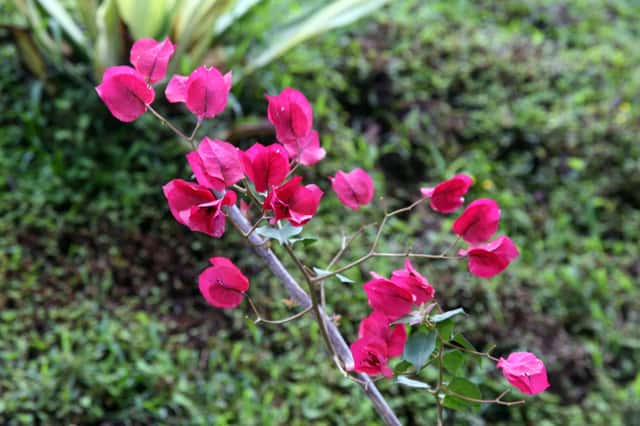
Bougainvillea spectabilis, commonly known as Great Bougainvillea or Paper Flower, is a vigorous thorny climbing shrub native to the eastern coast of Brazil. Celebrated for its spectacular papery bracts in shades of magenta, pink, orange, purple, red, and white, it is one of the most widely cultivated ornamental plants in tropical and subtropical regions worldwide. The true flowers are small and white, surrounded by three showy bracts that provide all the visual drama. Once established, it is exceptionally drought-tolerant and fast-growing, thriving in full sun and warm climates.
How to Propagate Great Bougainvillea?
Semi-hardwood stem cutting
Use sterilized pruning shears. Avoid excess moisture during rooting as it causes stem rot. Bottom heat (18–25°C) significantly improves success rates.
- 1 Take a semi-hardwood cutting 15–20 cm long with 2–3 nodes in late spring or early summer
- 2 Remove lower leaves, leaving only 2–3 leaves at the tip
- 3 Dip the cut end in rooting hormone powder or gel (IBA)
- 4 Plant in a fast-draining sterile mix of perlite and peat
- 5 Place in a warm, bright location with indirect light and avoid overwatering
- 6 Wait 4–8 weeks for rooting before transplanting
Materials needed:
How Big Does Great Bougainvillea Grow?
TLDR: Great Bougainvillea can reach up to 12.0m tall with Fast growth rate.
Max height
12.0m
Spread
6.0m
Growth rate
Fast
Foliage
Evergreen
Warning: Toxic Plant
This plant can be toxic if ingested. Keep out of reach of:
Plant Uses
Ornamental
Great for decoration
Is your plant showing symptoms?
Click on the symptom to discover possible causes:
What Diseases Commonly Affect Great Bougainvillea?
TLDR: Great Bougainvillea is susceptible to 8 known diseases. Monitor regularly for early detection.
Aphids
Aphids are small, soft-bodied, pear-shaped insects (1/16 to 1/8 inch long) that feed by sucking nutrient-rich sap from plants. They reproduce rapidly and can quickly weaken plants, causing distorted growth and transmitting plant viruses. Aphids come in various colors including green, black, red, yellow, brown, and gray. They secrete honeydew, a sticky substance that attracts ants and encourages sooty mold growth.
Spider Mites
Spider mites are tiny arachnids (less than 1/20 inch long) related to spiders and ticks that feed on plant sap. They thrive in hot, dry conditions and can cause significant damage to ornamental and vegetable plants. During severe infestations, crop losses can reach 14% or higher as these pests disrupt vital plant processes including photosynthesis, carbon dioxide absorption, and transpiration.
Mealybugs
Mealybugs are small, soft-bodied insects covered with a white, waxy, cottony material. They are common pests of houseplants and outdoor plants in mild climates. These sap-sucking insects feed on plant tissue, causing damage, stunted growth, and can lead to plant death if left untreated. They produce sticky honeydew which attracts sooty mold.
Scale Insects
Scale insects are small sap-sucking pests that appear as brown, shell-like bumps on plant stems and leaves. There are over 25 species, divided into armored (hard) and unarmored (soft) scales. They feed by piercing plant tissue and extracting sap, which weakens the plant and can lead to yellowing, stunted growth, and even death if left untreated. They also excrete honeydew, which attracts ants and promotes sooty mold growth.
Meaning & Symbolism
A symbol of welcome, vibrancy, and tropical hospitality across many cultures. Official flower of Guam, Grenada, and several cities in Asia and the Pacific.
Fun Facts
Bougainvillea spectabilis is native to the eastern coast of Brazil and was introduced to Europe in the early 19th century by French botanist Philibert Commerson
What looks like colorful petals are actually bracts — modified leaves that surround the plant's true small white flowers
In frost-free tropical climates, Bougainvillea can bloom almost year-round, producing multiple flush cycles
The plant's thorns are evolutionary adaptations that help it scramble and anchor itself onto other plants and structures
Frequently asked questions
How often should I water my Bougainvillea?
Why is my Bougainvillea not blooming?
Is Bougainvillea toxic to pets?
How fast does Bougainvillea grow?
Can I grow Bougainvillea in a pot?
Compare with similar plants
| Attribute | Difficulty | Light | Watering | Pet Safe |
|---|---|---|---|---|
| Dark Fieldcap | Medium | Low light | 2d | ⚠️ |
| Azalea | Medium | Partial shade | 3d | ⚠️ |
| Bougainvillea | Medium | Direct sun | 7d | ⚠️ |
| Wild Lettuce | Medium | Direct sun | 7d | ⚠️ |



