Asteraceae
How to Grow and Care for Burdock (Arctium lappa)
Arctium lappa
Burdock thrives in full sun to partial shade outdoors. Water regularly to maintain moist but well-drained soil, and feed with organic fertilizer monthly. It prefers deep, fertile, loamy soil and is largely pest-resistant, though watch for aphids and powdery mildew.
Every 9 days
Bright indirect
5° - 30°C
% - %
Categories
What is Burdock?
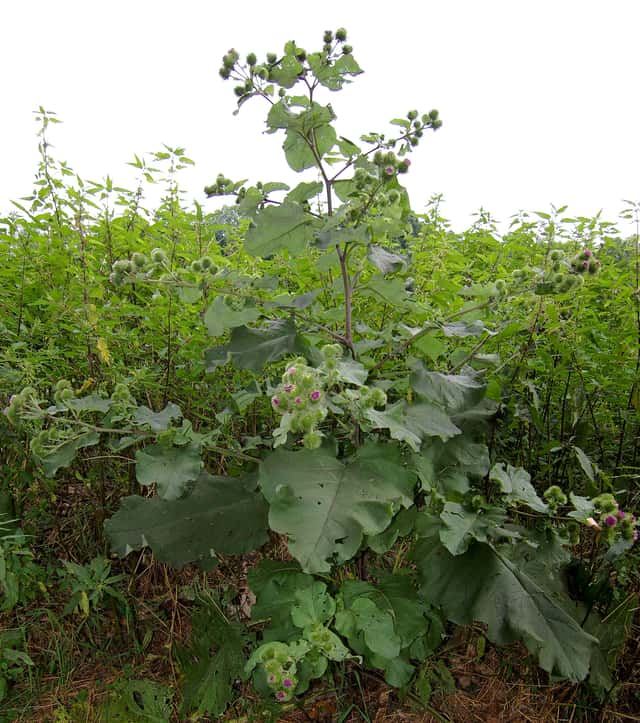
Burdock (Arctium lappa) is a medium-care plant from the Asteraceae family. Arctium lappa, commonly known as Burdock or Gobo, is a robust biennial herbaceous plant native to Europe and Asia. It grows up to 2 meters tall, producing large heart-shaped leaves and distinctive purple flower heads surrounded by hooked bracts that cling to clothing and animal fur — inspiring the i...
Burdock grows up to 2.0m, with spread of 90cm, watering every 9 days, 5°C – 30°C. It is not suitable for indoor environments and safe for pets.
Unlike many popular species, Burdock is safe to keep around pets.
How to Care for Burdock?
TLDR: Burdock needs Bright indirect, watering every 9 days, and temperatures between 5-30°C with 40-70% humidity.
How Often Should You Water Burdock?
Water every 7–10 days, checking that the top 2–3 cm of soil is dry before watering again. Avoid waterlogging, which causes root rot. Reduce watering in winter. In hot summers, check soil every 4–5 days.
How Much Light Does Burdock Need?
Place in a location that receives at least 4–6 hours of direct sunlight daily. Full sun produces the largest and most vigorous roots. Partial shade is tolerated but may reduce yield.
What Is the Best Soil for Burdock?
Plant in deep, well-draining soil rich in organic matter. A mix of 50% sandy/loamy soil, 30% garden soil and 20% compost works well. Avoid heavy clay soils, which prevent proper root development. Ideal pH between 6.0 and 7.5.
What Pot Should You Use for Burdock?
In-ground garden beds or very deep containers (60+ cm) are best to accommodate the long taproot. Terracotta or wooden raised beds work well.
Care Schedule
Fertilize
Every 30 days
What Is Burdock and Where Does It Come From?
Arctium lappa, commonly known as Burdock or Gobo, is a robust biennial herbaceous plant native to Europe and Asia. It grows up to 2 meters tall, producing large heart-shaped leaves and distinctive purple flower heads surrounded by hooked bracts that cling to clothing and animal fur — inspiring the invention of Velcro. Both the root and leaves have been valued for centuries in traditional medicine and Asian cuisine.
How to Propagate Burdock?
Seeds
Sow directly outdoors; transplanting is not recommended as taproots do not tolerate disturbance.
- 1 Sow seeds 1.5–2 cm deep in spring or early summer
- 2 Space plants 15–20 cm apart in rows 60 cm apart
- 3 Keep soil moist until germination (7–15 days)
- 4 Thin seedlings to strongest plant per group
- 5 Harvest roots 4 months after sowing
Materials needed:
How Big Does Burdock Grow?
TLDR: Burdock can reach up to 2.0m tall with Fast growth rate.
Max height
2.0m
Spread
90cm
Growth rate
Fast
Foliage
Deciduous
Plant Uses
Edible
Can be consumed
Medicinal
Medicinal properties
Ornamental
Great for decoration
Medicinal Uses
- Anti-inflammatory
- Diuretic
- Detoxifying (liver and skin)
- Antifungal
- Blood purifier
- Treatment for skin conditions such as eczema and psoriasis
Culinary Uses
- Root (gobo) eaten raw, pickled, stir-fried or braised — staple in Japanese cuisine
- Young leaves cooked as greens
- Stalks peeled and eaten like celery
- Root used to make burdock tea
Is your plant showing symptoms?
Click on the symptom to discover possible causes:
What Diseases Commonly Affect Burdock?
TLDR: Burdock is susceptible to 6 known diseases. Monitor regularly for early detection.
Powdery Mildew
Powdery mildew is a common fungal disease caused by various fungi species including Erysiphe, Podosphaera, Oïdium, and Leveillula. It affects over 10,000 plant species worldwide. The disease thrives in warm, dry climates with high humidity and appears as a distinctive white powdery coating on plant surfaces.
Root Rot
Root rot is a serious fungal disease that affects the root system of plants, causing them to decay and die. It is primarily caused by overwatering, poor drainage, or soil-borne fungi such as Pythium, Phytophthora, Rhizoctonia, and Fusarium. The disease thrives in waterlogged conditions where roots are deprived of oxygen, making them susceptible to fungal infection.
Aphids
Aphids are small, soft-bodied, pear-shaped insects (1/16 to 1/8 inch long) that feed by sucking nutrient-rich sap from plants. They reproduce rapidly and can quickly weaken plants, causing distorted growth and transmitting plant viruses. Aphids come in various colors including green, black, red, yellow, brown, and gray. They secrete honeydew, a sticky substance that attracts ants and encourages sooty mold growth.
Caterpillars
Caterpillars are the larval stage of moths and butterflies that feed voraciously on plant foliage, stems, flowers, and fruits. Common species include cabbage loopers, tomato hornworms, armyworms, and cutworms. These pests can cause extensive damage by consuming large amounts of plant tissue in a short time. They vary in size from small (1/4 inch) to large (5 inches), with colors ranging from green to brown, often featuring stripes or spots. Caterpillars are highly mobile and can quickly spread throughout gardens, making them one of the most destructive common pests.
Meaning & Symbolism
Burdock symbolizes persistence and protection in various folk traditions, owing to its tenacious hooked burrs that cling and travel far.
Fun Facts
The hooked burrs of burdock directly inspired Swiss engineer George de Mestral to invent Velcro in 1941 after finding them stuck to his dog's fur.
In Japan, burdock root (gobo) has been cultivated as a vegetable for over 1,000 years and remains a staple in traditional Japanese cooking.
Burdock is used in traditional Chinese medicine (TCM) to clear heat and detoxify, and its seeds (Niubangzi) are listed in the Chinese Pharmacopoeia.
A single burdock plant can produce hundreds of burrs, each capable of traveling miles attached to passing animals or clothing.
Frequently asked questions
Is burdock safe for pets?
How deep do burdock roots grow?
When should I harvest burdock roots?
Can I grow burdock in a container?
Does burdock come back every year?
Compare with similar plants
| Attribute | Difficulty | Light | Watering | Pet Safe |
|---|---|---|---|---|
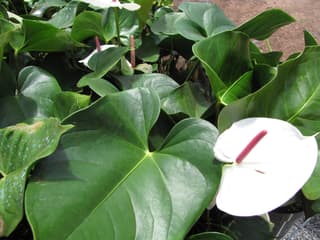
| Flamingo Flower | Medium | Partial shade | 5d | ⚠️ |
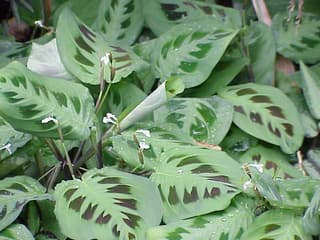
| Prayer Plant | Medium | Partial shade | 3d | ✓ |
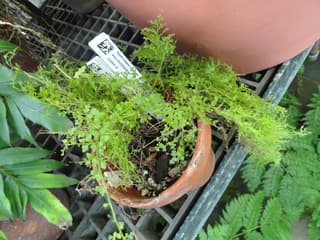
| Boston Fern | Medium | Partial shade | 3d | ✓ |
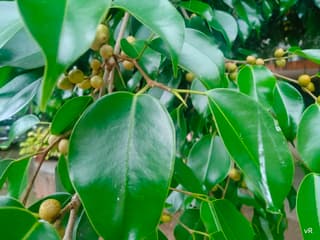
| Weeping Fig | Medium | Partial shade | 10d | ⚠️ |