Euphorbiaceae
Canary Island Spurge (Euphorbia canariensis)
Euphorbia canariensis
Canary Island Spurge is an extremely resilient plant requiring minimal care. Provide full sun, very infrequent watering, and excellent drainage. It is highly drought-tolerant and thrives in hot, windy, arid conditions. The main threat is overwatering, which causes root rot.
Every 21 days
Direct sun
5° - 40°C
30% - 60%
Categories
What is Canary Island Spurge?
Canary Island Spurge (Euphorbia canariensis) is a medium-care plant from the Euphorbiaceae family. Euphorbia canariensis, commonly known as Canary Island Spurge or Cardón, is a columnar succulent endemic to the Canary Islands (Spain). It is one of the most iconic plants of the Macaronesian region, forming dense stands called cardonal in arid lowlands. The plant grows up to 4 meters tall with a di...
Canary Island Spurge grows up to 4.0m, spread of 300cm, watering every 21 days, 5°C – 40°C, 30–60% humidity. It is not suitable for indoor environments and not safe for pets.
Without precautions, ingestion can cause irritation in pets. Keep out of reach of cats and dogs.
How to Care for Canary Island Spurge?
TLDR: Canary Island Spurge needs Direct sun, watering every 21 days, and temperatures between 5-40°C with 30-60% humidity.
How Often Should You Water Canary Island Spurge?
Water every 2-3 weeks in spring and summer, reducing to once a month or less in autumn and winter. Always allow the soil to dry completely between waterings. Overwatering is the number one killer of this species.
How Much Light Does Canary Island Spurge Need?
Requires full sun — at least 6-8 hours of direct sunlight per day. Not suitable for indoor cultivation. Young plants can benefit from light afternoon shade in extreme heat during their first season.
What Is the Best Soil for Canary Island Spurge?
Use a fast-draining cactus and succulent mix, ideally amended with coarse sand or perlite. Avoid clay-rich or moisture-retaining soils. Ideal pH is between 6.0 and 7.5.
What Pot Should You Use for Canary Island Spurge?
Best grown outdoors in a large terracotta pot or directly in well-drained ground in full sun. Not recommended for indoors due to size and extreme toxicity.
Care Schedule
Fertilize
Every 180 days
What Is Canary Island Spurge and Where Does It Come From?
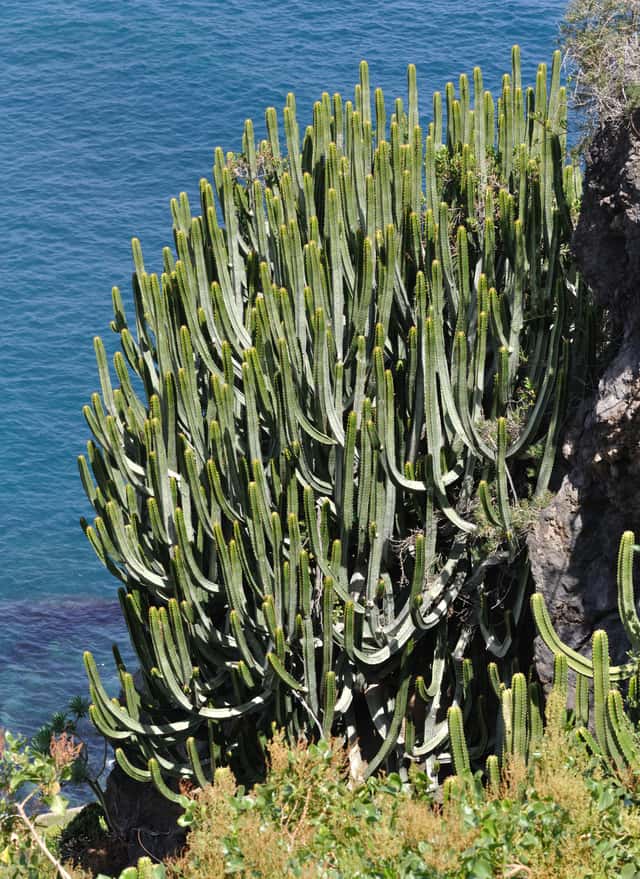
Euphorbia canariensis, commonly known as Canary Island Spurge or Cardón, is a columnar succulent endemic to the Canary Islands (Spain). It is one of the most iconic plants of the Macaronesian region, forming dense stands called cardonal in arid lowlands. The plant grows up to 4 meters tall with a distinctive candelabra-like branching structure. Its thick green stems have four prominent ribs lined with pairs of reddish spines. In spring, it produces small reddish-green cyathia (flower-like structures). All parts of the plant contain a highly toxic milky white latex that causes severe skin irritation and can cause blindness on eye contact.
How to Propagate Canary Island Spurge?
Stem Cutting
The latex is extremely irritating — always wear nitrile gloves and safety goggles. Pre-drying the cut is essential to prevent rot at the base.
- 1 Cut a healthy stem segment using gloves and eye protection to avoid contact with toxic latex
- 2 Allow the cut end to callous in open air for 7-14 days until fully sealed
- 3 Plant in dry cactus mix and do not water for the first 2 weeks
- 4 Begin very light watering once the cutting shows signs of new growth
Materials needed:
How Big Does Canary Island Spurge Grow?
TLDR: Canary Island Spurge can reach up to 4.0m tall with Medium growth rate.
Max height
4.0m
Spread
3.0m
Growth rate
Medium
Foliage
Evergreen
Warning: Toxic Plant
This plant can be toxic if ingested. Keep out of reach of:
Plant Uses
Ornamental
Great for decoration
Is your plant showing symptoms?
Click on the symptom to discover possible causes:
What Diseases Commonly Affect Canary Island Spurge?
TLDR: Canary Island Spurge is susceptible to 8 known diseases. Monitor regularly for early detection.
Root Rot
Root rot is a serious fungal disease that affects the root system of plants, causing them to decay and die. It is primarily caused by overwatering, poor drainage, or soil-borne fungi such as Pythium, Phytophthora, Rhizoctonia, and Fusarium. The disease thrives in waterlogged conditions where roots are deprived of oxygen, making them susceptible to fungal infection.
Mealybugs
Mealybugs are small, soft-bodied insects covered with a white, waxy, cottony material. They are common pests of houseplants and outdoor plants in mild climates. These sap-sucking insects feed on plant tissue, causing damage, stunted growth, and can lead to plant death if left untreated. They produce sticky honeydew which attracts sooty mold.
Scale Insects
Scale insects are small sap-sucking pests that appear as brown, shell-like bumps on plant stems and leaves. There are over 25 species, divided into armored (hard) and unarmored (soft) scales. They feed by piercing plant tissue and extracting sap, which weakens the plant and can lead to yellowing, stunted growth, and even death if left untreated. They also excrete honeydew, which attracts ants and promotes sooty mold growth.
Spider Mites
Spider mites are tiny arachnids (less than 1/20 inch long) related to spiders and ticks that feed on plant sap. They thrive in hot, dry conditions and can cause significant damage to ornamental and vegetable plants. During severe infestations, crop losses can reach 14% or higher as these pests disrupt vital plant processes including photosynthesis, carbon dioxide absorption, and transpiration.
Meaning & Symbolism
The Canary Island Spurge is the vegetable symbol of Gran Canaria and a defining feature of the Canarian landscape. It represents resilience, identity, and the unique endemic flora of the Macaronesian archipelago.
Fun Facts
The Canary Island Spurge is the official plant symbol of Gran Canaria and appears on the coat of arms of several Canarian municipalities.
The Guanches, the indigenous people of the Canary Islands, reportedly used its toxic latex to poison arrow tips and stun fish.
Some wild specimens are estimated to be hundreds of years old and are considered natural monuments.
Despite its strong resemblance to a cactus, it belongs to Euphorbiaceae — the same family as the Christmas poinsettia.
Frequently asked questions
Is the Canary Island Spurge toxic?
How often should I water Euphorbia canariensis?
How much light does Canary Island Spurge need?
How tall can Euphorbia canariensis grow?
What USDA hardiness zones suit Euphorbia canariensis?
Compare with similar plants
| Attribute | Difficulty | Light | Watering | Pet Safe |
|---|---|---|---|---|
| Dark Fieldcap | Medium | Low light | 2d | ⚠️ |
| Azalea | Medium | Partial shade | 3d | ⚠️ |
| Bougainvillea | Medium | Direct sun | 7d | ⚠️ |
| Wild Lettuce | Medium | Direct sun | 7d | ⚠️ |



