Caryophyllaceae
Carnation – Dianthus caryophyllus Complete Care Guide
Dianthus caryophyllus
Carnations thrive in full sun with well-drained, neutral to slightly alkaline soil. Water weekly, allowing the soil to dry slightly between waterings. They prefer cool temperatures (7–24°C) and moderate humidity. Fertilize every 30 days during the growing season and prune spent blooms regularly to encourage continuous flowering.
Every 7 days
Direct sun
7° - 24°C
40% - 60%
Categories
What is Carnation?
Carnation (Dianthus caryophyllus) is a medium-care plant from the Caryophyllaceae family. Dianthus caryophyllus, commonly known as Carnation or Clove Pink, is a species of Dianthus native to the Mediterranean region. One of the oldest cultivated flowers in history, carnations have been grown for over 2,000 years. They produce fragrant, fringed blooms in a wide range of colors — white, pi...
Carnation grows up to 1.2m, spread of 30cm, watering every 7 days, 7°C – 24°C, 40–60% humidity. It is suitable for indoor environments and not safe for pets.
Without precautions, ingestion can cause irritation in pets. Keep out of reach of cats and dogs. Without adequate drainage, root rot can develop within 14 days.
How to Care for Carnation?
TLDR: Carnation needs Direct sun, watering every 7 days, and temperatures between 7-24°C with 40-60% humidity.
How Often Should You Water Carnation?
Water deeply once a week, letting the top inch of soil dry out between waterings. Avoid wetting the foliage to prevent fungal disease. Water at the base of the plant and avoid waterlogging.
How Much Light Does Carnation Need?
Carnations require full sun — at least 6 hours of direct sunlight daily. Place near a south-facing window indoors or in an open, sunny garden bed outdoors. Insufficient light leads to weak stems and poor flowering.
What Is the Best Soil for Carnation?
Use well-draining, loamy or sandy soil enriched with organic matter. A neutral to slightly alkaline pH (6.0–8.0) is ideal. Avoid heavy clay soils that retain moisture; add perlite or coarse sand to improve drainage if needed.
What Pot Should You Use for Carnation?
Terracotta or clay pots are ideal as they allow excellent drainage and airflow. Use a pot with multiple drainage holes. Avoid plastic pots in humid climates as they can retain excess moisture and promote root rot.
Care Schedule
Fertilize
Every 30 days
Repot
Every 365 days
What Is Carnation and Where Does It Come From?
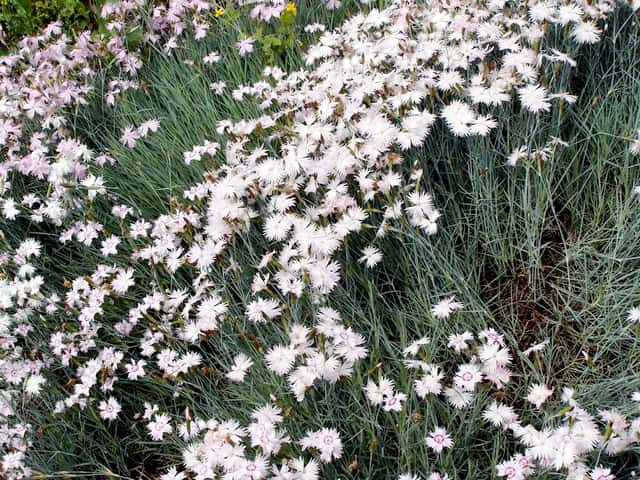
Dianthus caryophyllus, commonly known as Carnation or Clove Pink, is a species of Dianthus native to the Mediterranean region. One of the oldest cultivated flowers in history, carnations have been grown for over 2,000 years. They produce fragrant, fringed blooms in a wide range of colors — white, pink, red, purple, orange, and yellow — atop stiff, glaucous stems. Carnations are prized for their long vase life, spicy clove-like fragrance, and deep cultural symbolism across many traditions.
How to Propagate Carnation?
Stem Cutting
Use clean, sharp scissors to prevent disease. Change water weekly if propagating in water. Avoid direct sun until rooted.
- 1 Select a healthy, non-flowering stem with 4-6 nodes
- 2 Cut just below a node at a 45-degree angle
- 3 Remove lower leaves, leaving 2-3 pairs at the top
- 4 Dip the cut end in rooting hormone powder
- 5 Insert into moist, well-draining propagation mix
- 6 Cover loosely with a plastic bag to retain humidity
- 7 Place in bright, indirect light at 18-22°C
- 8 Roots form in 2-3 weeks; transplant when established
Materials needed:
Seed Propagation
Start seeds indoors 8-10 weeks before the last frost date for best results.
- 1 Sow seeds in a tray with moist seed-starting mix
- 2 Cover lightly with fine vermiculite
- 3 Maintain temperature of 18-21°C
- 4 Keep consistently moist until germination
- 5 Thin seedlings to 15-20 cm apart once established
- 6 Transplant outdoors after last frost
Materials needed:
How Big Does Carnation Grow?
TLDR: Carnation can reach up to 1.2m tall with Medium growth rate.
Max height
1.2m
Spread
30cm
Growth rate
Medium
Foliage
Evergreen
Warning: Toxic Plant
This plant can be toxic if ingested. Keep out of reach of:
Plant Uses
Ornamental
Great for decoration
Edible
Can be consumed
Medicinal
Medicinal properties
Aromatic
Pleasant fragrance
Medicinal Uses
- Historically used in tonics to treat fevers and reduce chest congestion
- Essential oil extracted from flowers used in aromatherapy for stress relief and mood elevation
- Used in European herbal medicine for stomach complaints
Culinary Uses
- Petals are edible and used as garnish for salads, desserts, and cocktails
- Flowers used to flavor liqueurs and syrups in Mediterranean cuisine
- Can be crystallized with sugar for cake decoration
Is your plant showing symptoms?
Click on the symptom to discover possible causes:
What Diseases Commonly Affect Carnation?
TLDR: Carnation is susceptible to 10 known diseases. Monitor regularly for early detection.
Fusarium Wilt
Fusarium wilt is a serious fungal disease caused by the soil-borne fungus Fusarium oxysporum. The fungus invades roots and blocks the water-conducting vessels (xylem) of the plant, causing progressive wilting and eventual death. Host-specific forms of the pathogen exist that attack different plant species.
Alternaria Leaf Spot
Alternaria leaf spot is a common fungal disease caused by Alternaria solani and Alternaria alternata that affects a wide range of plants including tomatoes, potatoes, brassicas, and ornamentals. The disease thrives in warm, humid conditions and can cause significant crop damage if left untreated. Spores overwinter on plant debris and can attach to seeds, making complete elimination difficult.
Root Rot
Root rot is a serious fungal disease that affects the root system of plants, causing them to decay and die. It is primarily caused by overwatering, poor drainage, or soil-borne fungi such as Pythium, Phytophthora, Rhizoctonia, and Fusarium. The disease thrives in waterlogged conditions where roots are deprived of oxygen, making them susceptible to fungal infection.
Crown Rot
Crown rot is a serious fungal disease that attacks the crown (base) of the plant where the stem meets the soil. It is caused by various fungal pathogens including Phytophthora, Fusarium, and Rhizoctonia. The disease thrives in waterlogged conditions and can quickly spread to kill the entire plant if not addressed promptly.
Meaning & Symbolism
Carnations symbolize love, admiration, and distinction. Red carnations represent deep love; white carnations signify purity and luck; pink carnations are associated with gratitude and motherly love. In ancient Greece, carnations were used in ceremonial garlands and offered to the gods.
Fun Facts
Carnations have been cultivated for over 2,000 years, making them one of the oldest cultivated flowers in the world
The name Dianthus means "flower of the gods" in Greek (dios = god, anthos = flower)
Carnations are the official birth flower for January
In the United States, pink carnations became the symbol of Mother's Day thanks to Anna Jarvis in 1907
Frequently asked questions
How often should I water my carnation?
Do carnations prefer full sun or shade?
Are carnations toxic to cats and dogs?
How do I make my carnation bloom longer?
Why are my carnation leaves turning yellow?
Compare with similar plants
| Attribute | Difficulty | Light | Watering | Pet Safe |
|---|---|---|---|---|
| Dark Fieldcap | Medium | Low light | 2d | ⚠️ |
| Azalea | Medium | Partial shade | 3d | ⚠️ |
| Muriel's Bamboo | Medium | Partial shade | 3d | ✓ |
| Bougainvillea | Medium | Direct sun | 7d | ⚠️ |




