Smilacaceae
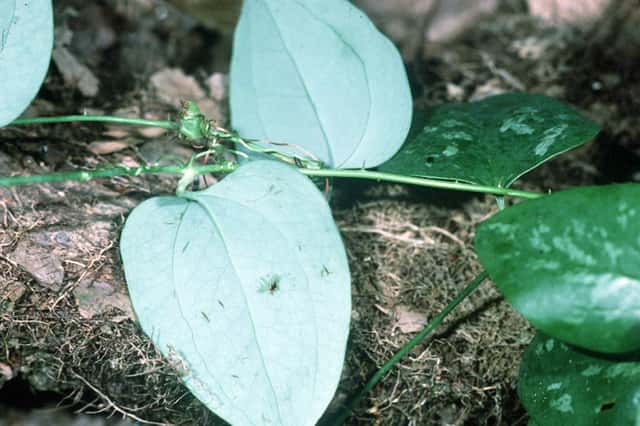
Cat Greenbrier (Smilax glauca)
Smilax glauca
Cat Greenbrier is a vigorous, low-maintenance woodland vine best grown outdoors in full sun to partial shade. Water weekly during the growing season; it tolerates brief dry spells once established. Feed lightly in spring. Prune in late winter to control spread. Not suitable for indoor cultivation.
Every 7 days
Bright indirect
5° - 35°C
40% - 70%
Categories
What is Cat Greenbrier?
Cat Greenbrier (Smilax glauca) is a medium-care plant from the Smilacaceae family. Smilax glauca, commonly known as Cat Greenbrier or Sawbrier, is a thorny deciduous climbing vine native to the woodlands and thickets of Eastern North America. It is recognized by its ovate to cordate leaves with a distinctive bluish-white waxy bloom on the undersides, giving the species its name "g...
Cat Greenbrier grows up to 3.5m, spread of 150cm, watering every 7 days, 5°C – 35°C, 40–70% humidity. It is not suitable for indoor environments and safe for pets.
Unlike many popular species, Cat Greenbrier is safe to keep around pets.
How to Care for Cat Greenbrier?
TLDR: Cat Greenbrier needs Bright indirect, watering every 7 days, and temperatures between 5-35°C with 40-70% humidity.
How Often Should You Water Cat Greenbrier?
Water deeply once a week during the growing season (spring–summer). Allow the top few centimetres of soil to dry slightly between waterings. Established plants tolerate short dry periods but perform best with consistent moisture.
How Much Light Does Cat Greenbrier Need?
Thrives in full sun to partial shade (5,000–50,000 lux). In hotter climates, some afternoon shade protects foliage from scorching. In cooler regions, maximum sun exposure encourages vigorous growth and fruiting.
What Is the Best Soil for Cat Greenbrier?
Plant in loamy, well-draining soil rich in organic matter. Tolerates sandy and clay soils. Prefers a slightly acidic to neutral pH (5.5–7.5). Amend heavy clay soils with compost to improve drainage.
What Pot Should You Use for Cat Greenbrier?
Not applicable (outdoor vine); train on a sturdy trellis, fence, or arbour.
Care Schedule
Fertilize
Every 42 days
What Is Cat Greenbrier and Where Does It Come From?
Smilax glauca, commonly known as Cat Greenbrier or Sawbrier, is a thorny deciduous climbing vine native to the woodlands and thickets of Eastern North America. It is recognized by its ovate to cordate leaves with a distinctive bluish-white waxy bloom on the undersides, giving the species its name "glauca". The stems are armed with sharp prickles. It produces small greenish-yellow flowers in spring to early summer, followed by clusters of dark blue-black berries that are an important wildlife food source.
How to Propagate Cat Greenbrier?
Rhizome Division
Division is the most reliable method. Ensure each division has a healthy bud. Avoid dividing during drought or extreme heat.
- 1 Dig up a section of the rhizome in early spring before new growth begins
- 2 Divide into sections each with at least one growth bud
- 3 Replant divisions 30–45 cm deep in prepared loamy soil
- 4 Water well and keep moist until new shoots emerge
Materials needed:
Seed Propagation
Smilax glauca is dioecious—both male and female plants are needed for seed production. Germination can be slow and erratic.
- 1 Collect ripe dark-blue berries in autumn
- 2 Clean seeds from pulp and cold-stratify for 60-90 days in moist sand in a refrigerator
- 3 Sow stratified seeds in loamy seed mix in spring
- 4 Keep moist and in bright indirect light until germination
Materials needed:
How Big Does Cat Greenbrier Grow?
TLDR: Cat Greenbrier can reach up to 3.5m tall with Fast growth rate.
Max height
3.5m
Spread
1.5m
Growth rate
Fast
Foliage
Deciduous
Plant Uses
Ornamental
Great for decoration
Medicinal
Medicinal properties
Edible
Can be consumed
Medicinal Uses
- Root and rhizome tea traditionally used for rheumatism and as a blood purifier; stem prickles rubbed on skin as a counter-irritant for localised pain relief
Culinary Uses
- Young spring shoots and leaves are edible raw or cooked; roots can be ground into a starchy powder used in baking or as a thickener
Is your plant showing symptoms?
Click on the symptom to discover possible causes:
What Diseases Commonly Affect Cat Greenbrier?
TLDR: Cat Greenbrier is susceptible to 7 known diseases. Monitor regularly for early detection.
Root Rot
Root rot is a serious fungal disease that affects the root system of plants, causing them to decay and die. It is primarily caused by overwatering, poor drainage, or soil-borne fungi such as Pythium, Phytophthora, Rhizoctonia, and Fusarium. The disease thrives in waterlogged conditions where roots are deprived of oxygen, making them susceptible to fungal infection.
Powdery Mildew
Powdery mildew is a common fungal disease caused by various fungi species including Erysiphe, Podosphaera, Oïdium, and Leveillula. It affects over 10,000 plant species worldwide. The disease thrives in warm, dry climates with high humidity and appears as a distinctive white powdery coating on plant surfaces.
Rust
Rust is a common fungal disease caused by fungi in the order Pucciniales that affects a wide variety of plants. The disease gets its name from the characteristic orange, yellow, or reddish-brown pustules that appear on leaves, resembling metal rust. This obligate fungal parasite requires living plants to survive and can cause significant economic losses in agricultural crops.
Leaf Spot
Leaf spot is a common fungal disease caused by various pathogens including Alternaria, Ascochyta, Colletotrichum, Septoria, and Venturia. It primarily affects leaves, causing discolored spots that can lead to premature leaf drop if left untreated.
Meaning & Symbolism
In many Native American traditions, Smilax glauca represents resilience, endurance, and adaptability—thriving where other plants struggle, weaving through adversity with tenacious vines.
Fun Facts
Cat Greenbrier berries are consumed by over 40 species of birds, making it a critical wildlife plant in Eastern North American ecosystems.
The bluish-white waxy coating on the leaf undersides gives the species its scientific name "glauca", from the Latin for blue-grey or silvery.
Despite being called a nuisance weed, Smilax glauca was used by multiple Native American peoples as food and medicine for centuries.
Cat Greenbrier can regrow rapidly from deep rhizomes even after fire or severe cutting, making it one of the most resilient native vines in its range.
Frequently asked questions
How often should I water Cat Greenbrier?
Is Cat Greenbrier toxic to pets?
Can Cat Greenbrier be grown indoors?
How do I control the spread of Cat Greenbrier?
What wildlife benefits does Cat Greenbrier provide?
Compare with similar plants
| Attribute | Difficulty | Light | Watering | Pet Safe |
|---|---|---|---|---|
| Dark Fieldcap | Medium | Low light | 2d | ⚠️ |
| Azalea | Medium | Partial shade | 3d | ⚠️ |
| Bougainvillea | Medium | Direct sun | 7d | ⚠️ |
| Wild Lettuce | Medium | Direct sun | 7d | ⚠️ |



