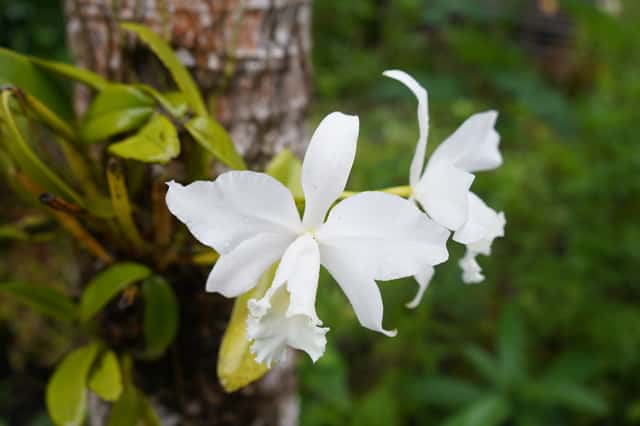
Orchidaceae
Cattleya — The Queen of Orchids
Cattleya
Bright indirect light, weekly watering when medium is dry, well-draining orchid bark mix, 50-70% humidity, temperatures 13-29°C. Fertilize every two weeks during active growth.
Every 7 days
Bright indirect
13° - 29°C
50% - 70%
Categories
What is Corsage Orchid?
Corsage Orchid (Cattleya) is a medium-care plant from the Orchidaceae family. Cattleya is an iconic genus of approximately 110 epiphytic and lithophytic orchid species native to the tropical Americas, ranging from Mexico to Argentina. Known as the "Queen of Orchids," the genus is celebrated for its large, fragrant, and showy flowers in vivid shades of pink, lavender, white, a...
Corsage Orchid grows up to 60cm, spread of 45cm, watering every 7 days, 13°C – 29°C, 50–70% humidity. It is suitable for indoor environments and safe for pets.
Unlike many popular species, Corsage Orchid is safe to keep around pets. Without adequate drainage, root rot can develop within 14 days.
How to Care for Corsage Orchid?
TLDR: Corsage Orchid needs Bright indirect, watering every 7 days, and temperatures between 13-29°C with 50-70% humidity.
How Often Should You Water Corsage Orchid?
Water once a week, but always check that the medium is completely dry first. Use lukewarm water and water in the morning so leaves can dry during the day, preventing bacterial rot overnight.
How Much Light Does Corsage Orchid Need?
Requires bright but filtered light — 21,500 to 37,700 lux. Place near an east-facing window or behind a sheer curtain on a south/west window. Avoid direct midday sun which can scorch the leaves.
What Is the Best Soil for Corsage Orchid?
Use a coarse orchid bark mix with perlite and charcoal. Medium must dry between waterings. Repot every 2 years when bark begins to break down and drain poorly.
What Pot Should You Use for Corsage Orchid?
Terra cotta or plastic pot with multiple drainage holes. Wooden slatted baskets are excellent for mounted Cattleyas. Never use pots without drainage.
Care Schedule
Fertilize
Every 14 days
Misting
Every 3 days
Repot
Every 730 days
What Is Corsage Orchid and Where Does It Come From?
Cattleya is an iconic genus of approximately 110 epiphytic and lithophytic orchid species native to the tropical Americas, ranging from Mexico to Argentina. Known as the "Queen of Orchids," the genus is celebrated for its large, fragrant, and showy flowers in vivid shades of pink, lavender, white, and yellow. In the Bloom database, a legacy entry "Cattleya spp" exists as an older collective reference for the genus. This "Cattleya" entry was created specifically for genus-level matching from Plant.id automated identifications.
How to Propagate Corsage Orchid?
Pseudobulb Division
Divide only after flowering when new roots are emerging. Keep at least 4 pseudobulbs per division to ensure future blooming. Sterilize all tools between cuts.
- 1 Remove plant from pot after flowering
- 2 Identify sections with at least 4 mature pseudobulbs and healthy roots
- 3 Use sterilized pruning shears to cut through the rhizome
- 4 Apply powdered fungicide to all cut surfaces
- 5 Plant each division in fresh orchid bark medium
Materials needed:
Backbulb Propagation
Less reliable method, best used only when surplus bulbs are available. Success depends entirely on the vigor of the active eye on the backbulb.
- 1 Separate older leafless bulbs from the rhizome
- 2 Plant in moist sphagnum moss
- 3 Keep in a warm, humid location
- 4 Wait for the active eye on the bulb to sprout
Materials needed:
How Big Does Corsage Orchid Grow?
TLDR: Corsage Orchid can reach up to 60cm tall with Slow growth rate.
Max height
60cm
Spread
45cm
Growth rate
Slow
Foliage
Evergreen
Plant Uses
Ornamental
Great for decoration
Aromatic
Pleasant fragrance
Is your plant showing symptoms?
Click on the symptom to discover possible causes:
What Diseases Commonly Affect Corsage Orchid?
TLDR: Corsage Orchid is susceptible to 11 known diseases. Monitor regularly for early detection.
Root Rot
Root rot is a serious fungal disease that affects the root system of plants, causing them to decay and die. It is primarily caused by overwatering, poor drainage, or soil-borne fungi such as Pythium, Phytophthora, Rhizoctonia, and Fusarium. The disease thrives in waterlogged conditions where roots are deprived of oxygen, making them susceptible to fungal infection.
Phytophthora Root Rot
Disease caused by fungus-like organisms (oomycetes) that live in soil and can survive for years. It affects roots, stem, and crown of plants, being especially severe in waterlogged or poorly drained soils. It is the second most common cause of root rot in trees and shrubs.
Gray Mold (Botrytis Blight)
Gray mold, caused by the fungus Botrytis cinerea, is one of the most common fungal diseases in plants. It affects over 200 plant species, including ornamentals, vegetables, fruits, and houseplants. The disease thrives in cool, humid conditions with poor air circulation, causing grayish spots and soft rot on infected tissues.
Scale Insects
Scale insects are small sap-sucking pests that appear as brown, shell-like bumps on plant stems and leaves. There are over 25 species, divided into armored (hard) and unarmored (soft) scales. They feed by piercing plant tissue and extracting sap, which weakens the plant and can lead to yellowing, stunted growth, and even death if left untreated. They also excrete honeydew, which attracts ants and promotes sooty mold growth.
Meaning & Symbolism
Symbol of luxury, beauty, love, and rare elegance. Historically the iconic corsage flower for formal occasions, representing refined admiration and sophisticated taste.
Fun Facts
With around 110 species, Cattleya is one of the largest and most diverse orchid genera native to tropical America.
Cattleya flowers were the quintessential corsage orchid of the 20th century, adorning boutonnieres and wrist corsages for proms and formal events worldwide.
Cattleya labiata was the first species in the genus discovered by European botanists in 1818, accidentally triggering the Victorian craze for orchid collecting known as "orchidelirium."
Despite their delicate appearance, Cattleya orchids are remarkably long-lived and can thrive for decades with proper care.
Frequently asked questions
How often should I water my Cattleya orchid?
How much light does a Cattleya need?
Are Cattleya orchids toxic to cats and dogs?
How and when should I repot my Cattleya?
Why is my Cattleya not blooming?
Compare with similar plants
| Attribute | Difficulty | Light | Watering | Pet Safe |
|---|---|---|---|---|
| Dark Fieldcap | Medium | Low light | 2d | ⚠️ |
| Azalea | Medium | Partial shade | 3d | ⚠️ |
| Bougainvillea | Medium | Direct sun | 7d | ⚠️ |
| Wild Lettuce | Medium | Direct sun | 7d | ⚠️ |



