Polypodiaceae
Staghorn Fern: Pet-Safe Plant
Platycerium bifurcatum
Staghorn ferns require bright indirect light, high humidity (60-80%), and consistent moisture without waterlogging. Mount on boards with sphagnum moss or grow in well-draining epiphyte mix. Water weekly in summer, every 2-3 weeks in winter. Mist frequently and fertilize monthly during growing season.
Every 7 days
Partial shade
10° - 27°C
60% - 80%
Categories
What is Staghorn Fern?
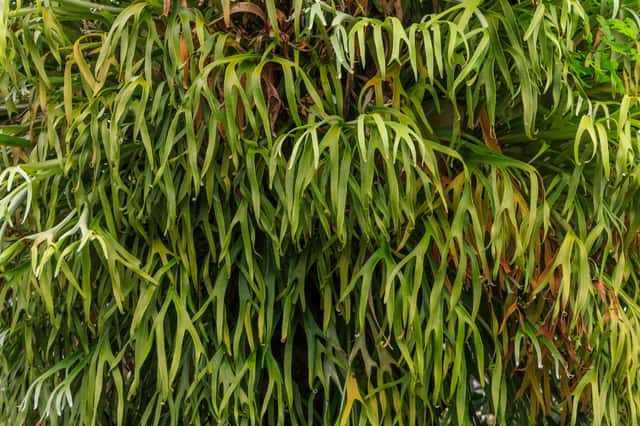
Staghorn Fern (Platycerium bifurcatum) is a medium-care plant from the Polypodiaceae family. Platycerium bifurcatum is a striking epiphytic fern native to the rainforests of Australia, Java, and New Guinea. Known for its unique antler-shaped fronds, this plant naturally grows on trees and rocks, absorbing nutrients and moisture from the air. It produces two types of fronds: sterile shield f...
Staghorn Fern grows up to 90cm, spread of 80cm, watering every 7 days, 10°C – 27°C, 60–80% humidity. It is suitable for indoor environments and safe for pets.
Unlike many popular species, Staghorn Fern is safe to keep around pets. Without adequate drainage, root rot can develop within 14 days.
How to Care for Staghorn Fern?
TLDR: Staghorn Fern needs Partial shade, watering every 7 days, and temperatures between 10-27°C with 60-80% humidity.
How Often Should You Water Staghorn Fern?
Water once per week in warm months, every 2-3 weeks in winter. Soak the root ball thoroughly and allow to dry slightly between waterings. Use rainwater or distilled water when possible. These ferns absorb water through their fronds, so regular misting is beneficial.
How Much Light Does Staghorn Fern Need?
Provide bright, indirect or diffused light. Avoid direct sunlight which can burn the sensitive fronds. East-facing windows are ideal indoors. Signs of insufficient light include pale fronds and slow growth.
What Is the Best Soil for Staghorn Fern?
As epiphytes, staghorn ferns do not grow in traditional soil. Mount them on boards or bark with sphagnum moss, or use a well-draining epiphyte mix containing orchid bark, peat moss, and sphagnum moss. Maintain slightly acidic to neutral pH (6.0-7.0).
What Pot Should You Use for Staghorn Fern?
Best grown mounted on wooden boards, bark slabs, or in wire hanging baskets. Traditional pots are not recommended as they can cause root rot. Cork bark or cedar boards work well as mounting surfaces.
Care Schedule
Fertilize
Every 30 days
Misting
Every 3 days
What Is Staghorn Fern and Where Does It Come From?
Platycerium bifurcatum is a striking epiphytic fern native to the rainforests of Australia, Java, and New Guinea. Known for its unique antler-shaped fronds, this plant naturally grows on trees and rocks, absorbing nutrients and moisture from the air. It produces two types of fronds: sterile shield fronds that anchor the plant and fertile fronds that resemble deer antlers. With proper care, staghorn ferns can live for over 50 years and become impressive living sculptures.
How to Propagate Staghorn Fern?
Division
- Best done in spring or summer during active growth
- Success rate is 80-90% when done correctly
- Divisions establish in 2-3 months
- 1 Wait for plant to produce pups or offsets
- 2 Use a sharp, sterilized knife to separate pups from mother plant
- 3 Ensure each division has roots and both basal and foliar fronds
- 4 Mount the new plant on board with moist sphagnum moss
- 5 Secure with fishing line or wire over basal fronds only
- 6 Keep in warm, humid location with bright indirect light
Materials needed:
Spores
- Very slow process taking 1-2 years to maturity
- Success rate around 30-50%
- Requires patience and sterile conditions
- 1 Collect brown spores from undersides of fertile fronds in summer
- 2 Cut frond and shake spores onto paper
- 3 Spread spores on sterile moist peat moss
- 4 Cover container with plastic for humidity
- 5 Place in indirect light
- 6 Keep moss consistently moist with bottom watering
- 7 Wait 3-6 months for germination
Materials needed:
How Big Does Staghorn Fern Grow?
TLDR: Staghorn Fern can reach up to 90cm tall with Slow growth rate.
Max height
90cm
Spread
80cm
Growth rate
Slow
Foliage
Evergreen
Plant Uses
Ornamental
Great for decoration
Air Purifying
Improves air quality
Is your plant showing symptoms?
Click on the symptom to discover possible causes:
What Diseases Commonly Affect Staghorn Fern?
TLDR: Staghorn Fern is susceptible to 25 known diseases. Monitor regularly for early detection.
Root Rot
Root rot is a serious fungal disease that affects the root system of plants, causing them to decay and die. It is primarily caused by overwatering, poor drainage, or soil-borne fungi such as Pythium, Phytophthora, Rhizoctonia, and Fusarium. The disease thrives in waterlogged conditions where roots are deprived of oxygen, making them susceptible to fungal infection.
Overwatering
Overwatering occurs when plants receive too much water, depriving roots of oxygen and causing root rot. This environmental stress is one of the most common causes of houseplant death, as waterlogged soil prevents roots from breathing and functioning properly.
Low Humidity Stress
Low humidity stress occurs when indoor air becomes too dry, causing plants to lose moisture faster than they can absorb it through their roots. This is especially common during winter heating periods, near radiators and heating vents, or in air-conditioned spaces. Tropical plants are particularly susceptible to low humidity damage.
Scale Insects
Scale insects are small sap-sucking pests that appear as brown, shell-like bumps on plant stems and leaves. There are over 25 species, divided into armored (hard) and unarmored (soft) scales. They feed by piercing plant tissue and extracting sap, which weakens the plant and can lead to yellowing, stunted growth, and even death if left untreated. They also excrete honeydew, which attracts ants and promotes sooty mold growth.
Meaning & Symbolism
Resilience, unique beauty, and natural artistry. The staghorn fern represents adaptability and the ability to thrive in unconventional environments.
Compare with similar plants
| Attribute | Difficulty | Light | Watering | Pet Safe |
|---|---|---|---|---|
| Dark Fieldcap | Medium | Low light | 2d | ⚠️ |
| Azalea | Medium | Partial shade | 3d | ⚠️ |
| Bougainvillea | Medium | Direct sun | 7d | ⚠️ |
| Wild Lettuce | Medium | Direct sun | 7d | ⚠️ |



