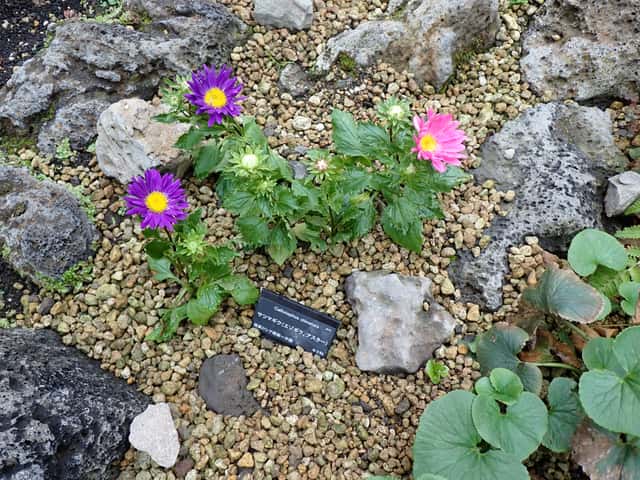
Asteraceae
China Aster (Callistephus chinensis) – Complete Care Guide
Callistephus chinensis
China Aster thrives in full sun with well-draining, fertile soil. Water regularly to keep the soil evenly moist, fertilize every two weeks during the growing season, and deadhead spent blooms to prolong flowering. Rotate planting sites annually to prevent disease buildup.
Every 7 days
Bright indirect
5° - 28°C
40% - 70%
Categories
What is China Aster?
China Aster (Callistephus chinensis) is a medium-care plant from the Asteraceae family. China Aster (Callistephus chinensis) is a stunning annual flowering plant native to China, beloved for its vibrant, daisy-like blooms in shades of white, pink, red, blue, violet, and purple. A member of the Asteraceae family, it blooms from late summer through fall, making it a favorite for cut flow...
China Aster grows up to 90cm, spread of 45cm, watering every 7 days, 5°C – 28°C, 40–70% humidity. It is not suitable for indoor environments and safe for pets.
Unlike many popular species, China Aster is safe to keep around pets.
How to Care for China Aster?
TLDR: China Aster needs Bright indirect, watering every 7 days, and temperatures between 5-28°C with 40-70% humidity.
How Often Should You Water China Aster?
Water deeply once a week, ensuring the soil stays evenly moist but never waterlogged. Container plants may need more frequent watering. Avoid overhead watering to reduce the risk of fungal diseases.
How Much Light Does China Aster Need?
Place China Asters in a spot that receives at least 6 hours of direct sunlight daily. In very hot climates, afternoon shade can help prolong bloom time and keep plants healthy.
What Is the Best Soil for China Aster?
Use a rich, well-draining soil amended with compost or aged manure. A slightly acidic to neutral pH between 5.5 and 7.5 is ideal. Avoid heavy clay soils that retain too much moisture.
What Pot Should You Use for China Aster?
Terracotta or ceramic pots with drainage holes are ideal for containers. Choose a pot at least 30 cm deep and wide for best performance.
Care Schedule
Fertilize
Every 14 days
What Is China Aster and Where Does It Come From?
China Aster (Callistephus chinensis) is a stunning annual flowering plant native to China, beloved for its vibrant, daisy-like blooms in shades of white, pink, red, blue, violet, and purple. A member of the Asteraceae family, it blooms from late summer through fall, making it a favorite for cut flower gardens and seasonal borders.
How to Propagate China Aster?
Seed Propagation
Use fresh seeds each year for best germination rates. Harden off seedlings by gradually exposing them to outdoor conditions over 7-10 days before transplanting.
- 1 Start seeds indoors 6-8 weeks before the last frost date
- 2 Sow seeds 0.6 cm deep in seed-starting mix and keep moist
- 3 Maintain temperature of 21-22°C until germination
- 4 Transplant seedlings outdoors after all frost danger has passed
- 5 Alternatively, direct sow outdoors after the last frost
Materials needed:
How Big Does China Aster Grow?
TLDR: China Aster can reach up to 90cm tall with Fast growth rate.
Max height
90cm
Spread
45cm
Growth rate
Fast
Foliage
Deciduous
Plant Uses
Ornamental
Great for decoration
Is your plant showing symptoms?
Click on the symptom to discover possible causes:
What Diseases Commonly Affect China Aster?
TLDR: China Aster is susceptible to 9 known diseases. Monitor regularly for early detection.
Fusarium Wilt
Fusarium wilt is a serious fungal disease caused by the soil-borne fungus Fusarium oxysporum. The fungus invades roots and blocks the water-conducting vessels (xylem) of the plant, causing progressive wilting and eventual death. Host-specific forms of the pathogen exist that attack different plant species.
Verticillium Wilt
Verticillium wilt is a soil-borne fungal disease caused primarily by the fungi Verticillium dahliae and V. albo-atrum. These pathogens infect plant roots and grow within the vascular tissues, blocking water and nutrient transport, resulting in wilting and eventual plant death. The disease affects over 350 plant species including vegetables, fruits, ornamental flowers, and trees. The fungi can survive in soil for more than 10 years as resistant structures called microsclerotia.
Powdery Mildew
Powdery mildew is a common fungal disease caused by various fungi species including Erysiphe, Podosphaera, Oïdium, and Leveillula. It affects over 10,000 plant species worldwide. The disease thrives in warm, dry climates with high humidity and appears as a distinctive white powdery coating on plant surfaces.
Gray Mold (Botrytis Blight)
Gray mold, caused by the fungus Botrytis cinerea, is one of the most common fungal diseases in plants. It affects over 200 plant species, including ornamentals, vegetables, fruits, and houseplants. The disease thrives in cool, humid conditions with poor air circulation, causing grayish spots and soft rot on infected tissues.
Meaning & Symbolism
In the language of flowers, China Asters symbolize love, patience, elegance, and daintiness. They are often given as tokens of admiration and a wish for variety in life.
Fun Facts
China Aster is the only species in its genus Callistephus, making it botanically unique among flowering annuals.
The name Callistephus comes from the Greek words for "beautiful" (kallos) and "crown" (stephos), referring to its crown-like flower heads.
China Asters were introduced to European gardens in the early 18th century and quickly became prized cut flowers.
A single China Aster plant can produce over 50 blooms in a single season when properly deadheaded.
Frequently asked questions
How often should I water China Aster?
Is China Aster toxic to pets?
Why are my China Aster plants wilting?
When does China Aster bloom?
How do I prevent diseases in China Aster?
Compare with similar plants
| Attribute | Difficulty | Light | Watering | Pet Safe |
|---|---|---|---|---|
| Dark Fieldcap | Medium | Low light | 2d | ⚠️ |
| Azalea | Medium | Partial shade | 3d | ⚠️ |
| Muriel's Bamboo | Medium | Partial shade | 3d | ✓ |
| Bougainvillea | Medium | Direct sun | 7d | ⚠️ |




