Bromeliaceae
Coral Berry Bromeliad (Aechmea fulgens) - Complete Care Guide
Aechmea fulgens
A low-maintenance plant that thrives in bright indirect light and high humidity. Keep the central cup always filled with fresh water. Avoid intense direct sunlight. Requires light, well-draining epiphyte mix. Fertilize every 14 days during spring and summer.
Every 7 days
Partial shade
15° - 30°C
60% - 80%
Categories
What is Coral Berry Bromeliad?
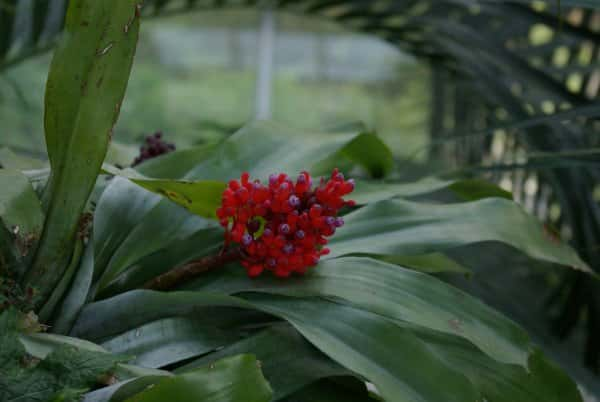
Coral Berry Bromeliad (Aechmea fulgens) is a medium-care plant from the Bromeliaceae family. Aechmea fulgens, commonly known as the Coral Berry Bromeliad, is an epiphytic bromeliad native to northeastern Brazil, particularly the states of Bahia and Pernambuco. It forms an elegant rosette of bright green, waxy leaves with marginal spines. Its striking inflorescence features red bracts and nu...
Coral Berry Bromeliad grows up to 60cm, spread of 50cm, watering every 7 days, 15°C – 30°C, 60–80% humidity. It is suitable for indoor environments and safe for pets.
Unlike many popular species, Coral Berry Bromeliad is safe to keep around pets. Without adequate drainage, root rot can develop within 14 days.
How to Care for Coral Berry Bromeliad?
TLDR: Coral Berry Bromeliad needs Partial shade, watering every 7 days, and temperatures between 15-30°C with 60-80% humidity.
How Often Should You Water Coral Berry Bromeliad?
Keep the central rosette cup filled with clean water at all times, flushing it weekly to prevent stagnation and salt buildup. Water the substrate only when slightly dry, approximately every 7 days. Always use chlorine-free water — rainwater or filtered water is ideal.
How Much Light Does Coral Berry Bromeliad Need?
Grow in bright indirect light, near a window without direct sun exposure. Tolerates partial shade but blooms better with more light. Avoid intense direct sunlight, which causes leaf scorch.
What Is the Best Soil for Coral Berry Bromeliad?
Use a well-draining epiphyte or bromeliad mix: a light blend of charcoal, coarse sand, organic matter, and coconut fiber. Avoid compacted substrates that retain too much moisture around the roots.
What Pot Should You Use for Coral Berry Bromeliad?
Shallow, heavy terracotta or ceramic pot with drainage holes. The pot size should be proportional to the rosette for stability.
Care Schedule
Fertilize
Every 14 days
Misting
Every 3 days
Rotate
Every 7 days
Repot
Every 730 days
What Is Coral Berry Bromeliad and Where Does It Come From?
Aechmea fulgens, commonly known as the Coral Berry Bromeliad, is an epiphytic bromeliad native to northeastern Brazil, particularly the states of Bahia and Pernambuco. It forms an elegant rosette of bright green, waxy leaves with marginal spines. Its striking inflorescence features red bracts and numerous purple flowers, followed by long-lasting red globose berries that persist for many months after blooming. This makes it one of the most decorative bromeliads for both indoor cultivation and tropical gardens.
How to Propagate Coral Berry Bromeliad?
Pup Separation
Wait for the pup to reach 1/3 the size of the mother plant before separating
- 1 Wait for pup to reach at least 10-15 cm in height
- 2 Carefully remove mother plant from pot
- 3 Separate pup with a clean sharp knife, keeping some roots attached
- 4 Plant pup in bromeliad mix in a small shallow pot
- 5 Keep in a humid, shaded spot until well-rooted
Materials needed:
Seeds
Slow process; use fresh seeds for best results
- 1 Collect ripe seeds from red berries
- 2 Sow in moist bromeliad mix
- 3 Keep in warm (22-28°C) high-humidity environment
- 4 Germination occurs in 2-6 weeks
- 5 Transplant seedlings when 5 cm tall
Materials needed:
How Big Does Coral Berry Bromeliad Grow?
TLDR: Coral Berry Bromeliad can reach up to 60cm tall with Slow growth rate.
Max height
60cm
Spread
50cm
Growth rate
Slow
Foliage
Evergreen
Plant Uses
Ornamental
Great for decoration
Is your plant showing symptoms?
Click on the symptom to discover possible causes:
What Diseases Commonly Affect Coral Berry Bromeliad?
TLDR: Coral Berry Bromeliad is susceptible to 14 known diseases. Monitor regularly for early detection.
Mealybugs
Mealybugs are small, soft-bodied insects covered with a white, waxy, cottony material. They are common pests of houseplants and outdoor plants in mild climates. These sap-sucking insects feed on plant tissue, causing damage, stunted growth, and can lead to plant death if left untreated. They produce sticky honeydew which attracts sooty mold.
Scale Insects
Scale insects are small sap-sucking pests that appear as brown, shell-like bumps on plant stems and leaves. There are over 25 species, divided into armored (hard) and unarmored (soft) scales. They feed by piercing plant tissue and extracting sap, which weakens the plant and can lead to yellowing, stunted growth, and even death if left untreated. They also excrete honeydew, which attracts ants and promotes sooty mold growth.
Spider Mites
Spider mites are tiny arachnids (less than 1/20 inch long) related to spiders and ticks that feed on plant sap. They thrive in hot, dry conditions and can cause significant damage to ornamental and vegetable plants. During severe infestations, crop losses can reach 14% or higher as these pests disrupt vital plant processes including photosynthesis, carbon dioxide absorption, and transpiration.
Aphids
Aphids are small, soft-bodied, pear-shaped insects (1/16 to 1/8 inch long) that feed by sucking nutrient-rich sap from plants. They reproduce rapidly and can quickly weaken plants, causing distorted growth and transmitting plant viruses. Aphids come in various colors including green, black, red, yellow, brown, and gray. They secrete honeydew, a sticky substance that attracts ants and encourages sooty mold growth.
Meaning & Symbolism
Tropical vitality, resilience, and exotic beauty. Symbolizes lasting joy thanks to its persistent berries that adorn the plant for months.
Fun Facts
Aechmea fulgens is monocarpic: it blooms only once in its lifetime, but before dying it produces multiple pups that carry on the species.
Its red berries can remain decorative on the plant for 6 months or more after flowering ends.
It is native to northeastern Brazil, growing as an epiphyte on trees in the states of Bahia and Pernambuco.
The genus name "Aechmea" derives from the Greek "aichme," meaning "spear point," referring to the pointed sepals of the flower.
Bromeliads like Aechmea fulgens act as mini-ecosystems in the wild, with their central water cups hosting small frogs, insects, and microorganisms.
Frequently asked questions
How often should I change the water in the Coral Berry Bromeliad cup?
Is Aechmea fulgens toxic to cats and dogs?
Why is my Coral Berry Bromeliad not blooming?
What should I do after my Coral Berry Bromeliad finishes blooming?
Can I grow Coral Berry Bromeliad outdoors?
Compare with similar plants
| Attribute | Difficulty | Light | Watering | Pet Safe |
|---|---|---|---|---|
| Dark Fieldcap | Medium | Low light | 2d | ⚠️ |
| Azalea | Medium | Partial shade | 3d | ⚠️ |
| Muriel's Bamboo | Medium | Partial shade | 3d | ✓ |
| Bougainvillea | Medium | Direct sun | 7d | ⚠️ |




