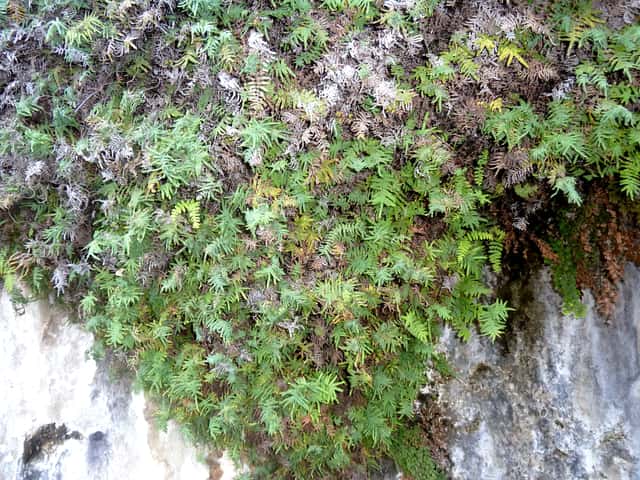
Gleicheniaceae
Coral Fern (Gleichenia polypodioides): Complete Care Guide
Gleichenia polypodioides
Prefers partial shade to filtered light, consistently moist peaty soil, and high ambient humidity. Water frequently. Not drought tolerant. Best suited for humid outdoor gardens or greenhouses.
Every 3 days
Partial shade
10° - 30°C
65% - 90%
Categories
What is Coral Fern?
Coral Fern (Gleichenia polypodioides) is a medium-care plant from the Gleicheniaceae family. Gleichenia polypodioides, commonly known as the coral fern, is an evergreen climbing fern native to southern and east tropical Africa. It is recognized by its dichotomously forked fronds, dark wiry stipes, and vigorous scrambling habit. It colonizes moist slopes, stream banks, road embankments, and...
Coral Fern grows up to 1.5m, spread of 200cm, watering every 3 days, 10°C – 30°C, 65–90% humidity. It is not suitable for indoor environments and safe for pets.
Unlike many popular species, Coral Fern is safe to keep around pets.
How to Care for Coral Fern?
TLDR: Coral Fern needs Partial shade, watering every 3 days, and temperatures between 10-30°C with 65-90% humidity.
How Often Should You Water Coral Fern?
Water 2-3 times per week, keeping the soil consistently moist. Never let the soil dry out completely. Ensure good drainage to prevent root rot.
How Much Light Does Coral Fern Need?
Provide bright filtered light or partial shade. It tolerates full sun in humid environments but performs best with indirect light or dappled shade.
What Is the Best Soil for Coral Fern?
Use peaty, slightly acidic soil (pH 4.5–6.0) rich in organic matter with good drainage. Incorporate bark or coconut fiber for aeration.
What Pot Should You Use for Coral Fern?
Outdoor beds or containers in humid, shaded areas. Not recommended for indoor cultivation due to high humidity and space requirements.
Care Schedule
Fertilize
Every 90 days
Misting
Every 2 days
What Is Coral Fern and Where Does It Come From?
Gleichenia polypodioides, commonly known as the coral fern, is an evergreen climbing fern native to southern and east tropical Africa. It is recognized by its dichotomously forked fronds, dark wiry stipes, and vigorous scrambling habit. It colonizes moist slopes, stream banks, road embankments, and eroded ravines in regions of high rainfall and frequent mist.
How to Propagate Coral Fern?
Spore propagation
Sterilize substrate to prevent competing fungi. Keep the container sealed to maintain humidity.
- 1 Collect mature fronds with dark sori on the underside
- 2 Let dry on paper for 1 week to release spores
- 3 Sow on moist sterilized peaty substrate in a closed container
- 4 Keep in indirect light with high humidity
- 5 Wait for germination and prothallus development
Materials needed:
Rhizome division
Divide only established plants. Maintain high humidity during rooting.
- 1 Locate healthy rhizomes at the base of the plant
- 2 Cut sections with at least 2-3 fronds each
- 3 Plant in moist peaty substrate
- 4 Water well and keep in a shaded, humid location
Materials needed:
How Big Does Coral Fern Grow?
TLDR: Coral Fern can reach up to 1.5m tall with Medium growth rate.
Max height
1.5m
Spread
2.0m
Growth rate
Medium
Foliage
Evergreen
Plant Uses
Ornamental
Great for decoration
Ground Cover
Soil coverage
Is your plant showing symptoms?
Click on the symptom to discover possible causes:
What Diseases Commonly Affect Coral Fern?
TLDR: Coral Fern is susceptible to 4 known diseases. Monitor regularly for early detection.
Aphids
Aphids are small, soft-bodied, pear-shaped insects (1/16 to 1/8 inch long) that feed by sucking nutrient-rich sap from plants. They reproduce rapidly and can quickly weaken plants, causing distorted growth and transmitting plant viruses. Aphids come in various colors including green, black, red, yellow, brown, and gray. They secrete honeydew, a sticky substance that attracts ants and encourages sooty mold growth.
Mealybugs
Mealybugs are small, soft-bodied insects covered with a white, waxy, cottony material. They are common pests of houseplants and outdoor plants in mild climates. These sap-sucking insects feed on plant tissue, causing damage, stunted growth, and can lead to plant death if left untreated. They produce sticky honeydew which attracts sooty mold.
Root Rot
Root rot is a serious fungal disease that affects the root system of plants, causing them to decay and die. It is primarily caused by overwatering, poor drainage, or soil-borne fungi such as Pythium, Phytophthora, Rhizoctonia, and Fusarium. The disease thrives in waterlogged conditions where roots are deprived of oxygen, making them susceptible to fungal infection.
Overwatering
Overwatering occurs when plants receive too much water, depriving roots of oxygen and causing root rot. This environmental stress is one of the most common causes of houseplant death, as waterlogged soil prevents roots from breathing and functioning properly.
Meaning & Symbolism
Resilience and natural expansion — symbolizes adaptability and the quiet power of nature.
Fun Facts
Its dark, wiry stems reminded African colonizers of iron, giving it the Afrikaans name "ystervaring" (iron fern).
It can form sprawling masses covering entire hillsides, acting as natural ground cover in eroded ravines.
One of the few ferns that efficiently colonizes disturbed areas, making it a pioneer in slope revegetation.
Its round sori lack a protective cover (no indusium), a primitive trait of the ancient Gleicheniaceae family.
Frequently asked questions
How often should I water coral fern?
Can coral fern be grown indoors?
What soil does coral fern need?
Is coral fern toxic to pets?
How do I propagate coral fern?
Compare with similar plants
| Attribute | Difficulty | Light | Watering | Pet Safe |
|---|---|---|---|---|
| Dark Fieldcap | Medium | Low light | 2d | ⚠️ |
| Azalea | Medium | Partial shade | 3d | ⚠️ |
| Bougainvillea | Medium | Direct sun | 7d | ⚠️ |
| Wild Lettuce | Medium | Direct sun | 7d | ⚠️ |



