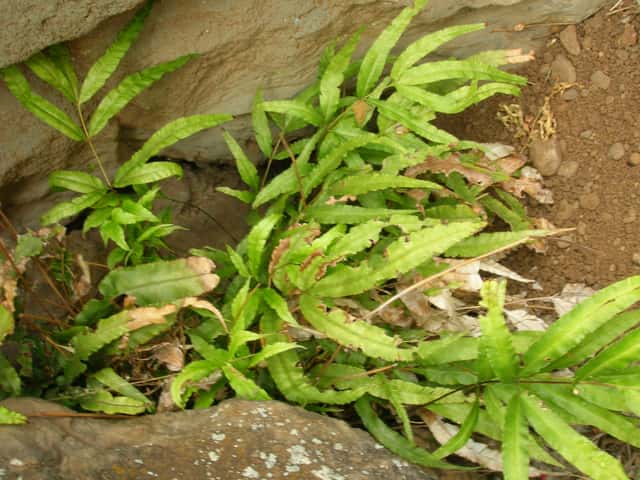
Pteridaceae
Cretan Brake Fern - Pteris cretica Care Guide
Pteris cretica
Keep soil consistently moist but never waterlogged. Provide bright, indirect light and maintain humidity above 40%. Avoid direct sunlight which scorches fronds. Fertilize monthly during growing season. This fern loves bathrooms and terrariums.
Every 4 days
Partial shade
10° - 27°C
40% - 70%
Categories
What is Cretan Brake Fern?
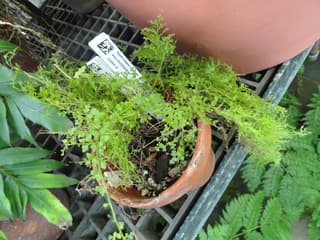
Cretan Brake Fern (Pteris cretica) is a medium-care plant from the Pteridaceae family. Pteris cretica, commonly known as the Cretan Brake Fern, is an elegant evergreen fern native to the Mediterranean region. With its graceful, pinnate fronds that can display beautiful variegation, it has become a popular houseplant prized for its delicate appearance and air-purifying properties. This...
Cretan Brake Fern grows up to 70cm, with spread of 100cm, watering every 4 days, 10°C – 27°C, 40–70% humidity. It is suitable for indoor environments and safe for pets.
Unlike many popular species, Cretan Brake Fern is safe to keep around pets. Without adequate drainage, root rot can develop within 8 days.
How to Care for Cretan Brake Fern?
TLDR: Cretan Brake Fern needs Partial shade, watering every 4 days, and temperatures between 10-27°C with 40-70% humidity.
How Often Should You Water Cretan Brake Fern?
Water when the top inch of soil feels slightly dry. Keep the soil consistently moist but never soggy. Use room-temperature water and ensure good drainage to prevent root rot.
How Much Light Does Cretan Brake Fern Need?
Place in bright, indirect light. Avoid direct sunlight which can scorch the delicate fronds. North or east-facing windows are ideal. Can tolerate lower light conditions but growth may slow.
What Is the Best Soil for Cretan Brake Fern?
Use a well-draining mix rich in organic matter. A blend of peat moss, perlite, and loamy soil works well. Maintain slightly acidic pH between 5.5 and 6.5.
What Pot Should You Use for Cretan Brake Fern?
Choose a plastic or glazed ceramic pot with drainage holes. Terracotta dries out too quickly for this moisture-loving fern. A slightly wider pot suits its spreading habit.
Care Schedule
Fertilize
Every 30 days
Misting
Every 3 days
Rotate
Every 14 days
Repot
Every 730 days
What Is Cretan Brake Fern and Where Does It Come From?
Pteris cretica, commonly known as the Cretan Brake Fern, is an elegant evergreen fern native to the Mediterranean region. With its graceful, pinnate fronds that can display beautiful variegation, it has become a popular houseplant prized for its delicate appearance and air-purifying properties. This slow-growing fern thrives in humid, shaded environments and is well-suited to terrariums, bathrooms, and indoor collections.
How to Propagate Cretan Brake Fern?
Division
Division is the easiest method for Pteris cretica. Ensure each division has a healthy portion of roots and at least 2-3 fronds.
- 1 Remove the plant from its pot in early spring
- 2 Gently separate the root ball into sections, each with several fronds
- 3 Plant each division in a fresh pot with moist, well-draining soil
- 4 Keep in a warm, humid spot with indirect light until established
Materials needed:
Spore propagation
Spore propagation requires patience and consistent moisture. Sterilize the growing medium to prevent mold. Keep covered until sporophytes are visible.
- 1 Collect mature spores from the underside of fertile fronds
- 2 Sprinkle spores onto a tray of moist peat-based compost
- 3 Cover with plastic wrap to maintain humidity
- 4 Keep at 20-24C in indirect light
- 5 Transplant young ferns once they reach 3-5cm
Materials needed:
How Big Does Cretan Brake Fern Grow?
TLDR: Cretan Brake Fern can reach up to 70cm tall with Slow growth rate.
Max height
70cm
Spread
1.0m
Growth rate
Slow
Foliage
Evergreen
Plant Uses
Ornamental
Great for decoration
Air Purifying
Improves air quality
Is your plant showing symptoms?
Click on the symptom to discover possible causes:
What Diseases Commonly Affect Cretan Brake Fern?
TLDR: Cretan Brake Fern is susceptible to 15 known diseases. Monitor regularly for early detection.
Root Rot
Root rot is a serious fungal disease that affects the root system of plants, causing them to decay and die. It is primarily caused by overwatering, poor drainage, or soil-borne fungi such as Pythium, Phytophthora, Rhizoctonia, and Fusarium. The disease thrives in waterlogged conditions where roots are deprived of oxygen, making them susceptible to fungal infection.
Pythium Root Rot
Pythium root rot is a serious fungal disease caused by various Pythium species including P. aphanidermatum, P. ultimum, and P. irregulare. These water molds are present in practically all cultivated soils and attack plant roots under wet conditions, causing rapid wet rot that can extend into the stem. The disease is favored by poor drainage, overwatering, and specific temperatures depending on the species.
Fusarium Wilt
Fusarium wilt is a serious fungal disease caused by the soil-borne fungus Fusarium oxysporum. The fungus invades roots and blocks the water-conducting vessels (xylem) of the plant, causing progressive wilting and eventual death. Host-specific forms of the pathogen exist that attack different plant species.
Gray Mold (Botrytis Blight)
Gray mold, caused by the fungus Botrytis cinerea, is one of the most common fungal diseases in plants. It affects over 200 plant species, including ornamentals, vegetables, fruits, and houseplants. The disease thrives in cool, humid conditions with poor air circulation, causing grayish spots and soft rot on infected tissues.
Meaning & Symbolism
Symbolizes resilience, protection, and new beginnings. In feng shui, ferns are associated with the wood element, bringing vitality and positive energy flow.
Fun Facts
Pteris cretica can absorb arsenic from soil and water, making it useful for environmental remediation
It is one of the few ferns proven by NASA to purify indoor air by removing formaldehyde, xylene, and toluene
Despite being called Cretan Brake, this fern is found across the Mediterranean, Africa, and parts of Asia
Frequently asked questions
How often should I water my Cretan Brake Fern?
Is Pteris cretica toxic to pets?
Why are my Cretan Brake Fern fronds turning brown at the tips?
Can Cretan Brake Fern grow in low light?
Compare with similar plants
| Attribute | Difficulty | Light | Watering | Pet Safe |
|---|---|---|---|---|
| Flamingo Flower | Medium | Partial shade | 5d | ⚠️ |
| Prayer Plant | Medium | Partial shade | 3d | ✓ |
| Boston Fern | Medium | Partial shade | 3d | ✓ |
| Weeping Fig | Medium | Partial shade | 10d | ⚠️ |