Orchidaceae
Cowhorn orchid: Pet-Safe Plant
Cyrtopodium
Requires bright to full light, abundant watering during active growth with a drastic reduction during dormancy, an open and very well-drained substrate, and mild to warm temperatures. It is considered a demanding orchid to cultivate, recommended for growers with some experience.
Every 5 days
Bright indirect
18° - 30°C
50% - 70%
Categories
What is Cowhorn orchid?
Cowhorn orchid (Cyrtopodium) is a hard-care plant from the Orchidaceae family. Cyrtopodium is a genus of terrestrial, epiphytic, or lithophytic orchids native to the tropical and subtropical Americas, from southern Florida to Argentina, with a strong presence in Brazil. Recognized for its large, spindle-shaped, and wrinkled pseudobulbs resembling cigars or horns, the genus pro...
Cowhorn orchid grows up to 90cm, spread of 75cm, watering every 5 days, 18°C – 30°C, 50–70% humidity. It is suitable for indoor environments and safe for pets.
Unlike easy-care plants, Cowhorn orchid demands constant attention to humidity and light. Not recommended for beginners. Unlike many popular species, Cowhorn orchid is safe to keep around pets. Without adequate drainage, root rot can develop within 10 days.
How to Care for Cowhorn orchid?
TLDR: Cowhorn orchid needs Bright indirect, watering every 5 days, and temperatures between 18-30°C with 50-70% humidity.
How Often Should You Water Cowhorn orchid?
Water generously during the growth phase (spring to summer), allowing the substrate surface to dry slightly between waterings. Drastically reduce watering after the leaves drop, keeping the pseudobulbs almost dry until new growth appears.
How Much Light Does Cowhorn orchid Need?
Provide bright light, preferably full morning sun or intense filtered light throughout the day; low light reduces flowering and weakens the pseudobulbs.
What Is the Best Soil for Cowhorn orchid?
Use an open, fast-draining substrate based on pine bark, perlite, and tree fern fiber, with a slightly acidic to neutral pH; avoid substrates that retain excessive moisture.
What Pot Should You Use for Cowhorn orchid?
Unglazed clay pot with good drainage and open substrate, allowing roots to dry quickly between waterings; larger plants also adapt well to hanging baskets.
Care Schedule
Fertilize
Every 15 days
Repot
Every 900 days
What Is Cowhorn orchid and Where Does It Come From?
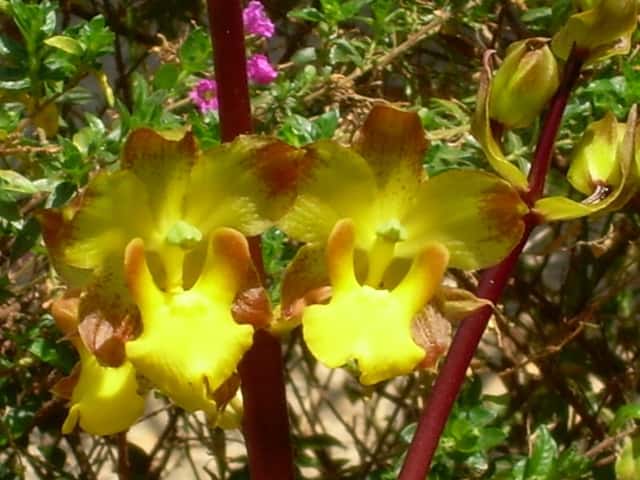
Cyrtopodium is a genus of terrestrial, epiphytic, or lithophytic orchids native to the tropical and subtropical Americas, from southern Florida to Argentina, with a strong presence in Brazil. Recognized for its large, spindle-shaped, and wrinkled pseudobulbs resembling cigars or horns, the genus produces tall flower spikes covered in dozens of yellow flowers with brown spots. The plicate leaves drop before flowering, in a cycle marked by a period of vigorous growth followed by dormancy.
How to Propagate Cowhorn orchid?
Pseudobulb division
- Use sterilized tools to prevent fungal and bacterial contamination.
- Wait a few days after division before the first watering.
- 1 Timing
Wait for the end of the dormancy period in early spring, before new shoots emerge.
- 2 Division
Remove the plant from the pot and separate the mature pseudobulbs into groups of 3 to 4, ensuring healthy roots in each division.
- 3 Planting
Plant each division in an individual pot with open, well-drained substrate, avoiding immediate watering to allow the cuts to heal.
Materials needed:
How Big Does Cowhorn orchid Grow?
TLDR: Cowhorn orchid can reach up to 90cm tall with Slow growth rate.
Max height
90cm
Spread
75cm
Growth rate
Slow
Foliage
Deciduous
Plant Uses
Ornamental
Great for decoration
Is your plant showing symptoms?
Click on the symptom to discover possible causes:
What Diseases Commonly Affect Cowhorn orchid?
TLDR: Cowhorn orchid is susceptible to 9 known diseases. Monitor regularly for early detection.
Root Rot
Root rot is a serious fungal disease that affects the root system of plants, causing them to decay and die. It is primarily caused by overwatering, poor drainage, or soil-borne fungi such as Pythium, Phytophthora, Rhizoctonia, and Fusarium. The disease thrives in waterlogged conditions where roots are deprived of oxygen, making them susceptible to fungal infection.
Spider Mites
Spider mites are tiny arachnids (less than 1/20 inch long) related to spiders and ticks that feed on plant sap. They thrive in hot, dry conditions and can cause significant damage to ornamental and vegetable plants. During severe infestations, crop losses can reach 14% or higher as these pests disrupt vital plant processes including photosynthesis, carbon dioxide absorption, and transpiration.
Anthracnose
Anthracnose is a fungal disease caused by fungi in the genus Colletotrichum that affects many plants, including vegetables, fruits, and trees. The disease thrives in cool, wet conditions, causing dark, sunken lesions on leaves, stems, flowers, and fruits.
Bacterial Leaf Spot
Bacterial leaf spot is a plant disease caused by bacteria in the Xanthomonas and Pseudomonas genera that affects various ornamental and edible plants. The bacteria infect leaves through wounds or natural openings, causing characteristic lesions that can lead to premature leaf drop and plant weakening.
Meaning & Symbolism
With its cigar-shaped pseudobulbs and imposing flower spikes, Cyrtopodium symbolizes resilience and adaptation, thriving in arid and sunny environments where few orchids survive.
Compare with similar plants
| Attribute | Difficulty | Light | Watering | Pet Safe |
|---|---|---|---|---|
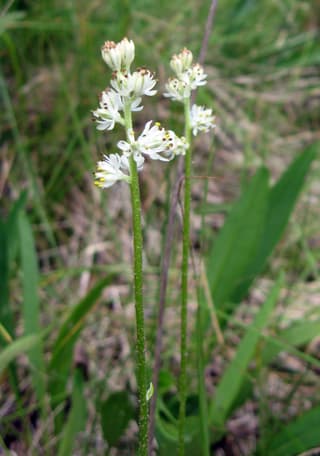
| Sticky false asphodel | Hard | Bright indirect | 1d | ✓ |
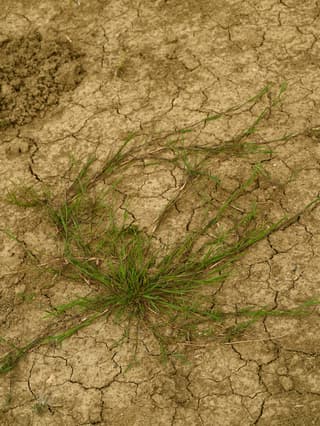
| Creeping bentgrass | Hard | Direct sun | 3d | ✓ |
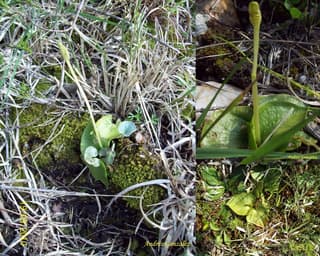
| Bulbous Adder's-tongue | Hard | Partial shade | 4d | ✓ |
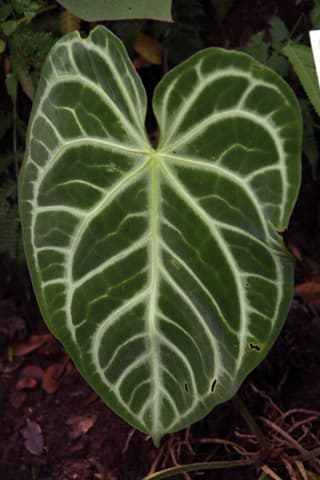
| Crystal Anthurium | Hard | Partial shade | 7d | ⚠️ |