Asteraceae
Garden Dahlia (Dahlia pinnata): Complete Care Guide
Dahlia pinnata
Garden dahlia requires full sun (at least 6 hours of direct sunlight daily), regular watering every 2-3 days while avoiding waterlogging, rich well-draining soil, and biweekly fertilization during the growing season. In cold climates, tubers must be lifted in autumn and stored indoors over winter to protect from freezing.
Every 3 days
Direct sun
10° - 30°C
50% - 70%
Categories
What is Garden Dahlia?
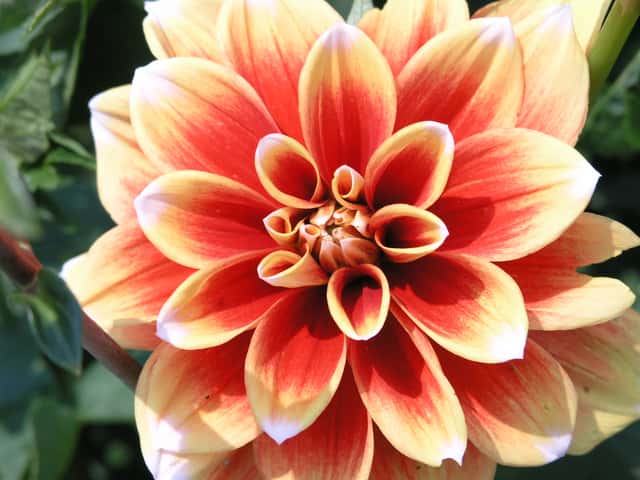
Garden Dahlia (Dahlia pinnata) is a medium-care plant from the Asteraceae family. Dahlia pinnata, commonly known as the garden dahlia, is a tuberous herbaceous perennial native to Mexico, where it serves as the national flower. Belonging to the Asteraceae family, it is celebrated for its large, showy blooms in an extraordinary range of colors including red, pink, orange, yellow,...
Garden Dahlia grows up to 1.8m, with spread of 90cm, watering every 3 days, 10°C – 30°C, 50–70% humidity. It is not suitable for indoor environments and not safe for pets.
Without precautions, ingestion can cause irritation in pets. Keep out of reach of cats and dogs.
How to Care for Garden Dahlia?
TLDR: Garden Dahlia needs Direct sun, watering every 3 days, and temperatures between 10-30°C with 50-70% humidity.
How Often Should You Water Garden Dahlia?
Water every 2-3 days during the active growing season, keeping the soil evenly moist but never waterlogged. Significantly reduce watering in winter when the plant goes dormant. Always water at soil level to avoid wetting the foliage and flowers, which can promote fungal diseases.
How Much Light Does Garden Dahlia Need?
Garden dahlia needs full sun: at least 6 hours of direct sunlight per day. A sunny position encourages abundant, vigorous blooming. In very hot climates, light afternoon shade can protect flowers from extreme heat.
What Is the Best Soil for Garden Dahlia?
Use well-draining, fertile soil enriched with organic matter such as compost or well-rotted manure. Ideal pH ranges from 6.0 to 7.5. Avoid heavy clay soils that retain excessive moisture, as they can rot tubers.
What Pot Should You Use for Garden Dahlia?
Terracotta or ceramic pot with generous drainage holes. For large varieties, choose pots at least 30-40 cm in diameter. Avoid plastic pots that retain more moisture.
Care Schedule
Fertilize
Every 14 days
Repot
Every 365 days
What Is Garden Dahlia and Where Does It Come From?
Dahlia pinnata, commonly known as the garden dahlia, is a tuberous herbaceous perennial native to Mexico, where it serves as the national flower. Belonging to the Asteraceae family, it is celebrated for its large, showy blooms in an extraordinary range of colors including red, pink, orange, yellow, white, purple, and lavender. Dahlias flower from midsummer through the first autumn frosts, making them one of the most prized ornamental plants for gardens worldwide.
How to Propagate Garden Dahlia?
Tuber Division
Use disinfected tools to prevent disease transmission. Store tubers in a cool, dry location during winter.
- 1 Dig up tubers in autumn after the first frost
- 2 Clean and allow tubers to dry for 24 hours
- 3 Divide with a sharp knife, ensuring each section has at least one eye or growth node
- 4 Allow cut surfaces to callous for 1-2 days before planting
- 5 Plant in spring when soil temperature exceeds 15°C (60°F)
Materials needed:
Stem Cuttings
Cover with a clear plastic bag to retain humidity. Gradually remove the cover once the first roots appear.
- 1 Take a healthy stem cutting of 8-10 cm with at least 2 nodes in spring
- 2 Remove lower leaves, leaving only 2-3 at the top
- 3 Apply rooting hormone to the cut end
- 4 Insert into moist, well-draining substrate
- 5 Maintain at 18-22°C with moderate humidity
Materials needed:
How Big Does Garden Dahlia Grow?
TLDR: Garden Dahlia can reach up to 1.8m tall with Medium growth rate.
Max height
1.8m
Spread
90cm
Growth rate
Medium
Foliage
Deciduous
Warning: Toxic Plant
This plant can be toxic if ingested. Keep out of reach of:
Plant Uses
Ornamental
Great for decoration
Is your plant showing symptoms?
Click on the symptom to discover possible causes:
What Diseases Commonly Affect Garden Dahlia?
TLDR: Garden Dahlia is susceptible to 11 known diseases. Monitor regularly for early detection.
Powdery Mildew
Powdery mildew is a common fungal disease caused by various fungi species including Erysiphe, Podosphaera, Oïdium, and Leveillula. It affects over 10,000 plant species worldwide. The disease thrives in warm, dry climates with high humidity and appears as a distinctive white powdery coating on plant surfaces.
Gray Mold (Botrytis Blight)
Gray mold, caused by the fungus Botrytis cinerea, is one of the most common fungal diseases in plants. It affects over 200 plant species, including ornamentals, vegetables, fruits, and houseplants. The disease thrives in cool, humid conditions with poor air circulation, causing grayish spots and soft rot on infected tissues.
Gray Mold (Botrytis Blight)
Gray mold, caused by the fungus Botrytis cinerea, is a widespread necrotrophic pathogen affecting over 1,400 plant species. It thrives in cool, humid conditions and attacks weakened or aging plant tissues, causing soft rot and characteristic gray fuzzy growth.
Aphids
Aphids are small, soft-bodied, pear-shaped insects (1/16 to 1/8 inch long) that feed by sucking nutrient-rich sap from plants. They reproduce rapidly and can quickly weaken plants, causing distorted growth and transmitting plant viruses. Aphids come in various colors including green, black, red, yellow, brown, and gray. They secrete honeydew, a sticky substance that attracts ants and encourages sooty mold growth.
Meaning & Symbolism
In Mexico, the dahlia is a symbol of national elegance, dignity, and natural diversity. It has been Mexico's national flower since 1963. In the language of flowers, dahlias are also associated with gratitude, inner strength, and lasting commitment.
Fun Facts
The dahlia has been Mexico's national flower since 1963 and was used by the Aztecs both as an ornamental plant and a food source.
There are over 57,000 registered dahlia varieties, ranging in size from 30 cm to 1.8 meters tall.
Dahlia flowers can range from 5 cm (pompom type) to over 30 cm in diameter in dinner-plate varieties.
The Aztecs called the dahlia "acocotli" or "cocoxochitl" and used its hollow tubers as water carriers.
Frequently asked questions
How often should I water my dahlia?
Is the garden dahlia toxic to pets?
When do dahlias bloom?
Can I grow dahlias in containers?
What should I do with dahlia tubers in winter?
Compare with similar plants
| Attribute | Difficulty | Light | Watering | Pet Safe |
|---|---|---|---|---|
| Flamingo Flower | Medium | Partial shade | 5d | ⚠️ |
| Prayer Plant | Medium | Partial shade | 3d | ✓ |
| Boston Fern | Medium | Partial shade | 3d | ✓ |
| Weeping Fig | Medium | Partial shade | 10d | ⚠️ |