Poaceae
Annual Meadow Grass (Poa annua)
Poa annua
Water every 7–10 days keeping soil evenly moist. Place in partial to full sun. Use well-draining loamy soil with pH 5.5–7.5. Fertilize lightly every 30 days during the growing season. Mow or trim every two weeks to prevent excessive seeding.
Every 8 days
Partial shade
10° - 24°C
40% - 70%
Categories
What is Annual Meadow Grass?
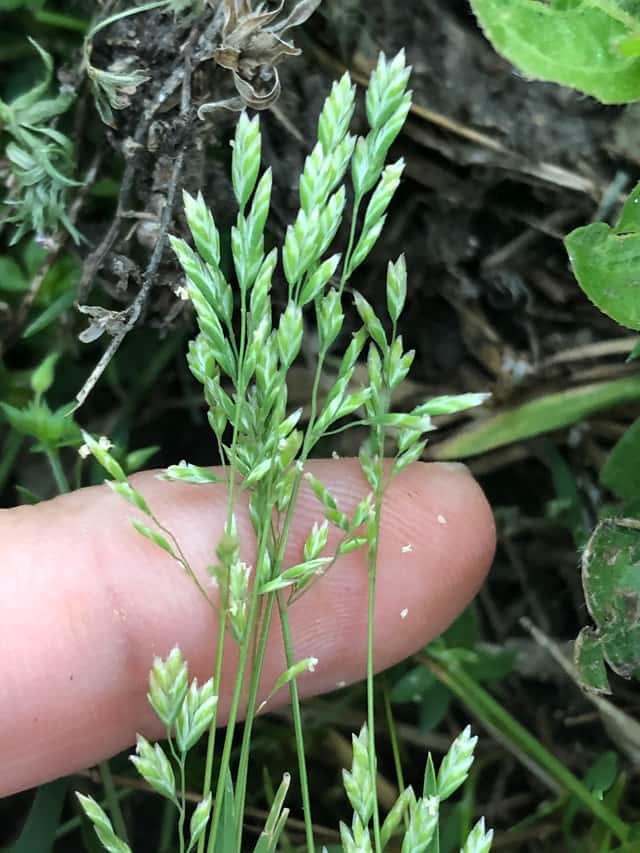
Annual Meadow Grass (Poa annua) is a easy-care plant from the Poaceae family. Poa annua, commonly known as Annual Meadow Grass or Annual Bluegrass, is a small, tufted annual or short-lived perennial grass native to temperate Europe and Asia but now found worldwide. It forms dense low mats of fine-textured, bright yellow-green blades with characteristic boat-shaped leaf tips....
Annual Meadow Grass grows up to 30cm, spread of 20cm, watering every 8 days, 10°C – 24°C, 40–70% humidity. It is not suitable for indoor environments and safe for pets.
Unlike many tropical plants, Annual Meadow Grass tolerates watering mistakes. Best for beginners. Unlike many popular species, Annual Meadow Grass is safe to keep around pets.
How to Care for Annual Meadow Grass?
TLDR: Annual Meadow Grass needs Partial shade, watering every 8 days, and temperatures between 10-24°C with 40-70% humidity.
How Often Should You Water Annual Meadow Grass?
Keep soil consistently moist but never waterlogged. Water every 8 days on average, more frequently in warm dry spells. Shallow roots make this grass sensitive to drought.
How Much Light Does Annual Meadow Grass Need?
Thrives in partial to full sun (2–8+ hours per day). It tolerates some shade but may become leggy and less dense under low-light conditions.
What Is the Best Soil for Annual Meadow Grass?
Prefers loamy to sandy-loam soils with good drainage. A pH of 5.5–7.5 is ideal. Amend heavy clay soils with sand or organic matter to improve drainage and aeration.
What Pot Should You Use for Annual Meadow Grass?
Low-profile containers or ground-level planters with good drainage holes; terracotta or unglazed ceramic preferred.
Care Schedule
Fertilize
Every 30 days
What Is Annual Meadow Grass and Where Does It Come From?
Poa annua, commonly known as Annual Meadow Grass or Annual Bluegrass, is a small, tufted annual or short-lived perennial grass native to temperate Europe and Asia but now found worldwide. It forms dense low mats of fine-textured, bright yellow-green blades with characteristic boat-shaped leaf tips. Despite often being considered a lawn weed, it is also cultivated on golf-course putting greens and used as a ground cover in low-maintenance areas. It germinates in cool weather, flowers in spring, and dies back as summer heat arrives.
How Big Does Annual Meadow Grass Grow?
TLDR: Annual Meadow Grass can reach up to 30cm tall with Fast growth rate.
Max height
30cm
Spread
20cm
Growth rate
Fast
Foliage
Semi-evergreen
Plant Uses
Ornamental
Great for decoration
Ground Cover
Soil coverage
Is your plant showing symptoms?
Click on the symptom to discover possible causes:
What Diseases Commonly Affect Annual Meadow Grass?
TLDR: Annual Meadow Grass is susceptible to 5 known diseases. Monitor regularly for early detection.
Anthracnose
Anthracnose is a fungal disease caused by fungi in the genus Colletotrichum that affects many plants, including vegetables, fruits, and trees. The disease thrives in cool, wet conditions, causing dark, sunken lesions on leaves, stems, flowers, and fruits.
Pythium Root Rot
Pythium root rot is a serious fungal disease caused by various Pythium species including P. aphanidermatum, P. ultimum, and P. irregulare. These water molds are present in practically all cultivated soils and attack plant roots under wet conditions, causing rapid wet rot that can extend into the stem. The disease is favored by poor drainage, overwatering, and specific temperatures depending on the species.
Rust
Rust is a common fungal disease caused by fungi in the order Pucciniales that affects a wide variety of plants. The disease gets its name from the characteristic orange, yellow, or reddish-brown pustules that appear on leaves, resembling metal rust. This obligate fungal parasite requires living plants to survive and can cause significant economic losses in agricultural crops.
Leaf Spot
Leaf spot is a common fungal disease caused by various pathogens including Alternaria, Ascochyta, Colletotrichum, Septoria, and Venturia. It primarily affects leaves, causing discolored spots that can lead to premature leaf drop if left untreated.
Meaning & Symbolism
Resilience and adaptability; associated with persistence and the ability to thrive in trampled, disturbed ground.
Fun Facts
Poa annua produces several hundred seeds per plant each season, and those seeds can remain viable in the soil for several years.
It is one of the most widely distributed plants on Earth, having reached even Antarctica with human activity.
Golf course putting greens in cool climates are sometimes intentionally managed as pure Poa annua turf for its fine texture and consistent surface.
The characteristic boat-shaped leaf tip is the easiest field identification mark for Poa annua.
Frequently asked questions
Is Poa annua toxic to pets or humans?
Why does my Poa annua die in summer?
Can I use Poa annua as a lawn grass?
Compare with similar plants
| Attribute | Difficulty | Light | Watering | Pet Safe |
|---|---|---|---|---|
| Field Maple | Easy | Bright indirect | 14d | ✓ |
| Silver Birch | Easy | Direct sun | 14d | ✓ |
| Cushion Bush | Easy | Direct sun | 14d | ✓ |
| Peruvian peppertree | Easy | Direct sun | 14d | ⚠️ |





