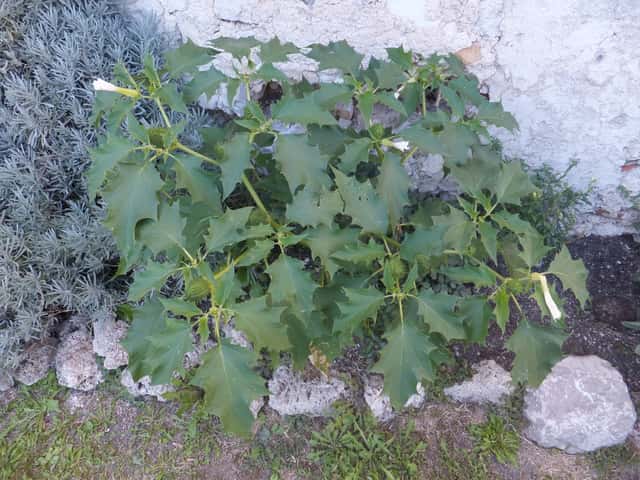
Solanaceae
Jimsonweed (Datura stramonium): The Devil's Trumpet
Datura stramonium
Low-maintenance once established: needs full sun, moderate watering, and well-drained soil. Drought-tolerant but blooms best with regular moisture. WARNING: severely toxic — wear gloves when handling and keep away from children and all animals.
Every 7 days
Direct sun
10° - 35°C
40% - 70%
Categories
What is Jimsonweed?
Jimsonweed (Datura stramonium) is a medium-care plant from the Solanaceae family. Jimsonweed (Datura stramonium) is a coarse annual herb in the nightshade family (Solanaceae), native to the Americas and now naturalized on every inhabited continent. It produces large, trumpet-shaped white or pale-purple flowers that open at dusk and emit a heavy fragrance, followed by distinctive...
Jimsonweed grows up to 1.5m, spread of 100cm, watering every 7 days, 10°C – 35°C, 40–70% humidity. It is not suitable for indoor environments and not safe for pets.
Without precautions, ingestion can cause irritation in pets. Keep out of reach of cats and dogs.
How to Care for Jimsonweed?
TLDR: Jimsonweed needs Direct sun, watering every 7 days, and temperatures between 10-35°C with 40-70% humidity.
How Often Should You Water Jimsonweed?
Water approximately every 7 days. Jimsonweed is drought-tolerant once established but benefits from consistent moisture during the flowering period. Avoid waterlogging — roots are susceptible to rot in poorly drained soils.
How Much Light Does Jimsonweed Need?
Requires full sun — at least 6–8 hours of direct sunlight daily. Plants grown in partial shade become leggy and produce significantly fewer flowers. Always select the sunniest spot available.
What Is the Best Soil for Jimsonweed?
Prefers loamy, well-drained soil moderately rich in organic matter. Tolerates sandy and clay soils within a pH of 6.0–8.0. Avoid compacted or waterlogged conditions.
What Pot Should You Use for Jimsonweed?
Terracotta or ceramic pot with large drainage holes. As the plant grows quite large, use a container with a minimum diameter of 35–40 cm. Open garden cultivation is strongly preferred for safety.
Care Schedule
Fertilize
Every 30 days
What Is Jimsonweed and Where Does It Come From?
Jimsonweed (Datura stramonium) is a coarse annual herb in the nightshade family (Solanaceae), native to the Americas and now naturalized on every inhabited continent. It produces large, trumpet-shaped white or pale-purple flowers that open at dusk and emit a heavy fragrance, followed by distinctive spiny egg-shaped seed capsules. Despite its dramatic ornamental appeal, every part of the plant is dangerously toxic — containing tropane alkaloids (atropine, scopolamine, hyoscyamine) capable of causing delirium, hallucinations, and death. Cultivation requires strict caution and should never occur in spaces accessible to children or pets.
How to Propagate Jimsonweed?
Direct Sowing
Always wear gloves — seeds and all plant parts are highly toxic. Plants self-seed prolifically if capsules are allowed to dehisce.
- 1 Sow seeds directly outdoors after the last frost date, or start indoors 6 weeks before the last frost
- 2 Press seeds 0.5 cm into moist, well-drained soil
- 3 Germination occurs in 10–21 days at temperatures between 18–30°C (65–86°F)
- 4 Thin seedlings to at least 60–90 cm apart
- 5 Remove spiny seed capsules before they split open to prevent unwanted self-seeding
Materials needed:
How Big Does Jimsonweed Grow?
TLDR: Jimsonweed can reach up to 1.5m tall with Medium growth rate.
Max height
1.5m
Spread
1.0m
Growth rate
Medium
Foliage
Deciduous
Warning: Toxic Plant
This plant can be toxic if ingested. Keep out of reach of:
Plant Uses
Ornamental
Great for decoration
Medicinal
Medicinal properties
Medicinal Uses
- Historically used (with severe risk) to treat asthma, bronchitis, and muscle spasms through smoked leaves; atropine derived from the plant is used in modern medicine to dilate pupils and treat bradycardia; scopolamine is used as a motion-sickness patch
Is your plant showing symptoms?
Click on the symptom to discover possible causes:
What Diseases Commonly Affect Jimsonweed?
TLDR: Jimsonweed is susceptible to 9 known diseases. Monitor regularly for early detection.
Aphids
Aphids are small, soft-bodied, pear-shaped insects (1/16 to 1/8 inch long) that feed by sucking nutrient-rich sap from plants. They reproduce rapidly and can quickly weaken plants, causing distorted growth and transmitting plant viruses. Aphids come in various colors including green, black, red, yellow, brown, and gray. They secrete honeydew, a sticky substance that attracts ants and encourages sooty mold growth.
Whiteflies
Whiteflies are small, soft-bodied, winged insects closely related to aphids and mealybugs. They are moth-like in appearance, about 1/16 inch long, triangular in shape, and gray-white in color. These sap-sucking pests feed on plant tissue, causing yellowing, stunted growth, and wilting. They also excrete honeydew, which attracts ants and promotes sooty mold growth. Whiteflies can transmit serious plant viruses.
Spider Mites
Spider mites are tiny arachnids (less than 1/20 inch long) related to spiders and ticks that feed on plant sap. They thrive in hot, dry conditions and can cause significant damage to ornamental and vegetable plants. During severe infestations, crop losses can reach 14% or higher as these pests disrupt vital plant processes including photosynthesis, carbon dioxide absorption, and transpiration.
Leafminers
Leafminers are the larvae of various insects including flies, moths, sawflies, and beetles that tunnel between leaf surfaces, creating distinctive serpentine trails or blotchy patches. While primarily cosmetic, severe infestations can weaken plants by reducing photosynthesis capacity and making them susceptible to secondary infections.
Meaning & Symbolism
In Western folklore, jimsonweed is strongly associated with witchcraft, danger, and forbidden knowledge — an ingredient in alleged 'flying ointments' of medieval witches. For many indigenous American peoples, it was a sacred plant used in vision quests and coming-of-age rituals. It symbolizes mystery, deception, and the thin boundary between the living world and the spirit realm.
Fun Facts
The name 'jimsonweed' comes from 'Jamestown weed' — in 1676, British soldiers ate it by mistake and hallucinated for 11 days straight
A single plant can produce over 30,000 seeds per season, explaining why it spreads so aggressively across disturbed land
The flowers open only at dusk and last a single night, pollinated exclusively by hawk moths with tongues long enough to reach the nectar
Atropine derived from Datura is still used in modern medicine to dilate pupils during eye exams and to treat dangerously slow heart rates
Frequently asked questions
Is jimsonweed toxic to pets?
How often should I water jimsonweed?
Can jimsonweed be grown in a pot?
When does jimsonweed flower?
Why is it called jimsonweed?
Compare with similar plants
| Attribute | Difficulty | Light | Watering | Pet Safe |
|---|---|---|---|---|
| Dark Fieldcap | Medium | Low light | 2d | ⚠️ |
| Azalea | Medium | Partial shade | 3d | ⚠️ |
| Bougainvillea | Medium | Direct sun | 7d | ⚠️ |
| Wild Lettuce | Medium | Direct sun | 7d | ⚠️ |



