Solanaceae
Jerusalem Cherry (Solanum pseudocapsicum): Complete Care Guide
Solanum pseudocapsicum
Moderate-maintenance plant. Needs bright indirect light, watering every 3 days (never waterlogged), weekly misting in dry conditions, and biweekly fertilizing in spring/summer. Light pruning after fruiting keeps its compact shape. Keep strictly away from children and pets due to severe toxicity.
Every 3 days
Bright indirect
5° - 30°C
40% - 70%
Categories
What is Jerusalem Cherry?
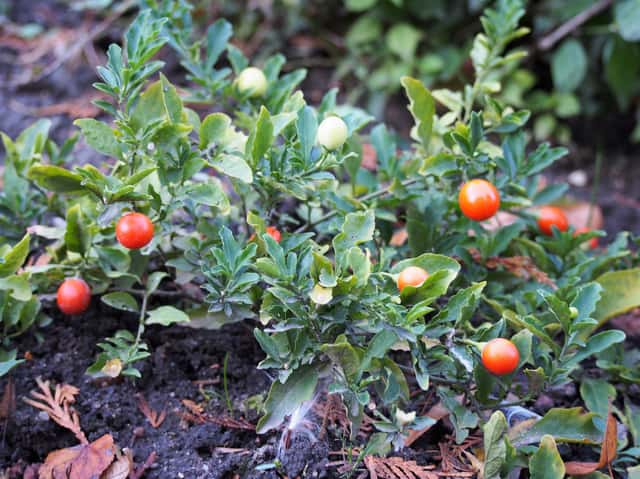
Jerusalem Cherry (Solanum pseudocapsicum) is a medium-care plant from the Solanaceae family. Solanum pseudocapsicum, commonly known as Jerusalem Cherry or Winter Cherry, is an evergreen ornamental shrub native to South America (Peru and Ecuador). It is widely grown for its decorative berries that transition through green, yellow, orange, and red, persisting for months. CRITICAL WARNING: all...
Jerusalem Cherry grows up to 90cm, spread of 60cm, watering every 3 days, 5°C – 30°C, 40–70% humidity. It is suitable for indoor environments and not safe for pets.
Without precautions, ingestion can cause irritation in pets. Keep out of reach of cats and dogs. Without adequate drainage, root rot can develop within 7 days.
How to Care for Jerusalem Cherry?
TLDR: Jerusalem Cherry needs Bright indirect, watering every 3 days, and temperatures between 5-30°C with 40-70% humidity.
How Often Should You Water Jerusalem Cherry?
Water every 3 days when the top 2-3 cm of soil feel dry. Apply approximately 150 ml per session. Never allow waterlogging. Reduce frequency in winter.
How Much Light Does Jerusalem Cherry Need?
Place in bright indirect light or partial sun (4-6 hours daily). East- or west-facing windows are ideal indoors. Avoid intense midday direct sun, which can scorch leaves.
What Is the Best Soil for Jerusalem Cherry?
Use a well-draining potting mix (universal substrate with added perlite or coarse sand). Ideal pH: 6.0-7.5. Good drainage is essential to prevent root rot.
What Pot Should You Use for Jerusalem Cherry?
Ceramic or terracotta pot with drainage holes. Avoid oversized pots — Jerusalem Cherry prefers moderate root space to encourage fruiting.
Care Schedule
Fertilize
Every 14 days
Misting
Every 7 days
Repot
Every 365 days
What Is Jerusalem Cherry and Where Does It Come From?
Solanum pseudocapsicum, commonly known as Jerusalem Cherry or Winter Cherry, is an evergreen ornamental shrub native to South America (Peru and Ecuador). It is widely grown for its decorative berries that transition through green, yellow, orange, and red, persisting for months. CRITICAL WARNING: all berries and leaves are severely toxic to humans, cats, and dogs due to solanocapsine and solanine alkaloids.
How to Propagate Jerusalem Cherry?
Seed propagation
Germination occurs in 2-4 weeks. Use sterile substrate to prevent fungal damping-off.
- 1 Sow seeds in a tray with moist well-draining seed mix
- 2 Cover lightly with substrate and maintain 18-25C temperature
- 3 Keep substrate slightly moist until germination
- 4 Transplant seedlings when they reach 5-7 cm tall
Materials needed:
Stem cutting
Keep humidity high around the cutting by covering with a perforated plastic bag. Avoid direct sun during rooting.
- 1 Cut a healthy stem 10-15 cm long with 2-3 leaf pairs
- 2 Remove lower leaves and dip cut end in rooting hormone
- 3 Insert into moist perlite and peat mix in equal parts
- 4 Keep in bright indirect light at 20-25C
Materials needed:
How Big Does Jerusalem Cherry Grow?
TLDR: Jerusalem Cherry can reach up to 90cm tall with Medium growth rate.
Max height
90cm
Spread
60cm
Growth rate
Medium
Foliage
Evergreen
Warning: Toxic Plant
This plant can be toxic if ingested. Keep out of reach of:
Plant Uses
Ornamental
Great for decoration
Is your plant showing symptoms?
Click on the symptom to discover possible causes:
What Diseases Commonly Affect Jerusalem Cherry?
TLDR: Jerusalem Cherry is susceptible to 10 known diseases. Monitor regularly for early detection.
Aphids
Aphids are small, soft-bodied, pear-shaped insects (1/16 to 1/8 inch long) that feed by sucking nutrient-rich sap from plants. They reproduce rapidly and can quickly weaken plants, causing distorted growth and transmitting plant viruses. Aphids come in various colors including green, black, red, yellow, brown, and gray. They secrete honeydew, a sticky substance that attracts ants and encourages sooty mold growth.
Spider Mites
Spider mites are tiny arachnids (less than 1/20 inch long) related to spiders and ticks that feed on plant sap. They thrive in hot, dry conditions and can cause significant damage to ornamental and vegetable plants. During severe infestations, crop losses can reach 14% or higher as these pests disrupt vital plant processes including photosynthesis, carbon dioxide absorption, and transpiration.
Thrips
Thrips are tiny cigar-shaped insects (1/25-inch long) that damage plants by sucking plant juices and scraping at fruits, flowers, and leaves. With over 6,000 species and rapid reproduction (lifecycle as short as 14 days), they can quickly infest plants and transmit viruses like tomato spotted wilt virus.
Whiteflies
Whiteflies are small, soft-bodied, winged insects closely related to aphids and mealybugs. They are moth-like in appearance, about 1/16 inch long, triangular in shape, and gray-white in color. These sap-sucking pests feed on plant tissue, causing yellowing, stunted growth, and wilting. They also excrete honeydew, which attracts ants and promotes sooty mold growth. Whiteflies can transmit serious plant viruses.
Fun Facts
Jerusalem Cherry berries can display up to four colors simultaneously on the same plant: green, yellow, orange, and red.
Despite resembling cherries or tomatoes, the berries contain solanocapsine — a highly toxic alkaloid dangerous to humans and pets.
It is popularly used as a Christmas decoration in Europe because its berries ripen to red in winter.
It belongs to the Solanaceae family alongside tomatoes and peppers, but unlike its relatives, it is not edible.
Frequently asked questions
Is Jerusalem Cherry toxic to cats and dogs?
How often should I water Jerusalem Cherry?
Where should I place Jerusalem Cherry indoors?
When and how should I prune Jerusalem Cherry?
Why are my Jerusalem Cherry berries falling off?
Compare with similar plants
| Attribute | Difficulty | Light | Watering | Pet Safe |
|---|---|---|---|---|
| Dark Fieldcap | Medium | Low light | 2d | ⚠️ |
| Azalea | Medium | Partial shade | 3d | ⚠️ |
| Bougainvillea | Medium | Direct sun | 7d | ⚠️ |
| Wild Lettuce | Medium | Direct sun | 7d | ⚠️ |



