Acanthaceae
Firecracker Flower (Crossandra infundibuliformis)
Crossandra infundibuliformis
Crossandra thrives in bright indirect light with consistently moist soil and high humidity. Keep temperatures above 12°C (55°F) and fertilize every two weeks during the growing season. It rewards consistent care with nearly continuous blooms.
Every 3 days
Partial shade
12° - 30°C
60% - 80%
Categories
What is Firecracker Flower?
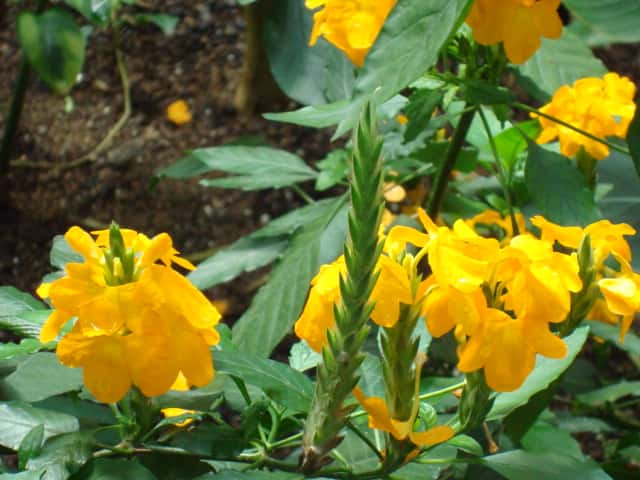
Firecracker Flower (Crossandra infundibuliformis) is a medium-care plant from the Acanthaceae family. Crossandra infundibuliformis, commonly known as the Firecracker Flower, is a tropical evergreen shrub native to India and Sri Lanka. It belongs to the Acanthaceae family and is prized for its vibrant fan-shaped flowers that bloom nearly year-round in warm conditions. The glossy, dark green foliage w...
Firecracker Flower grows up to 90cm, with spread of 60cm, watering every 3 days, 12°C – 30°C, 60–80% humidity. It is suitable for indoor environments and safe for pets.
Unlike many popular species, Firecracker Flower is safe to keep around pets. Without adequate drainage, root rot can develop within 7 days.
How to Care for Firecracker Flower?
TLDR: Firecracker Flower needs Partial shade, watering every 3 days, and temperatures between 12-30°C with 60-80% humidity.
How Often Should You Water Firecracker Flower?
Keep soil consistently moist but never waterlogged. Allow only the top third of the soil to dry between waterings. Always use lukewarm water — cold water can shock the roots and cause damage.
How Much Light Does Firecracker Flower Need?
Provide bright, indirect light. Avoid harsh direct sunlight which can scorch leaves. A spot near an east or north-facing window is ideal. Low light will halt flowering.
What Is the Best Soil for Firecracker Flower?
Use a rich, well-draining organic potting mix. A blend of peat or coco coir with perlite and compost works well. Maintain slightly acidic pH between 5.5 and 6.5.
What Pot Should You Use for Firecracker Flower?
Use a standard plastic or glazed ceramic pot with drainage holes. Crossandra prefers being slightly pot-bound, so avoid oversized pots. Repot every 2-3 years in spring.
Care Schedule
Fertilize
Every 14 days
Misting
Every 7 days
Repot
Every 1095 days
What Is Firecracker Flower and Where Does It Come From?
Crossandra infundibuliformis, commonly known as the Firecracker Flower, is a tropical evergreen shrub native to India and Sri Lanka. It belongs to the Acanthaceae family and is prized for its vibrant fan-shaped flowers that bloom nearly year-round in warm conditions. The glossy, dark green foliage with wavy margins provides an attractive backdrop to the spectacular orange, salmon, yellow, and pink blooms. Its seed pods famously "explode" when wet, which inspired its common name.
How to Propagate Firecracker Flower?
Stem Cutting
Stem cuttings can take up to 5 months to fully establish. Be patient and maintain warm, humid conditions throughout.
- 1 Take a 10-15 cm cutting from healthy new spring growth
- 2 Remove the lower leaves, keeping 2-3 pairs at the top
- 3 Dip the cut end in rooting hormone powder
- 4 Plant in a moist seed-starting mix
- 5 Cover with a plastic bag to maintain humidity
- 6 Provide bottom heat above 18°C (64°F)
- 7 Roots should develop within 4-8 weeks
Materials needed:
Seed Propagation
Crossandra seeds are most viable when fresh. Collect from the explosive seed pods and sow promptly for best germination rates.
- 1 Sow seeds on the surface of a moist seed-starting mix
- 2 Press lightly into the soil but do not cover — seeds need light to germinate
- 3 Keep soil consistently moist and warm (21-24°C)
- 4 Use a heat mat for best results
- 5 Germination occurs in 2-4 weeks
Materials needed:
How Big Does Firecracker Flower Grow?
TLDR: Firecracker Flower can reach up to 90cm tall with Fast growth rate.
Max height
90cm
Spread
60cm
Growth rate
Fast
Foliage
Evergreen
Plant Uses
Ornamental
Great for decoration
Is your plant showing symptoms?
Click on the symptom to discover possible causes:
What Diseases Commonly Affect Firecracker Flower?
TLDR: Firecracker Flower is susceptible to 12 known diseases. Monitor regularly for early detection.
Root Rot
Root rot is a serious fungal disease that affects the root system of plants, causing them to decay and die. It is primarily caused by overwatering, poor drainage, or soil-borne fungi such as Pythium, Phytophthora, Rhizoctonia, and Fusarium. The disease thrives in waterlogged conditions where roots are deprived of oxygen, making them susceptible to fungal infection.
Leaf Spot
Leaf spot is a common fungal disease caused by various pathogens including Alternaria, Ascochyta, Colletotrichum, Septoria, and Venturia. It primarily affects leaves, causing discolored spots that can lead to premature leaf drop if left untreated.
Gray Mold (Botrytis Blight)
Gray mold, caused by the fungus Botrytis cinerea, is one of the most common fungal diseases in plants. It affects over 200 plant species, including ornamentals, vegetables, fruits, and houseplants. The disease thrives in cool, humid conditions with poor air circulation, causing grayish spots and soft rot on infected tissues.
Rust
Rust is a common fungal disease caused by fungi in the order Pucciniales that affects a wide variety of plants. The disease gets its name from the characteristic orange, yellow, or reddish-brown pustules that appear on leaves, resembling metal rust. This obligate fungal parasite requires living plants to survive and can cause significant economic losses in agricultural crops.
Meaning & Symbolism
Symbolizes joy, creativity, and vibrant energy. In Indian culture, it represents enthusiasm and warmth.
Fun Facts
The seed pods explode when they get wet, launching seeds several feet away — hence the name Firecracker Flower
Crossandra can bloom almost year-round in tropical conditions, producing flowers for up to 300 days a year
In India, Crossandra flowers are traditionally strung into garlands and worn in women's hair
The genus name Crossandra comes from the Greek words "krossos" (fringe) and "aner" (male), referring to the fringed anthers
Frequently asked questions
How often should I water my Firecracker Flower?
Why is my Crossandra not flowering?
Is Crossandra toxic to pets?
What temperature does Crossandra need?
Compare with similar plants
| Attribute | Difficulty | Light | Watering | Pet Safe |
|---|---|---|---|---|
| Flamingo Flower | Medium | Partial shade | 5d | ⚠️ |
| Prayer Plant | Medium | Partial shade | 3d | ✓ |
| Boston Fern | Medium | Partial shade | 3d | ✓ |
| Weeping Fig | Medium | Partial shade | 10d | ⚠️ |