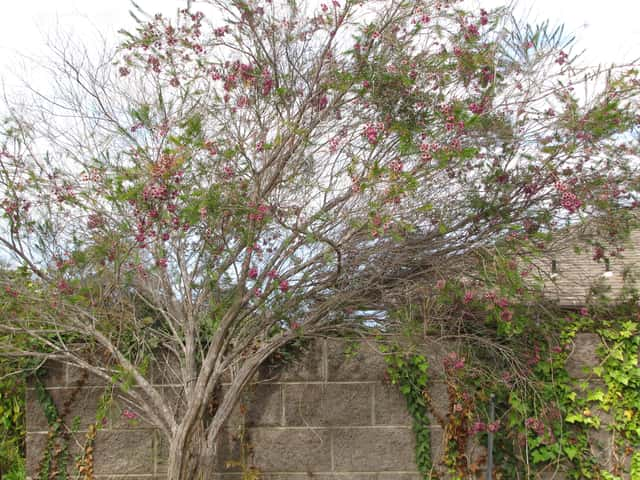
Myrtaceae
Geraldton Waxflower (Chamelaucium uncinatum) — Complete Care Guide
Chamelaucium uncinatum
Geraldton Waxflower is a drought-tolerant shrub that thrives in full sun and excellent drainage. Water sparingly — allow the soil to dry completely between waterings. Feed lightly with a low-phosphorus fertilizer suited to Australian natives. Prune lightly after flowering to maintain shape and encourage bushier growth.
Every 14 days
Direct sun
-3° - 35°C
30% - 50%
Categories
What is Geraldton Waxflower?
Geraldton Waxflower (Chamelaucium uncinatum) is a medium-care plant from the Myrtaceae family. Chamelaucium uncinatum, commonly known as the Geraldton Waxflower, is a stunning evergreen shrub native to the coastal heathlands of Western Australia, particularly the Geraldton region. It produces masses of small, waxy, five-petalled flowers in shades of white, pink, magenta, and purple from late...
Geraldton Waxflower grows up to 4.0m, spread of 300cm, watering every 14 days, -3°C – 35°C, 30–50% humidity. It is not suitable for indoor environments and safe for pets.
Unlike many popular species, Geraldton Waxflower is safe to keep around pets.
How to Care for Geraldton Waxflower?
TLDR: Geraldton Waxflower needs Direct sun, watering every 14 days, and temperatures between -3-35°C with 30-50% humidity.
How Often Should You Water Geraldton Waxflower?
Water deeply every 10–14 days during the growing season, reducing to once every 3–4 weeks when established. Never allow the roots to sit in waterlogged soil, as root rot is the primary cause of failure. Err on the side of under-watering rather than over-watering.
How Much Light Does Geraldton Waxflower Need?
Plant in full sun — at least 6–8 hours of direct sunlight per day. Insufficient light leads to leggy growth and reduced flowering. In hot climates, some afternoon shade is tolerated but full sun is strongly preferred.
What Is the Best Soil for Geraldton Waxflower?
Use a sandy, free-draining soil or a mix specifically designed for Australian natives with low phosphorus. Avoid clay soils or rich organic composts. A slightly acidic pH between 5.5–6.5 is ideal. Raised beds or slopes help ensure drainage.
What Pot Should You Use for Geraldton Waxflower?
Terracotta or unglazed ceramic pots are ideal as they promote airflow and prevent waterlogging. Ensure the pot has large drainage holes. Avoid plastic pots that retain moisture.
Care Schedule
Fertilize
Every 90 days
Repot
Every 730 days
What Is Geraldton Waxflower and Where Does It Come From?
Chamelaucium uncinatum, commonly known as the Geraldton Waxflower, is a stunning evergreen shrub native to the coastal heathlands of Western Australia, particularly the Geraldton region. It produces masses of small, waxy, five-petalled flowers in shades of white, pink, magenta, and purple from late winter through spring. The needle-like foliage releases a light citrus fragrance when crushed. Highly valued as a cut flower worldwide, it thrives in dry, sunny Mediterranean-type conditions and is beloved in Australian native gardens.
How to Propagate Geraldton Waxflower?
Semi-hardwood Cutting
Use sterilized cutting tools to prevent disease. Avoid cuttings from flowering stems — they root poorly. Bottom heat of 20–22°C improves success.
- 1 Take 8–10 cm semi-hardwood cuttings from non-flowering stems
- 2 Remove lower leaves, leaving 2–3 sets at the tip
- 3 Dip the cut end in rooting hormone powder
- 4 Insert into a mix of coarse sand and perlite
- 5 Keep in a warm, bright location out of direct sun
- 6 Mist lightly to maintain humidity without waterlogging
- 7 Transplant when roots are established (6–8 weeks)
Materials needed:
How Big Does Geraldton Waxflower Grow?
TLDR: Geraldton Waxflower can reach up to 4.0m tall with Medium growth rate.
Max height
4.0m
Spread
3.0m
Growth rate
Medium
Foliage
Evergreen
Plant Uses
Ornamental
Great for decoration
Is your plant showing symptoms?
Click on the symptom to discover possible causes:
What Diseases Commonly Affect Geraldton Waxflower?
TLDR: Geraldton Waxflower is susceptible to 10 known diseases. Monitor regularly for early detection.
Root Rot
Root rot is a serious fungal disease that affects the root system of plants, causing them to decay and die. It is primarily caused by overwatering, poor drainage, or soil-borne fungi such as Pythium, Phytophthora, Rhizoctonia, and Fusarium. The disease thrives in waterlogged conditions where roots are deprived of oxygen, making them susceptible to fungal infection.
Gray Mold (Botrytis Blight)
Gray mold, caused by the fungus Botrytis cinerea, is one of the most common fungal diseases in plants. It affects over 200 plant species, including ornamentals, vegetables, fruits, and houseplants. The disease thrives in cool, humid conditions with poor air circulation, causing grayish spots and soft rot on infected tissues.
Gray Mold (Botrytis Blight)
Gray mold, caused by the fungus Botrytis cinerea, is a widespread necrotrophic pathogen affecting over 1,400 plant species. It thrives in cool, humid conditions and attacks weakened or aging plant tissues, causing soft rot and characteristic gray fuzzy growth.
Powdery Mildew
Powdery mildew is a common fungal disease caused by various fungi species including Erysiphe, Podosphaera, Oïdium, and Leveillula. It affects over 10,000 plant species worldwide. The disease thrives in warm, dry climates with high humidity and appears as a distinctive white powdery coating on plant surfaces.
Meaning & Symbolism
The Geraldton Waxflower symbolizes lasting love and endurance — a meaningful choice for weddings and celebrations. Its waxy blooms retain their beauty long after cutting, making it a cherished element in floral arrangements across the world.
Fun Facts
The waxy flowers of Chamelaucium uncinatum can last up to 3 weeks in a vase, making it one of the longest-lasting cut flowers from Australia.
The species name 'uncinatum' means 'hooked' in Latin, referring to the tiny hook-shaped tips on the needle-like leaves.
Geraldton Waxflower is one of Australia's top export cut flowers, shipped to floral markets in Europe, Asia and the United States.
Bees are particularly attracted to Waxflower blooms, making it an excellent plant for supporting native pollinators.
Frequently asked questions
How often should I water Geraldton Waxflower?
Why is my Waxflower not flowering?
Is Geraldton Waxflower toxic to pets?
Can I grow Waxflower indoors?
What soil is best for Geraldton Waxflower?
Compare with similar plants
| Attribute | Difficulty | Light | Watering | Pet Safe |
|---|---|---|---|---|
| Dark Fieldcap | Medium | Low light | 2d | ⚠️ |
| Azalea | Medium | Partial shade | 3d | ⚠️ |
| Muriel's Bamboo | Medium | Partial shade | 3d | ✓ |
| Bougainvillea | Medium | Direct sun | 7d | ⚠️ |




