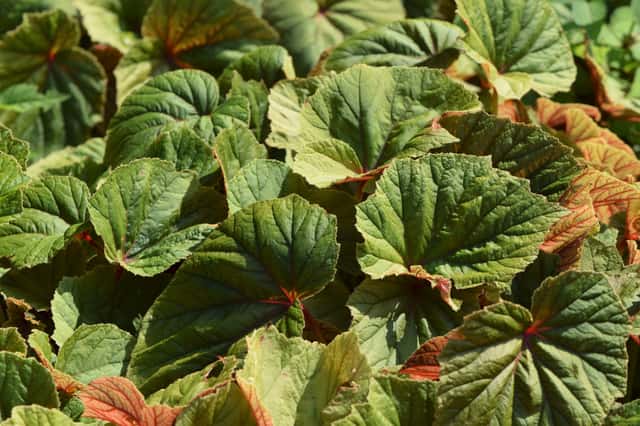
Begoniaceae
Hardy Begonia (Begonia grandis): Complete Care Guide
Begonia grandis
Keep soil consistently moist but well-drained. Grow in partial to full shade. Water every 4 days. Fertilize every 90 days during the growing season. Prune dead stems after dormancy. Mulch heavily in winter to protect the tuber.
Every 4 days
Partial shade
-5° - 30°C
50% - 80%
Categories
What is Hardy Begonia?
Hardy Begonia (Begonia grandis) is a medium-care plant from the Begoniaceae family. Begonia grandis, commonly known as Hardy Begonia, is a tuberous perennial native to China and Japan. It stands out among begonias for its exceptional cold hardiness, surviving frost when its tuber is protected underground. From midsummer through early fall, it produces loose, drooping clusters of de...
Hardy Begonia grows up to 60cm, spread of 60cm, watering every 4 days, -5°C – 30°C, 50–80% humidity. It is suitable for indoor environments and not safe for pets.
Without precautions, ingestion can cause irritation in pets. Keep out of reach of cats and dogs. Without adequate drainage, root rot can develop within 8 days.
How to Care for Hardy Begonia?
TLDR: Hardy Begonia needs Partial shade, watering every 4 days, and temperatures between -5-30°C with 50-80% humidity.
How Often Should You Water Hardy Begonia?
Water every 4 days, keeping the soil evenly moist. Avoid wetting the foliage directly to prevent fungal diseases. Gradually reduce watering in fall as the plant goes dormant.
How Much Light Does Hardy Begonia Need?
Prefers bright indirect light or partial to full shade. Avoid harsh midday sun, which can scorch the delicate foliage. A few hours of gentle morning sun is ideal.
What Is the Best Soil for Hardy Begonia?
Use rich, organically amended, well-draining, slightly acidic soil (pH 6.0–6.5). A mix of loamy soil with compost and perlite works well.
What Pot Should You Use for Hardy Begonia?
Terracotta or unglazed ceramic pot that allows good soil aeration. Ensure adequate drainage holes.
Care Schedule
Fertilize
Every 90 days
Repot
Every 730 days
What Is Hardy Begonia and Where Does It Come From?
Begonia grandis, commonly known as Hardy Begonia, is a tuberous perennial native to China and Japan. It stands out among begonias for its exceptional cold hardiness, surviving frost when its tuber is protected underground. From midsummer through early fall, it produces loose, drooping clusters of delicate pink flowers that attract pollinators, making it a prized ornamental for shaded gardens in temperate climates.
How to Propagate Hardy Begonia?
Tuber Division
Use a clean, sterilized knife for division. Dust cut surfaces with powdered fungicide to prevent rot.
- 1 In early spring, carefully dig up the tuber
- 2 Divide the tuber into sections, ensuring each piece has at least one visible bud
- 3 Allow cut sections to dry for 24 hours to callous over
- 4 Plant in moist, well-draining soil, about 5 cm deep
- 5 Place in partial shade and keep soil lightly moist until shoots emerge
Materials needed:
Stem Cutting
If rooting in water, change it every 3-4 days. Avoid direct sun during rooting.
- 1 Cut a healthy stem 10-15 cm long, just below a node
- 2 Remove lower leaves, leaving 2-3 leaves at the top
- 3 Dip the base in rooting hormone
- 4 Plant in moist soil or place in clean water
- 5 Keep in indirect light with high humidity
Materials needed:
How Big Does Hardy Begonia Grow?
TLDR: Hardy Begonia can reach up to 60cm tall with Medium growth rate.
Max height
60cm
Spread
60cm
Growth rate
Medium
Foliage
Deciduous
Warning: Toxic Plant
This plant can be toxic if ingested. Keep out of reach of:
Plant Uses
Ornamental
Great for decoration
Is your plant showing symptoms?
Click on the symptom to discover possible causes:
What Diseases Commonly Affect Hardy Begonia?
TLDR: Hardy Begonia is susceptible to 15 known diseases. Monitor regularly for early detection.
Bacterial Leaf Spot
Bacterial leaf spot is a plant disease caused by bacteria in the Xanthomonas and Pseudomonas genera that affects various ornamental and edible plants. The bacteria infect leaves through wounds or natural openings, causing characteristic lesions that can lead to premature leaf drop and plant weakening.
Powdery Mildew
Powdery mildew is a common fungal disease caused by various fungi species including Erysiphe, Podosphaera, Oïdium, and Leveillula. It affects over 10,000 plant species worldwide. The disease thrives in warm, dry climates with high humidity and appears as a distinctive white powdery coating on plant surfaces.
Pythium Root Rot
Pythium root rot is a serious fungal disease caused by various Pythium species including P. aphanidermatum, P. ultimum, and P. irregulare. These water molds are present in practically all cultivated soils and attack plant roots under wet conditions, causing rapid wet rot that can extend into the stem. The disease is favored by poor drainage, overwatering, and specific temperatures depending on the species.
Gray Mold (Botrytis Blight)
Gray mold, caused by the fungus Botrytis cinerea, is one of the most common fungal diseases in plants. It affects over 200 plant species, including ornamentals, vegetables, fruits, and houseplants. The disease thrives in cool, humid conditions with poor air circulation, causing grayish spots and soft rot on infected tissues.
Meaning & Symbolism
Symbolizes resilience and renewal — disappearing each winter and returning vigorously in spring, representing hope and perseverance.
Fun Facts
One of the few truly hardy begonias, it can survive freezing temperatures with its tuber protected underground.
It naturally self-propagates by producing tiny bulbils in its leaf axils that fall to the ground and sprout the following spring.
Despite being native to East Asia, it adapts beautifully to temperate European and American gardens.
Unlike most begonias, grandis is deciduous — the entire above-ground plant dies in winter and re-emerges vigorously in spring.
Frequently asked questions
Is Hardy Begonia toxic to cats and dogs?
How often should I water Hardy Begonia?
Can Hardy Begonia survive winter?
What light does Hardy Begonia need?
When does Hardy Begonia bloom?
Compare with similar plants
| Attribute | Difficulty | Light | Watering | Pet Safe |
|---|---|---|---|---|
| Dark Fieldcap | Medium | Low light | 2d | ⚠️ |
| Azalea | Medium | Partial shade | 3d | ⚠️ |
| Muriel's Bamboo | Medium | Partial shade | 3d | ✓ |
| Bougainvillea | Medium | Direct sun | 7d | ⚠️ |




