Solanaceae
Nightshades (Solanum): The World's Most Diverse Plant Genus
Solanum
Solanum species generally prefer bright light and fertile, well-drained soil. Water regularly during the growing season, allowing the topsoil to partially dry between waterings. Fertilize monthly. Most species dislike frost; bring container plants indoors when temperatures fall below 10°C. Green parts and unripe fruits of most species are toxic — handle with care and keep away from children and pets.
Every 7 days
Bright indirect
10° - 38°C
40% - 70%
Categories
What is Nightshades?
Nightshades (Solanum) is a medium-care plant from the Solanaceae family. Solanum is one of the largest and most diverse plant genera on Earth, comprising 1,500–2,000 species of herbs, shrubs, vines, and small trees in the family Solanaceae. It includes three of humanity's most economically important crops — potato (S. tuberosum), tomato (S. lycopersicum), and eggplant (S...
Nightshades grows up to 3.0m, spread of 150cm, watering every 7 days, 10°C – 38°C, 40–70% humidity. It is suitable for indoor environments and not safe for pets.
Without precautions, ingestion can cause irritation in pets. Keep out of reach of cats and dogs. Without adequate drainage, root rot can develop within 14 days.
How to Care for Nightshades?
TLDR: Nightshades needs Bright indirect, watering every 7 days, and temperatures between 10-38°C with 40-70% humidity.
How Often Should You Water Nightshades?
Water every 7 days during the growing season, reducing frequency in winter. Allow the top 2–3 cm of soil to dry between waterings. Overwatering is the most common cause of root rot in this genus.
How Much Light Does Nightshades Need?
Provide full sun to bright indirect light (10,000–80,000 lux). Full sun promotes better flowering and fruiting in ornamental species. Avoid deep shade, which causes weak, leggy growth.
What Is the Best Soil for Nightshades?
Use fertile, well-draining soil rich in organic matter. A mix of loam and perlite works well for most species. Slightly acidic to neutral pH (5.5–7.0) is ideal.
What Pot Should You Use for Nightshades?
Terracotta pots are ideal for most ornamental Solanum species, as they allow excess moisture to evaporate. Use containers with drainage holes. For food crops like tomatoes and eggplants, large deep containers (at least 30 cm deep) are preferred.
Care Schedule
Fertilize
Every 30 days
Rotate
Every 30 days
Repot
Every 365 days
What Is Nightshades and Where Does It Come From?
Solanum is one of the largest and most diverse plant genera on Earth, comprising 1,500–2,000 species of herbs, shrubs, vines, and small trees in the family Solanaceae. It includes three of humanity's most economically important crops — potato (S. tuberosum), tomato (S. lycopersicum), and eggplant (S. melongena) — alongside hundreds of ornamental and wild species. Most green parts contain toxic alkaloids such as solanine, making this a genus of remarkable duality: life-sustaining food and potential danger, often in the same plant.
How to Propagate Nightshades?
Seed Propagation
Pre-soaking seeds for 24 hours improves germination rates. Use a heat mat for tropical species.
- 1 Sow seeds in warm, moist seed-starting mix at 20-25°C
- 2 Cover lightly and keep consistently moist until germination
- 3 Transplant seedlings when 5-7 cm tall
Materials needed:
Stem Cutting
Keep cuttings in bright indirect light and high humidity until rooted. Change water weekly if propagating in water.
- 1 Take a 10-15 cm cutting just below a leaf node
- 2 Remove lower leaves and dip cut end in rooting hormone
- 3 Place in moist potting mix or water and maintain warmth
Materials needed:
Tuber Division
Apply sulfur powder to cut surfaces to prevent fungal infection.
- 1 Lift the plant and separate tubers with a clean, sharp knife
- 2 Ensure each division has at least one healthy growth bud
- 3 Allow cut surfaces to dry for 24 hours before replanting
Materials needed:
How Big Does Nightshades Grow?
TLDR: Nightshades can reach up to 3.0m tall with Medium growth rate.
Max height
3.0m
Spread
1.5m
Growth rate
Medium
Foliage
Deciduous
Warning: Toxic Plant
This plant can be toxic if ingested. Keep out of reach of:
Plant Uses
Ornamental
Great for decoration
Edible
Can be consumed
Medicinal
Medicinal properties
Medicinal Uses
- Used in traditional medicine across Africa, Asia, and Latin America for fever, inflammation, and skin conditions
- Alkaloids extracted from Solanum species are studied for pharmaceutical applications
Culinary Uses
- Tomato (S. lycopersicum) — one of the world's most consumed vegetables
- Potato (S. tuberosum) — the world's most important non-grain food crop
- Eggplant (S. melongena) — widely used in Mediterranean and Asian cuisines
- Regional crops include tamarillo, lulo, cocona, and pepino melon
Is your plant showing symptoms?
Click on the symptom to discover possible causes:
What Diseases Commonly Affect Nightshades?
TLDR: Nightshades is susceptible to 9 known diseases. Monitor regularly for early detection.
Root Rot
Root rot is a serious fungal disease that affects the root system of plants, causing them to decay and die. It is primarily caused by overwatering, poor drainage, or soil-borne fungi such as Pythium, Phytophthora, Rhizoctonia, and Fusarium. The disease thrives in waterlogged conditions where roots are deprived of oxygen, making them susceptible to fungal infection.
Powdery Mildew
Powdery mildew is a common fungal disease caused by various fungi species including Erysiphe, Podosphaera, Oïdium, and Leveillula. It affects over 10,000 plant species worldwide. The disease thrives in warm, dry climates with high humidity and appears as a distinctive white powdery coating on plant surfaces.
Gray Mold (Botrytis Blight)
Gray mold, caused by the fungus Botrytis cinerea, is a widespread necrotrophic pathogen affecting over 1,400 plant species. It thrives in cool, humid conditions and attacks weakened or aging plant tissues, causing soft rot and characteristic gray fuzzy growth.
Aphids
Aphids are small, soft-bodied, pear-shaped insects (1/16 to 1/8 inch long) that feed by sucking nutrient-rich sap from plants. They reproduce rapidly and can quickly weaken plants, causing distorted growth and transmitting plant viruses. Aphids come in various colors including green, black, red, yellow, brown, and gray. They secrete honeydew, a sticky substance that attracts ants and encourages sooty mold growth.
Meaning & Symbolism
A genus of extraordinary duality — harboring both deadly poisons and three of the world's most important food crops. The nightshades remind us that toxicity and nourishment are two sides of the same evolutionary coin.
Fun Facts
The genus Solanum contains roughly 1,500–2,000 species — more than any other genus in the nightshade family
Three Solanum species — tomato, potato, and eggplant — together feed more people than almost any other group of plants on Earth
Solanine, the toxic alkaloid found in green potato skins, was historically used as a pesticide
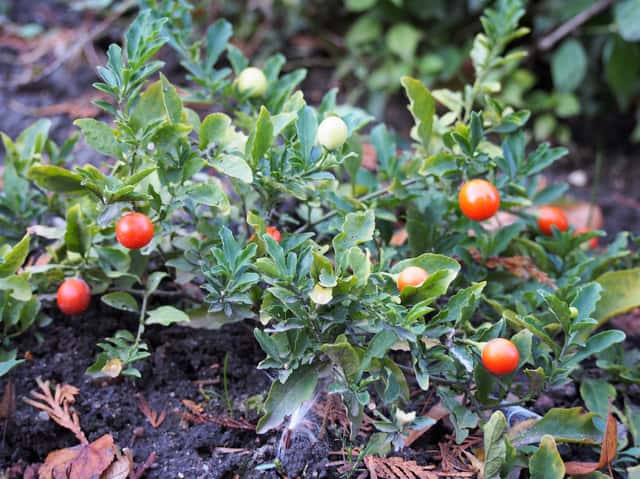
The Jerusalem cherry (Solanum pseudocapsicum) looks like a miniature tomato but is highly toxic and should never be eaten
Frequently asked questions
Are nightshades (Solanum) toxic?
How often should I water Solanum plants?
Can Solanum plants grow indoors?
What is the most common disease affecting Solanum plants?
How do I propagate Solanum?
Compare with similar plants
| Attribute | Difficulty | Light | Watering | Pet Safe |
|---|---|---|---|---|
| Dark Fieldcap | Medium | Low light | 2d | ⚠️ |
| Azalea | Medium | Partial shade | 3d | ⚠️ |
| Bougainvillea | Medium | Direct sun | 7d | ⚠️ |
| Wild Lettuce | Medium | Direct sun | 7d | ⚠️ |



