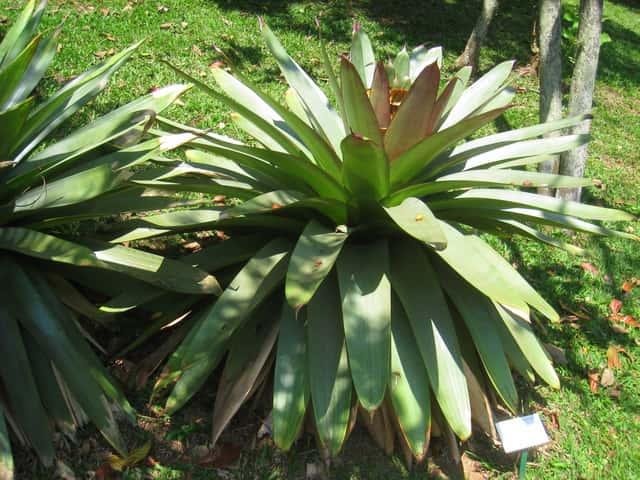
Bromeliaceae
Imperial Bromeliad: How to Grow and Care for Alcantarea imperialis
Alcantarea imperialis
Low-maintenance and hardy plant. Thrives in full sun to partial shade, requires moderate watering (keeping water in the central tank), and well-draining soil enriched with organic matter. Drought-tolerant and can withstand light frost. Fertilize every 30 days during spring and summer with diluted liquid fertilizer applied to the central tank.
Every 7 days
Bright indirect
10° - 35°C
60% - 80%
Categories
What is Imperial Bromeliad?
Imperial Bromeliad (Alcantarea imperialis) is a medium-care plant from the Bromeliaceae family. Alcantarea imperialis, commonly known as the Imperial Bromeliad, is one of the largest bromeliads in the world and a truly spectacular ornamental plant endemic to Brazil. Native to the rocky slopes of the Serra dos Órgãos mountain range in Rio de Janeiro state, this magnificent species forms enormou...
Imperial Bromeliad grows up to 1.5m, spread of 150cm, watering every 7 days, 10°C – 35°C, 60–80% humidity. It is suitable for indoor environments and safe for pets.
Unlike many popular species, Imperial Bromeliad is safe to keep around pets. Without adequate drainage, root rot can develop within 14 days.
How to Care for Imperial Bromeliad?
TLDR: Imperial Bromeliad needs Bright indirect, watering every 7 days, and temperatures between 10-35°C with 60-80% humidity.
How Often Should You Water Imperial Bromeliad?
Water every 7 days by filling the central tank (reservoir) formed by the leaf rosette with fresh water. Flush and replace the tank water every 15 days to prevent mosquito breeding. During intense dry periods, also water the substrate. Avoid waterlogging the soil, which can lead to root rot.
How Much Light Does Imperial Bromeliad Need?
Prefers full sun to partial shade. Indoors, place in a very bright location with indirect light or near a window with good light exposure. Avoid excessive shade, which causes the leaves to become thin and lose their characteristic reddish coloration.
What Is the Best Soil for Imperial Bromeliad?
Use light, well-draining substrate: mix potting soil, coarse sand, and pine bark in equal parts. Avoid clay or compacted soils. The ideal pH range is 6.0–7.0. Ensure the pot has adequate drainage holes.
What Pot Should You Use for Imperial Bromeliad?
Large ceramic or terracotta pot for outdoor specimens, or sturdy plastic pot with saucer. For garden planting, plant directly in the ground with good drainage. The pot should be at least 40 cm in diameter to accommodate the adult rosette.
Care Schedule
Fertilize
Every 30 days
Misting
Every 7 days
What Is Imperial Bromeliad and Where Does It Come From?
Alcantarea imperialis, commonly known as the Imperial Bromeliad, is one of the largest bromeliads in the world and a truly spectacular ornamental plant endemic to Brazil. Native to the rocky slopes of the Serra dos Órgãos mountain range in Rio de Janeiro state, this magnificent species forms enormous rosettes of leathery leaves that can reach 1.5 m in diameter, with a central tank capable of holding up to 30 liters of rainwater. When it eventually blooms — an event that occurs after 10 to 40 years — it produces a towering flower spike up to 3.5 m tall bearing white-yellowish flowers with reddish bracts that attract hummingbirds and other pollinators.
How to Propagate Imperial Bromeliad?
Division of basal pups (offsets)
Pups take 7–10 years to flower. Wear gloves when handling, as leaf edges can be sharp.
- 1 Wait for the mother plant to produce basal pups after flowering.
- 2 When pups reach at least 1/3 the size of the mother plant, separate them with a sterilized knife.
- 3 Allow pups to dry for 24 hours before planting.
- 4 Plant in well-draining substrate and keep in a shaded location for 2 weeks.
- 5 Begin light watering and gradually increase as rooting establishes.
Materials needed:
Seed propagation
Seeds lose viability quickly — use fresh seeds whenever possible. The plant will take 10–40 years to flower from seed.
- 1 Collect fresh seeds from the flower spike after maturation (feathery seeds).
- 2 Sow in fine, moist substrate (sand and sphagnum mixture).
- 3 Cover with transparent plastic to maintain humidity.
- 4 Keep in a warm location (22–28°C) with indirect light.
- 5 Transplant seedlings when they reach 5 cm in height.
Materials needed:
How Big Does Imperial Bromeliad Grow?
TLDR: Imperial Bromeliad can reach up to 1.5m tall with Slow growth rate.
Max height
1.5m
Spread
1.5m
Growth rate
Slow
Foliage
Evergreen
Plant Uses
Ornamental
Great for decoration
Is your plant showing symptoms?
Click on the symptom to discover possible causes:
What Diseases Commonly Affect Imperial Bromeliad?
TLDR: Imperial Bromeliad is susceptible to 7 known diseases. Monitor regularly for early detection.
Root Rot
Root rot is a serious fungal disease that affects the root system of plants, causing them to decay and die. It is primarily caused by overwatering, poor drainage, or soil-borne fungi such as Pythium, Phytophthora, Rhizoctonia, and Fusarium. The disease thrives in waterlogged conditions where roots are deprived of oxygen, making them susceptible to fungal infection.
Crown Rot
Crown rot is a serious fungal disease that attacks the crown (base) of the plant where the stem meets the soil. It is caused by various fungal pathogens including Phytophthora, Fusarium, and Rhizoctonia. The disease thrives in waterlogged conditions and can quickly spread to kill the entire plant if not addressed promptly.
Mealybugs
Mealybugs are small, soft-bodied insects covered with a white, waxy, cottony material. They are common pests of houseplants and outdoor plants in mild climates. These sap-sucking insects feed on plant tissue, causing damage, stunted growth, and can lead to plant death if left untreated. They produce sticky honeydew which attracts sooty mold.
Scale Insects
Scale insects are small sap-sucking pests that appear as brown, shell-like bumps on plant stems and leaves. There are over 25 species, divided into armored (hard) and unarmored (soft) scales. They feed by piercing plant tissue and extracting sap, which weakens the plant and can lead to yellowing, stunted growth, and even death if left untreated. They also excrete honeydew, which attracts ants and promotes sooty mold growth.
Meaning & Symbolism
Named after Emperor Dom Pedro II of Brazil (epithet "imperialis"), the Imperial Bromeliad symbolizes majesty, nobility, and resilience. It is considered a prestigious plant in tropical gardens, representing the richness of Brazil's endemic flora.
Fun Facts
The Imperial Bromeliad can hold up to 30 liters of water in its central tank, creating a miniature aquatic ecosystem that shelters frogs, insects, and small animals.
Its species name "imperialis" honors Emperor Dom Pedro II of Brazil, under whose reign the species was first scientifically described in 1888.
A single flower spike can produce between 80,000 and 200,000 feathery seeds dispersed by the wind.
In its natural habitat, this lithophytic species grows directly on rocky outcrops in the Serra dos Órgãos mountains, requiring no deep soil to thrive.
Frequently asked questions
How often should I water the Imperial Bromeliad?
Can the Imperial Bromeliad be grown in a pot?
When does the Imperial Bromeliad flower?
Is the Imperial Bromeliad toxic to pets?
How do I prevent mosquitoes breeding in the tank?
Compare with similar plants
| Attribute | Difficulty | Light | Watering | Pet Safe |
|---|---|---|---|---|
| Dark Fieldcap | Medium | Low light | 2d | ⚠️ |
| Azalea | Medium | Partial shade | 3d | ⚠️ |
| Muriel's Bamboo | Medium | Partial shade | 3d | ✓ |
| Bougainvillea | Medium | Direct sun | 7d | ⚠️ |




