Apocynaceae
Indian Hemp (Apocynum cannabinum): Native Perennial Care Guide
Apocynum cannabinum
Indian Hemp is an extremely hardy, low-maintenance native plant suited to outdoor naturalized areas only. It thrives in full sun to partial shade, tolerates drought once established, and spreads vigorously via underground rhizomes. Never grow indoors. Handle with gloves due to caustic milky sap. Water deeply but infrequently; the plant is very drought-tolerant once established.
Every 10 days
Bright indirect
-40° - 38°C
30% - 70%
Categories
What is Indian Hemp?
Indian Hemp (Apocynum cannabinum) is a medium-care plant from the Apocynaceae family. Apocynum cannabinum, commonly known as Indian Hemp or Hemp Dogbane, is a native North American perennial herb in the Apocynaceae family. Despite its common name, it is not related to Cannabis — the name derives from the historical use of its strong bast fibers as cordage by Native Americans. The pla...
Indian Hemp grows up to 1.5m, spread of 75cm, watering every 10 days, -40°C – 38°C, 30–70% humidity. It is not suitable for indoor environments and not safe for pets.
Without precautions, ingestion can cause irritation in pets. Keep out of reach of cats and dogs.
How to Care for Indian Hemp?
TLDR: Indian Hemp needs Bright indirect, watering every 10 days, and temperatures between -40-38°C with 30-70% humidity.
How Often Should You Water Indian Hemp?
Water deeply once established, approximately every 10 days during dry spells. The plant is drought-tolerant and prefers to dry out between waterings. Overwatering in poorly drained soils can lead to root rot. Avoid standing water.
How Much Light Does Indian Hemp Need?
Prefers full sun (6+ hours of direct sunlight daily) for best growth and flowering. Tolerates partial shade (2-6 hours) but may spread less vigorously. Not suitable for indoor growing.
What Is the Best Soil for Indian Hemp?
Grows well in sandy, loamy, or rocky soils with good drainage. Tolerates a wide pH range (5.5–7.5). Avoid heavy clay or waterlogged conditions. No soil amendment is typically needed for naturalized plantings.
What Pot Should You Use for Indian Hemp?
Not recommended for potted cultivation. This plant is best suited to naturalized outdoor areas, meadows, and native plant gardens where it can spread freely without restriction.
What Is Indian Hemp and Where Does It Come From?
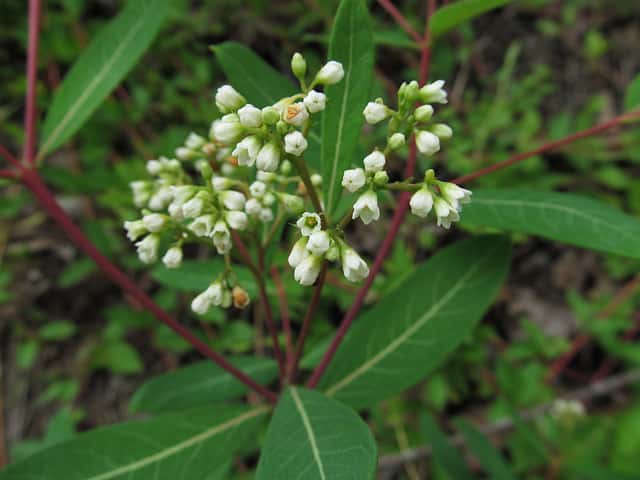
Apocynum cannabinum, commonly known as Indian Hemp or Hemp Dogbane, is a native North American perennial herb in the Apocynaceae family. Despite its common name, it is not related to Cannabis — the name derives from the historical use of its strong bast fibers as cordage by Native Americans. The plant produces clusters of small white bell-shaped flowers in summer and spreads aggressively via rhizomes. CRITICAL WARNING: All parts of this plant contain potent cardiac glycosides that can cause fatal cardiac arrhythmias. It is highly toxic to humans, dogs, cats, horses, and livestock.
How to Propagate Indian Hemp?
Rhizome Division
Wear gloves to avoid contact with the milky sap which can cause skin irritation. Division is the most reliable propagation method as seeds require stratification.
- 1 Dig up a section of rhizome in early spring before new growth emerges
- 2 Divide into sections each with at least one growth node
- 3 Replant in prepared soil at the same depth
- 4 Water in well and keep moist until established
Materials needed:
Seed Propagation
Seeds need cold stratification to break dormancy. Direct fall sowing mimics natural conditions and improves germination rates.
- 1 Collect seeds in fall when pods split open
- 2 Cold-stratify seeds for 30-60 days in moist sand in the refrigerator
- 3 Sow outdoors in early spring or direct sow in fall
- 4 Keep soil moist until germination
Materials needed:
How Big Does Indian Hemp Grow?
TLDR: Indian Hemp can reach up to 1.5m tall with Fast growth rate.
Max height
1.5m
Spread
75cm
Growth rate
Fast
Foliage
Deciduous
Warning: Toxic Plant
This plant can be toxic if ingested. Keep out of reach of:
Plant Uses
Ornamental
Great for decoration
Medicinal
Medicinal properties
Medicinal Uses
- Historically used in small, carefully prepared doses for heart conditions, rheumatism, fever, and respiratory ailments by Native American herbalists. No self-medication recommended due to extreme toxicity.
Is your plant showing symptoms?
Click on the symptom to discover possible causes:
What Diseases Commonly Affect Indian Hemp?
TLDR: Indian Hemp is susceptible to 2 known diseases. Monitor regularly for early detection.
Root Rot
Root rot is a serious fungal disease that affects the root system of plants, causing them to decay and die. It is primarily caused by overwatering, poor drainage, or soil-borne fungi such as Pythium, Phytophthora, Rhizoctonia, and Fusarium. The disease thrives in waterlogged conditions where roots are deprived of oxygen, making them susceptible to fungal infection.
Aphids
Aphids are small, soft-bodied, pear-shaped insects (1/16 to 1/8 inch long) that feed by sucking nutrient-rich sap from plants. They reproduce rapidly and can quickly weaken plants, causing distorted growth and transmitting plant viruses. Aphids come in various colors including green, black, red, yellow, brown, and gray. They secrete honeydew, a sticky substance that attracts ants and encourages sooty mold growth.
Meaning & Symbolism
Symbolizes resilience, resourcefulness, and Indigenous ingenuity. Its strong fibers sustained Native American cultures for centuries, used in bows, fishing nets, cordage, and clothing.
Fun Facts
Despite being highly toxic, Indian Hemp was one of the most important fiber plants of Native North America — used for bowstrings, fishing nets, and clothing.
The plant's cardiac glycoside cymarin was once medically studied as a potential heart stimulant, similar to digitalis from foxglove.
Indian Hemp can spread so aggressively via rhizomes that it is considered a noxious weed in many agricultural settings.
Hummingbird moths (Hemaris spp.) are among the few insects that can feed on this plant and are specially attracted to its nectar.
Frequently asked questions
Is Indian Hemp the same as Cannabis?
Is Indian Hemp safe to grow in a garden with children or pets?
How do I control the spread of Indian Hemp?
When does Indian Hemp flower?
What hardiness zones is Indian Hemp suitable for?
Compare with similar plants
| Attribute | Difficulty | Light | Watering | Pet Safe |
|---|---|---|---|---|
| Dark Fieldcap | Medium | Low light | 2d | ⚠️ |
| Azalea | Medium | Partial shade | 3d | ⚠️ |
| Bougainvillea | Medium | Direct sun | 7d | ⚠️ |
| Wild Lettuce | Medium | Direct sun | 7d | ⚠️ |



