Lamiaceae
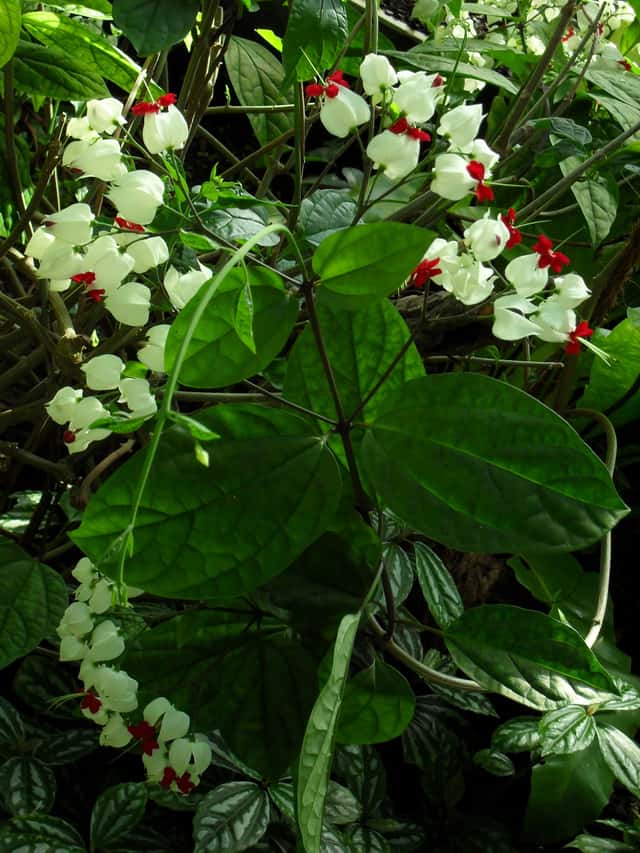
Bleeding Heart Vine (Clerodendrum thomsoniae)
Clerodendrum thomsoniae
Provide bright indirect light, keep soil consistently moist during the growing season, and maintain high humidity (60-80%). Feed monthly in spring and summer. Allow a cool, drier rest period in winter to encourage next season's blooms. Prune after flowering to maintain shape.
Every 5 days
Bright indirect
16° - 30°C
60% - 80%
Categories
What is Bleeding Heart Vine?
Bleeding Heart Vine (Clerodendrum thomsoniae) is a medium-care plant from the Lamiaceae family. Clerodendrum thomsoniae is a stunning tropical climbing vine native to West Africa, prized for its striking bicolored flowers featuring pristine white heart-shaped calyces from which bright crimson tubular flowers emerge. This vigorous twining vine can grow up to 4 meters and blooms profusely in spr...
Bleeding Heart Vine grows up to 4.0m, with spread of 200cm, watering every 5 days, 16°C – 30°C, 60–80% humidity. It is suitable for indoor environments and not safe for pets.
Without precautions, ingestion can cause irritation in pets. Keep out of reach of cats and dogs. Without adequate drainage, root rot can develop within 10 days.
How to Care for Bleeding Heart Vine?
TLDR: Bleeding Heart Vine needs Bright indirect, watering every 5 days, and temperatures between 16-30°C with 60-80% humidity.
How Often Should You Water Bleeding Heart Vine?
Water thoroughly when the top 2-3 cm of soil feels dry. Keep soil evenly moist during the growing season but reduce watering in winter. Never let the plant sit in waterlogged soil as it is susceptible to root rot.
How Much Light Does Bleeding Heart Vine Need?
Place in bright, indirect light. A few hours of morning direct sun is beneficial, but avoid harsh afternoon sunlight which can scorch the leaves. Insufficient light will reduce flowering.
What Is the Best Soil for Bleeding Heart Vine?
Use a rich, well-draining potting mix. Combine regular potting soil with perlite and peat moss or compost. The plant thrives in slightly acidic to neutral soil with pH 5.5-6.5.
What Pot Should You Use for Bleeding Heart Vine?
Use a medium-sized pot with excellent drainage holes. Terracotta pots work well as they allow excess moisture to evaporate. Provide a trellis, moss pole, or support structure for the vine to climb.
Care Schedule
Fertilize
Every 30 days
Misting
Every 3 days
Rotate
Every 14 days
Repot
Every 730 days
What Is Bleeding Heart Vine and Where Does It Come From?
Clerodendrum thomsoniae is a stunning tropical climbing vine native to West Africa, prized for its striking bicolored flowers featuring pristine white heart-shaped calyces from which bright crimson tubular flowers emerge. This vigorous twining vine can grow up to 4 meters and blooms profusely in spring and summer, making it a spectacular addition to any indoor or outdoor tropical garden.
How to Propagate Bleeding Heart Vine?
Stem cutting
Use clean, sharp pruning shears. Semi-hardwood cuttings taken in spring or early summer root most readily. Bottom heat of around 21-24°C improves success.
- 1 Take a 10-15 cm cutting from a healthy semi-hardwood stem with at least 2-3 nodes
- 2 Remove lower leaves, keeping 2-3 leaves at the top
- 3 Dip the cut end in rooting hormone
- 4 Plant in a moist mix of perlite and peat moss
- 5 Cover with a plastic bag to maintain humidity
- 6 Keep in bright, indirect light and mist regularly
Materials needed:
Seed propagation
Seeds have low germination rates and take significantly longer to produce a flowering plant compared to cuttings. Fresh seeds germinate best.
- 1 Collect ripe seeds from the dark blue-black fruits
- 2 Sow seeds on the surface of moist seed-starting mix
- 3 Cover lightly with fine vermiculite
- 4 Keep warm (24-27°C) and moist
- 5 Provide bright indirect light once seedlings emerge
Materials needed:
How Big Does Bleeding Heart Vine Grow?
TLDR: Bleeding Heart Vine can reach up to 4.0m tall with Fast growth rate.
Max height
4.0m
Spread
2.0m
Growth rate
Fast
Foliage
Evergreen
Warning: Toxic Plant
This plant can be toxic if ingested. Keep out of reach of:
Plant Uses
Ornamental
Great for decoration
Is your plant showing symptoms?
Click on the symptom to discover possible causes:
What Diseases Commonly Affect Bleeding Heart Vine?
TLDR: Bleeding Heart Vine is susceptible to 6 known diseases. Monitor regularly for early detection.
Whiteflies
Whiteflies are small, soft-bodied, winged insects closely related to aphids and mealybugs. They are moth-like in appearance, about 1/16 inch long, triangular in shape, and gray-white in color. These sap-sucking pests feed on plant tissue, causing yellowing, stunted growth, and wilting. They also excrete honeydew, which attracts ants and promotes sooty mold growth. Whiteflies can transmit serious plant viruses.
Mealybugs
Mealybugs are small, soft-bodied insects covered with a white, waxy, cottony material. They are common pests of houseplants and outdoor plants in mild climates. These sap-sucking insects feed on plant tissue, causing damage, stunted growth, and can lead to plant death if left untreated. They produce sticky honeydew which attracts sooty mold.
Spider Mites
Spider mites are tiny arachnids (less than 1/20 inch long) related to spiders and ticks that feed on plant sap. They thrive in hot, dry conditions and can cause significant damage to ornamental and vegetable plants. During severe infestations, crop losses can reach 14% or higher as these pests disrupt vital plant processes including photosynthesis, carbon dioxide absorption, and transpiration.
Scale Insects
Scale insects are small sap-sucking pests that appear as brown, shell-like bumps on plant stems and leaves. There are over 25 species, divided into armored (hard) and unarmored (soft) scales. They feed by piercing plant tissue and extracting sap, which weakens the plant and can lead to yellowing, stunted growth, and even death if left untreated. They also excrete honeydew, which attracts ants and promotes sooty mold growth.
Meaning & Symbolism
Love, purity and innocence due to its heart-shaped white calyces with crimson flowers
Fun Facts
The unique flowers have inspired its common name - the white calyces resemble bleeding hearts with the crimson flowers appearing as droplets of blood
In its native West African habitat, the vine can grow up to 4 meters, scrambling through trees in the tropical forest understory
The plant belongs to the mint family (Lamiaceae), which was reclassified from the former Verbenaceae family
A cool winter rest period of 6-8 weeks is essential to trigger the spectacular spring bloom display
Frequently asked questions
Why is my Bleeding Heart Vine not flowering?
How do I prune a Bleeding Heart Vine?
Is Bleeding Heart Vine toxic to pets?
How fast does Bleeding Heart Vine grow?
Compare with similar plants
| Attribute | Difficulty | Light | Watering | Pet Safe |
|---|---|---|---|---|
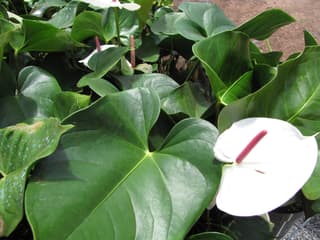
| Flamingo Flower | Medium | Partial shade | 5d | ⚠️ |
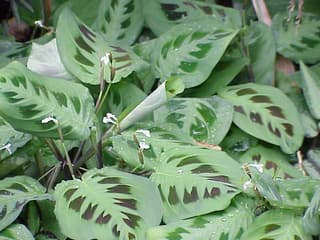
| Prayer Plant | Medium | Partial shade | 3d | ✓ |
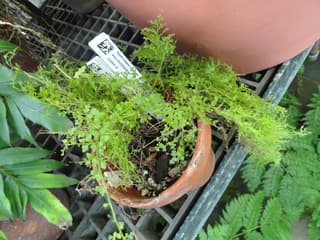
| Boston Fern | Medium | Partial shade | 3d | ✓ |
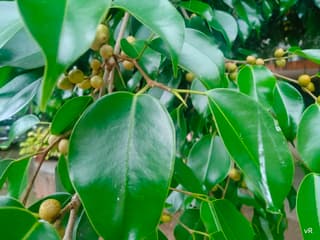
| Weeping Fig | Medium | Partial shade | 10d | ⚠️ |